

Residential Pest Control
Starting from
$49 /mo
Ants, roaches, spiders, scorpions, crickets, wasps, fleas, ticks. Quarterly Zero Gap treatment™, the foundation of Forterra's treatment plan.
Learn more about residential pest control →Interior rooms and the outside of the house share one recurring plan, and a return between visits costs nothing. Sealing the gaps pests use is part of pest control in University Park from the very first visit.
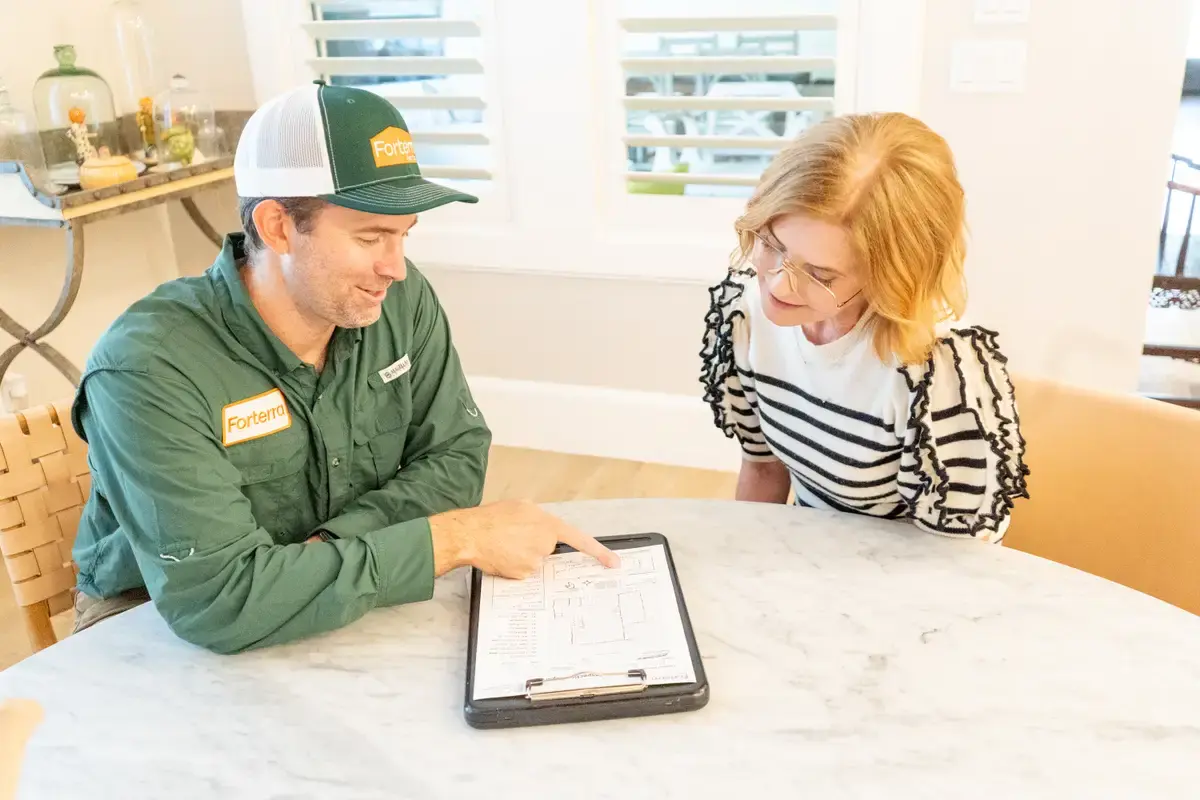
Rear alleys serve nearly every University Park home, which puts bins, garages and service access along one shared lane that runs the length of your block. Anything moving along it reaches every property. Forterra treats the alley side as the primary face of the house, the reverse of a standard perimeter walk, then seals with the Zero Gap System™. Texas Pest Control License TPCL #850046.
"The technician is right on time very polite, clean well mannered puts shoe coverings on to not track into the house excellent service and no bugs"
"Casey was prompt professional and personable."
"Yes, he did very good job and as I think he knows how to do everything excellent work he was smiling all the time whatever we ask and he answered thank you"
"As usual, Chad was awesome! We had a major infestation of flies and that has gone down tremendously. Thanks Chad!🫶🏼"
"On time, good communication"
"Always professional on time service."
75205 and 75225 hold University Park's historic grid entire. Staff notes, service entrances and scheduling preferences go on file through (972) 349-1621 once and stay there for good, and measurements alone produce each figure, with SMU-neighborhood prestige contributing exactly nothing to the arithmetic. Two ZIPs of history, one modern calculator, zero mystique anywhere in the pricing. The trees keep the only secrets.
One mile connects University Park to the Dallas office, the tightest radius on our map after its Park Cities neighbor, held since 2025 with UP addresses quietly steady across the 569-review history at ★ 5.0. That proximity makes windows exact, free returns same-day affairs more often than not, and the crew's knowledge of these blocks practically pedestrian, literally.
Most DFW pest companies hide prices to size you up. We don't. Here's what our four core services cost, no hidden surprises. A 12-month plan takes about $200 off your first service, or go month to month at the full first-service price. We do one-time treatments too.
Ants, roaches, spiders, scorpions, crickets, wasps, fleas, ticks. Quarterly Zero Gap treatment™, the foundation of Forterra's treatment plan.
Learn more about residential pest control →
Sentricon® Always Active baiting and annual monitoring. Subterranean termites cause 98% of DFW termite damage, catch them early.
Learn more about termite control →
Monthly yard + perimeter fog treatment April–October. Knocks down adults and kills larvae in standing water. Backyards you can actually use.
Learn more about mosquito control →
Exclusions to stop entries, trapping to catch what's there, and monitoring and prevention with bait stations. We do it all so you are rodent-free.
Learn more about rodent control →Towering canopies run carpenter ant traffic over pre-war rooflines, original pier-and-beam construction breathes through vents that read as doorways to pests, and mature gardens shelter spiders and seasonal wasps. Every University Park pest page below names the first signs of an infestation, the harm it can bring to pre-war framing and today's figure, with preservation-grade care on each quarterly visit.
Termite Control Rodent ControlMosquito ControlAnt Control
 Cockroach Control
 Spider Control
 Wasp & Hornet Removal
 Flea Control
 Tick ControlRat ControlMouse ControlCarpenter Ant Control
 Scorpion Control
 Fly Control
 Silverfish Control
 Beetle Control
 Earwig Control
 Chigger Control
 Moth Control
 Cricket Control
 Pantry Pest Control
 Mite Control
Quarterly coverage anchors University Park, preservation-conscious sealing leading each engagement, termite protection watching foundations older than the science defending them, and WDI inspections serving a market where documentation decides closings. Garden mosquito service covers the entertaining months, lone problems book at papered figures, and pricing always precedes the doorbell. Quarterly pest control, rodent exclusion for older attics and termite inspections for home sales combine into customized pest management for each University Park, TX house.
Pre-war charm, post-survey quiet. Ninety-year construction carries ninety-year gaps, breathing vents, original weep patterns, thresholds worn by generations, and the survey documents each before sealing with materials that respect the fabric. Nothing visible changes from the sidewalk, everything changes for whatever was using those openings, and the quarterly barrier maintains the craftsmanship's win discreetly, season upon season. Your exterminator closes weep holes, attic vents and old door thresholds first, because pest prevention at those points protects a pre-war house better than spray.
Your tech walks all 6 zones, foundation, eaves, entry points, doors/windows, garage, yard, and logs what they find. They're then able to customize the treatment.
Perimeter treatment at the foundation, eave sweep, targeted spot treatments in high-pressure zones. We use the minimum effective product, not the maximum billable volume.
This is the part everyone else skips. Weep holes, utility penetrations and seals that failed years ago, each closed with the material that suits it. It's slower. It's better. And it stays with your house forever.
Before we leave, you get a detailed report of what was treated, what was sealed, and what we flagged for the next visit. See a pest between services? Text us. We come back free.
Ready when you are. Real prices online in about 60 seconds, phones answered 24/7.
The canopy conducts this calendar, carpenter ants working the towering trees from March, garden mosquitoes claiming the entertaining season unless intercepted, spiders prospering beneath the shade all summer, and the first cold week pressing mice toward pre-war foundations. That shaded rhythm shapes our seasonal pest control here, so the year-round plan shifts its focus each quarter instead of repeating one visit four times.
When to start: Any time, but new customers who start in January–March typically see the smoothest first summer. Mid-summer starts still work (we just treat a little harder on visit one).
Highland Park completes the Park Cities beside University Park, Dallas proper surrounds the rest, and each carries a page here grounded in its own reality. Pre-war pedigree reads the same arithmetic as post-war sprawl, deliberately. All part of Pest Control in Dallas County, TX, the inner core documented with the specificity its architecture deserves.
The same promise in University Park. See a pest between visits? Text us. We re-treat free as many times as it takes. Still not satisfied? We refund your last service. Still in your first year? We'll cancel with no fees.
University Park asks about cost, response speed and termite realities in older homes, and the answers below stay as exact as the neighborhood expects. Property questions get their answers at (972) 349-1621 on a weekday, their permanent record immediately, their scheduling after. Historic blocks deserve contemporary clarity, so that is precisely what we deliver here, every single time.
Not rats, because a weep hole is too narrow for one. On older DFW houses, rats come in around HVAC lines, through low openings near the foundation and up from crawl spaces, and your exterminator seals those spots first. Trapping follows in the attic for about a week once the openings are shut, and outside bait stations take over as maintenance. When rodents prompt the call, the interior inspection costs nothing.
The rear of the property becomes the working edge. Garage returns, bin standing, the gate threshold and the wall facing the lane all take the weight of the visit, because that is where arrivals happen. Treating a University Park house evenly around four sides underdoes the only elevation carrying genuine pressure. Weighting the visit is the whole point, and even coverage quietly undoes it.
Along a shared lane, yes, considerably. Bins left open or a garage used as storage a few doors down supports a population that then works its way along the alley to everybody else. It is worth a conversation, and where several University Park households go in together the result on a lane is markedly better. A lane is common infrastructure whether or not anybody treats it that way.
They conduct the calendar. Carpenter ants work the towering canopy from March, garden mosquitoes hold the shaded ground far longer than an open lot would, and a limb touching the roof lets anything climbing pass above every treatment applied below. On a University Park lot the survey looks up as well as along the alley. Anything that bridges from a limb to a roof bypasses the ground entirely.
Recorded once and followed thereafter. We record staff contacts, service entrances, alley gate codes and preferred hours on the first visit, so a technician arrives knowing how to reach the rear of a University Park property rather than working out the arrangements again at every quarterly visit. Access arrangements go on the account once and we follow them afterwards.
They do, especially in summer. Food residue in the bins behind University Park homes feeds flies, American roaches and yellowjackets, and the pests then work along the back of every house that shares the alley. Rinsing bins weekly, keeping lids shut and parking them away from the garage door help. Your exterminator treats the back of the house hardest and seals gaps on that side.
Yes, because they are often where pests stage before the house. Detached garages on University Park alleys hold stored boxes, pet food and old furniture, and their worn doors and open eaves let mice, rats and roaches settle in. From there it is a short trip to the main house. Your technician walks the garage on each visit, seals what its structure allows and places locked bait stations along the alley wall.
Shaded courtyards, ivy walls, potted plants and irrigated beds under big trees give mosquitoes everything they need, and University Park evenings outdoors put people right beside them. Saucers under pots, clogged downspouts and fountains left off for a week breed most of them. Dumping them twice weekly matters most. Program visits treat the ivy and hedges where adults hide, and MosquitoCon stations by the patio work on the larvae.
No phone call. No credit card up front. See the real price for your home, pick a start date, and a technician will be at your door in about two business days.