
"As a first-time customer with Forterra, I am extremely happy and deeply appreciative of their service. Hands down, they are the best pest control company I have ever used. Our rental property had a German roach infestation. Following the initial treatment, they performed weekly follow-up treatments. From the informative phone call and prompt appointment scheduling to the hassle-free service itself, the entire process was seamless. Whenever I had concerns after a treatment, communicating with them was effortless; they listened to my feedback and adjusted the treatment plan accordingly. The service manager, Mr. Chad Brown, constantly kept me updated on the progress of the treatments. After roughly 2.5 to 3 months of hard work, the German roach activity was fully brought under control and resolved. Now, we are in the maintenance phase. I am so pleased with their exceptional service, professional communication, and aggressive follow-up. I highly recommend them!"
Cockroach Control in DFW
Whether they are breeding indoors or wandering in decides where the whole job belongs. Cockroach control across DFW establishes that first, then treats accordingly and closes the gaps into your home with copper mesh and silicone.
cabinet hinges
Getting rid of roaches depends entirely on which kind you have. One species lives outside and wanders in, so the work belongs at your perimeter. Another breeds indoors and never leaves, which makes exterior treatment useless. Forterra identifies the species before treating, then seals the entry points with the Zero Gap System™, copper mesh and silicone. Licensed TPCL #850046, with free re-treatment between visits if they come back.
2,900+ five-star reviews.
All public. All verifiable.
"Have had a water bug issue for a long time, havent seen one since Cesar came out!"
"First time visit from Forterra last week to deal with roach issue. From first contact on Forterra was very professional. It was easy to book an appointment and their rep contacted us when he was on his way. Raul arrived and was very polite and explained what the methods were he would use. He showed concern for our dogs and had them stay inside for a while after he applied the treatment outside. He efficiently finished the job and told us what to expect in the future. Raul is an outstanding young man and we look forward to his next visit."
"The exterminator was very friendly and did a great job getting rid of the roach problem I had.Would recommend Forterra and will use again..Great Job.."
"I had an excellent experience with Forterra, thanks to Gabrael! He was professional, knowledgeable, and incredibly thorough throughout the entire process. He took the time to explain everything clearly, answered all of my questions, and made sure I understood the treatment plan. I never felt rushed, and it was obvious that he genuinely cared about providing exceptional service. Gabrael was punctual, courteous, and paid close attention to detail. His professionalism, expertise, and customer-focused approach made the entire experience seamless and stress-free. It’s refreshing to work with someone who takes such pride in his work. I highly recommend Gabrael and Forterra to anyone looking for reliable, honest, and effective pest control services. Thank you for the outstanding service!"
"Caroline did a fantastic job! She was extremely friendly, approachable, knowledgeable, and hard-working. She answered any concerning questions that I held and was efficient with the service. Highly recommend. Thank you!"
Roach response across DFW.
German infestations move fast, so response time matters, and three offices keep the drive short whether the kitchen is in Keller or east Dallas.
HQ Southlake
Forterra Pest Control
935 S Kimball Ave Ste. 162
Southlake, TX 76092
2 Dallas
Forterra Pest Control
8300 Douglas Ave Ste. 800 - #802
Dallas, TX 75225
3 Aubrey
Forterra Pest Control
9053 Ike Byrom Rd Ste 2C
Aubrey, TX 76227
Which roach you have changes the treatment.
DFW kitchens and garages see four roaches, the American (the waterbug), the German, the smoky brown and the oriental, with the brown-banded turning up now and then. The little roach in the kitchen and the big roach in the garage are different problems with different treatments, so identification comes first.
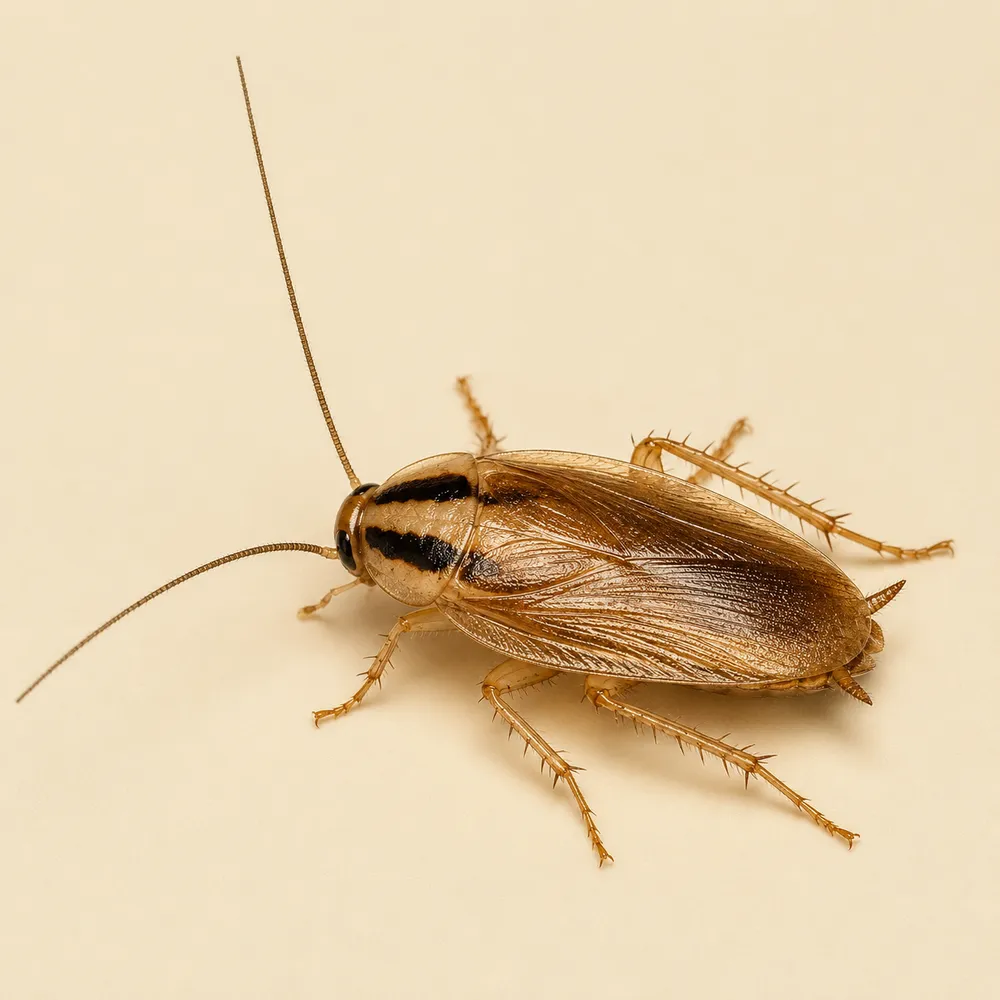
INDOOR BREEDER German cockroach
- Behavior
- The small tan roach with two dark stripes behind the head. It lives entirely indoors, breeds fastest of any roach, and concentrates near kitchen and bathroom warmth and water.
- What makes them tricky
- Decades of exposure taught German roaches to avoid many sprays. Gel bait where they harbor is what clears them, and finding every harborage takes a trained eye.
- How we approach them
-
- Gel bait placed at every harborage point
- Growth regulator to collapse the breeding cycle
- Follow-up until monitors read zero
THE INVADER American cockroach
- Behavior
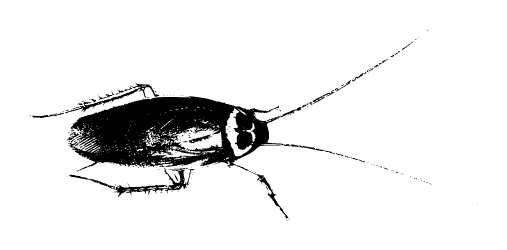
- The big reddish-brown roach Texans call a water bug. It lives in sewers, drains and mulch, pushing indoors through drain lines and door gaps when heat and rain drive it.
- What makes them tricky
- Killing the ones inside does nothing about the population outside. The fix is a treated perimeter, sealed entry routes and drain-line attention, not a can of spray.
- How we approach them
-
- Perimeter barrier on the Zero Gap System
- Drain-line and garage entry treatment
- Door gaps and weep holes sealed
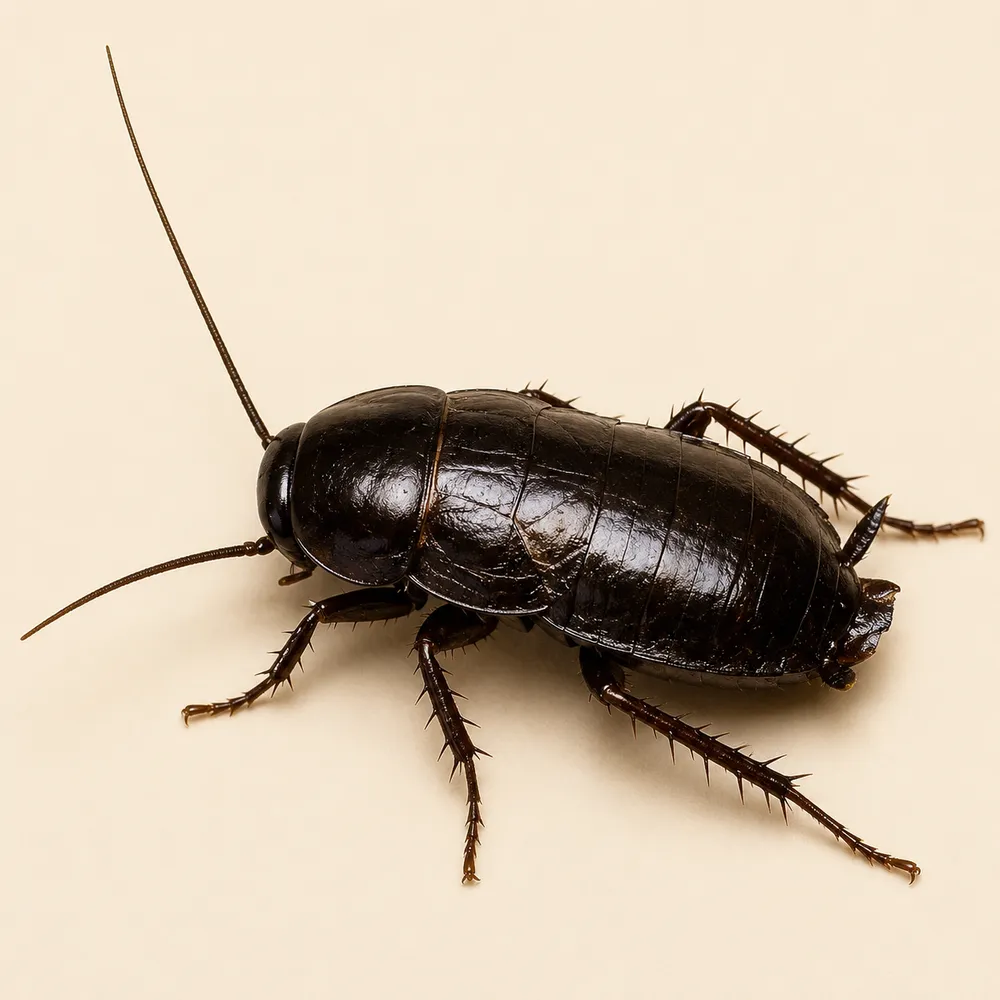
DAMP AREAS Oriental cockroach
- Behavior
- Glossy, nearly black, and slower than the others. Favors cool damp spaces such as crawl spaces, floor drains, water meter boxes and the soil line around the foundation.
- What makes them tricky
- Because it lives at ground level and below, you rarely see the population, only strays. Treatment has to reach the damp harborage areas, not just the kitchen.
- How we approach them
-
- Crawl space and drain harborage treated
- Moisture sources flagged for repair
- Ground-level entry routes closed
Signs of a German roach problem before you see roaches.
These signs belong to the German roach, the indoor breeder. Outdoor species announce themselves by showing up; the German announces itself like this. Early is cheaper.
Droppings and smear marks
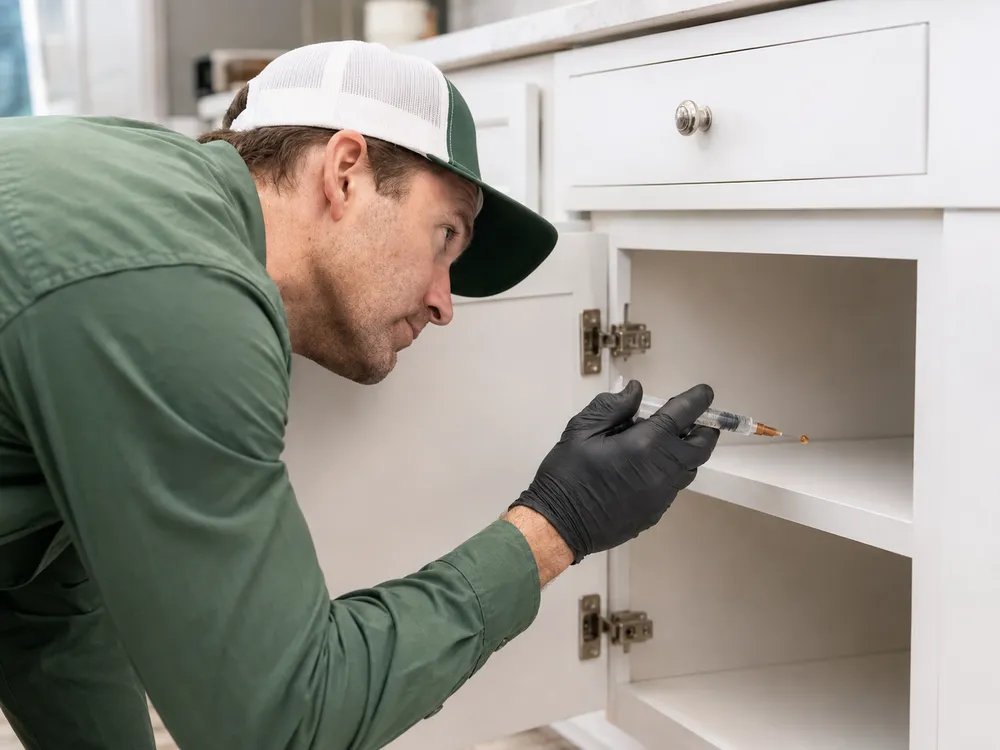
German roach droppings look like ground pepper collected in drawer corners and cabinet hinges. Larger roaches leave cylindrical droppings and dark smear marks along the runways they use every night.
Egg cases in hidden corners
A single purse-shaped egg case holds 16 to 48 eggs depending on the species. Finding empty cases glued under shelves or behind appliances means at least one full generation has already hatched.
A musty, oily odor
Established roach populations produce a distinct musty smell from the aggregation pheromone they use to gather. If a cabinet or pantry has developed an odor you can't place, take it seriously.
Roaches out in daylight
Roaches are strictly nocturnal when harborage is available. Seeing them in daylight means the hiding spots are full, which is the single clearest sign of a heavy infestation.
Spotted any of these? Get your exact price online in about 60 seconds, or call the office and we will take it from there. See my price →
We treat the harborage, not the sighting.
A can of spray moves roaches deeper into the walls. Our method puts the treatment where they actually live and cuts off the next generation at the same time.
Identify species
The species tells us where they live and what will kill them.
German, American, Oriental, smokybrown and brown-banded roaches live in different places and fail to different treatments. Five minutes of identification decides the whole plan.
Target harborage
Treatment goes where the species actually lives.
Treatment splits by species here. German roaches get gel bait in the cracks, hinges and voids where they spend the day, a German-specific tool. The outdoor species get a defended perimeter and treated entry routes. Foggers scatter roaches deeper into walls; placement wins.
Collapse or exclude
A growth regulator stops the nymphs that survive from ever breeding.
For German infestations, a growth regulator stops nymphs maturing into breeders, so the indoor population collapses instead of rebounding after each hatch; that breeding-cycle work is German-only. Outdoor species breed outside, so their job is exclusion and perimeter pressure.
Ready when you are. Real prices online in about 60 seconds, phones answered 24/7.
The big roaches come from outside. These are the doors.
The big roaches come in from outside through these doors. The German roach is the exception. It arrives from other infested interiors, a friend's house, a restaurant, a moving box, which is why sealing alone never solves a German problem.
- 01
Sewer and utility penetrations
The American roach's main road. Gaps where plumbing enters the slab connect your kitchen to the drain system. Packed and sealed.
- 02
Weep holes
Open weeps at mulch level are roach doors by design. Stainless screens keep the wall breathing and the roaches out.
- 03
Garage door bottom
The worn corner gap admits the nightly patrol; the garage's warmth and clutter do the rest.
- 04
Dryer vent
Warm, moist and directly connected to the laundry room when the flap sticks open.
- 05
HVAC penetrations
Oversized line-set holes behind the condenser lead straight into wall voids roaches travel.
- 06
Soffit gaps
Smoky-brown roaches enter high from trees and attics; the roofline check covers their route.
Forterra's roach process, step by step.
Four steps, no surprises. The price and any German surcharge are settled before the first visit, and the guarantee picks up everything after it.
- 01
Transparent quote
Home size and situation go in, the roach-job price comes out, about sixty seconds online. German infestations that need extra trips get their surcharge named up front, not discovered on an invoice.
- 02
First-visit inspection
Kitchen hinges, bathroom voids, the garage and the perimeter get the flashlight treatment on visit one. The technician maps harborage, moisture and entry routes before choosing tools.
- 03
Treat and bait
German roaches get gel bait at the harborage plus a growth regulator to stop the breeding cycle, tools we use for German infestations only. Other species get perimeter treatment and sealed entry routes so outdoor roaches stay outdoors.
- 04
Guaranteed results
Re-treatments between scheduled visits cost nothing, however many it takes. Behind them stands the money-back guarantee, which is easier to offer when the German protocol works the first time.
When roaches hit hardest in DFW.
German roaches breed indoors all year. The big American roaches surge into homes when summer heat and storms push them out of drains and mulch beds.
When to start: Any time of year. Coverage is year-round on the quarterly plan, so the right month to start is the one you are in; the first visit targets whatever the current season is sending.
Questions, answered plainly.
If you don't see yours, call (817) 665-6527 or text us, a human will answer.
Cleanliness helps but does not decide it. American and Oriental roaches live in sewers, drains and landscaping and come inside for water, especially in summer. German roaches usually arrive hidden in cardboard, grocery bags or secondhand appliances. A clean house slows an infestation down; it does not prevent one.
No, and they usually make things worse. Foggers put droplets on open surfaces while roaches wait it out deep in cracks and wall voids, and the repellent effect scatters them into new rooms. Gel bait placed at the harborage does the opposite. Roaches find it, feed and carry it back to the others.
They are a genuine health issue. Roaches walk through sewage and garbage and then over counters and food, spreading bacteria like salmonella. Their droppings and shed skins are also a major asthma and allergy trigger, especially for children. A roach problem is worth treating for reasons beyond the creep factor.
The small tan ones in the kitchen are German roaches, an indoor breeding infestation that grows until it is treated. The big reddish ones are American roaches, outdoor insects that push inside for water. The first needs baiting at the harborage; the second needs a defended perimeter. Both are covered by the plan.
Outdoor roach species ride the quarterly plan, $49 monthly at standard home size. A German cleanout is different work, where extra trips mean an initial-service surcharge, stated plainly in the quote before you book anything.
Size, number and location between them. One large insect turning up on its own beside a drain or under a garage door overnight has come in from outside. A group of smaller ones gathered where a kitchen is warm and damp means a population breeding indoors. Those are different problems and they want the work done in different places.
Because cleanliness governs how long one stays rather than how many arrive. An outdoor species walks in under a door regardless of what the counters look like, and an indoor population anchored to water in a void is not living on crumbs. Housekeeping helps a treatment work and does not replace one. A spotless kitchen and a leaking void can happily exist in the same house.
For an outdoor species, frequently. For an established indoor population, no, and anybody promising otherwise is ignoring the life cycle. Eggs already laid are protected from everything applied and hatch afterwards, so a follow-up timed to that emergence is what actually finishes it rather than an especially thorough first attempt. Booking the follow-up at the outset is what makes the difference between an end and a pause.
Cockroach Control, city by city.
City pages below carry the roach specifics for your area and name the office that answers the call.
Start at $49/mo.
Quote in 60 seconds.
No phone call. No credit card up front. See the real price for your home, pick a start date, and a technician will be at your door in about two business days.
- ✓Quarterly Zero Gap treatment
- ✓50+ pests covered
- ✓Free re-treats between visits
- ✓Licensed W-2 technicians, never subcontractors
- ✓Flexible contracts
- ✓Money-back guarantee