

Locally owned · Southlake · Dallas · AubreyView service area →★ 5.0 · 2,900+ reviews
★ 5.0 · 2,900+ Google reviews817-665-6527
★ 5.0 · 2,900+ Google reviews TPCL #850046
★ 5.0 · 2,900+ Google reviews · Go verify →

Ant Control in North Texas

Fire ant mounds in the lawn, sugar ants on the counter, carpenter ants trailing the crape myrtle. Our ant control covers North Texas homes with species-first treatment. We find the colony, kill it, and seal the routes behind it.

Starting at
$49/mo
Serviced quarterly, billed monthly · Typical DFW home ( under 3,000 sft) · Flexible contract
Free quote · Flexible contract · 100% money-back guarantee · 60 seconds online
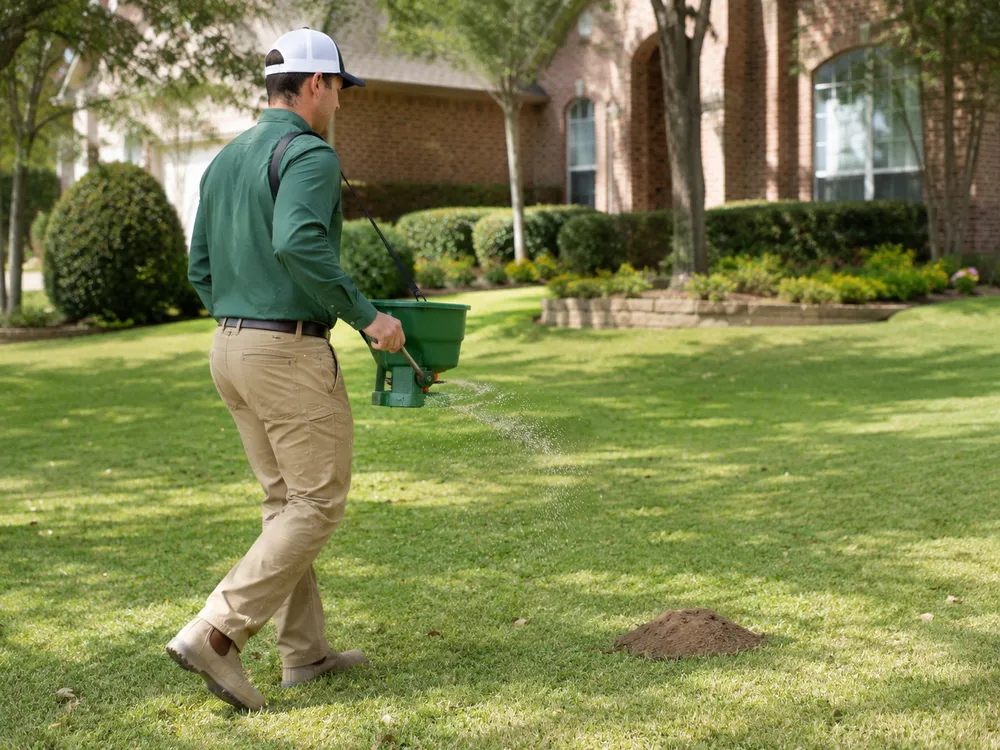
Fire ant bait treatment in progress, Forterra Pest Control
◉ Ant Control · DFW
Fire ant bait treatment
in progress
Granular broadcast
Overview What is Forterra's ant control service?

Forterra Ant Control is species-first ant treatment for Dallas–Fort Worth, covered by the quarterly plan from $49/month. The technician identifies the ant before treating. Colonies are treated directly when they can be located, and otherwise with baits and non-repellent sprays the workers carry home, the only approach that kills a colony instead of scattering it. Fire ant yards get broadcast granular baiting; entry gaps are sealed under the Zero Gap System™. Backed by the money-back guarantee, licensed under TPCL #850046.

Reviews

2,900+ five-star reviews.
All public. All verifiable.

Read all our reviews on Google →
Service area

Ant control from three DFW offices.

Fire ant season does not care which county you live in. Southlake, Dallas and Aubrey crews run the same species-first ant playbook on their own routes.

Forterra Pest Control service truck in DFW
ON THE ROAD
You'll spot our trucks across DFW, branded and driven by our own licensed W-2 technicians. All of our trucks have cameras and GPS devices installed because we take careful driving as seriously as we take pests.

HQ Southlake

Forterra Pest Control
935 S Kimball Ave Ste. 162
Southlake, TX 76092

817-665-6527
Serving: Southlake, Grapevine, Colleyville, Keller, Trophy Club, Westlake, Roanoke, Fort Worth, Arlington, Mansfield, North Richland Hills, Watauga, and more
Pest control in Southlake, TX →

2 Dallas

Forterra Pest Control
8300 Douglas Ave Ste. 800 - #802
Dallas, TX 75225

972-349-1621
Serving: Dallas, Highland Park, University Park, Preston Hollow, Lakewood, Richardson, Plano, Sunnyvale, Forney, Addison, and more
Pest control in Dallas, TX →

3 Aubrey

Forterra Pest Control
9053 Ike Byrom Rd Ste 2C
Aubrey, TX 76227

817-670-2835
Serving: Aubrey, Prosper, Frisco, Celina, Little Elm, Providence Village, Cross Roads, Flower Mound, Lewisville, Justin, Highland Village, Denton and more
Pest control in Aubrey, TX →
Know what you're seeing

Signs you have an ant problem, not just ants.

A few scouts on the patio is Texas. These four patterns mean a colony has decided your house is a resource.

01

Steady trails

A defined line of ants moving both directions between one entry point and a food source. Trails mean an established pheromone route, and the colony behind it will keep using it until the colony is treated, not just the trail.

Look here Kitchens · pet bowls · pantry walls
02

Mounds after rain

Fire ant mounds appear in lawns within a day or two of heavy rain, often near walkways and play areas. No visible opening on top is the tell, entry is underground from the sides.

Look here Lawns · fence lines · sidewalk edges
03

Winged swarmers indoors

Flying ants inside the house, especially near windows, can mean a mature colony is splitting, and if the wings are uneven in length it may be carpenter ants nesting in the structure.

Look here Window sills · light fixtures
04

Fine sawdust piles

Carpenter ants do not eat wood, they carry it out. Small cone-shaped piles of coarse sawdust under trim, sills or deck joists mean excavation is under way above.

Look here Window frames · decks · eaves

Spotted any of these? Get your exact price online in about 60 seconds, or call the office and we will take it from there. See my price →

DFW's big three

Which ant you have changes the treatment.

Spraying the wrong species makes some infestations worse. Identification comes first on every ant job.

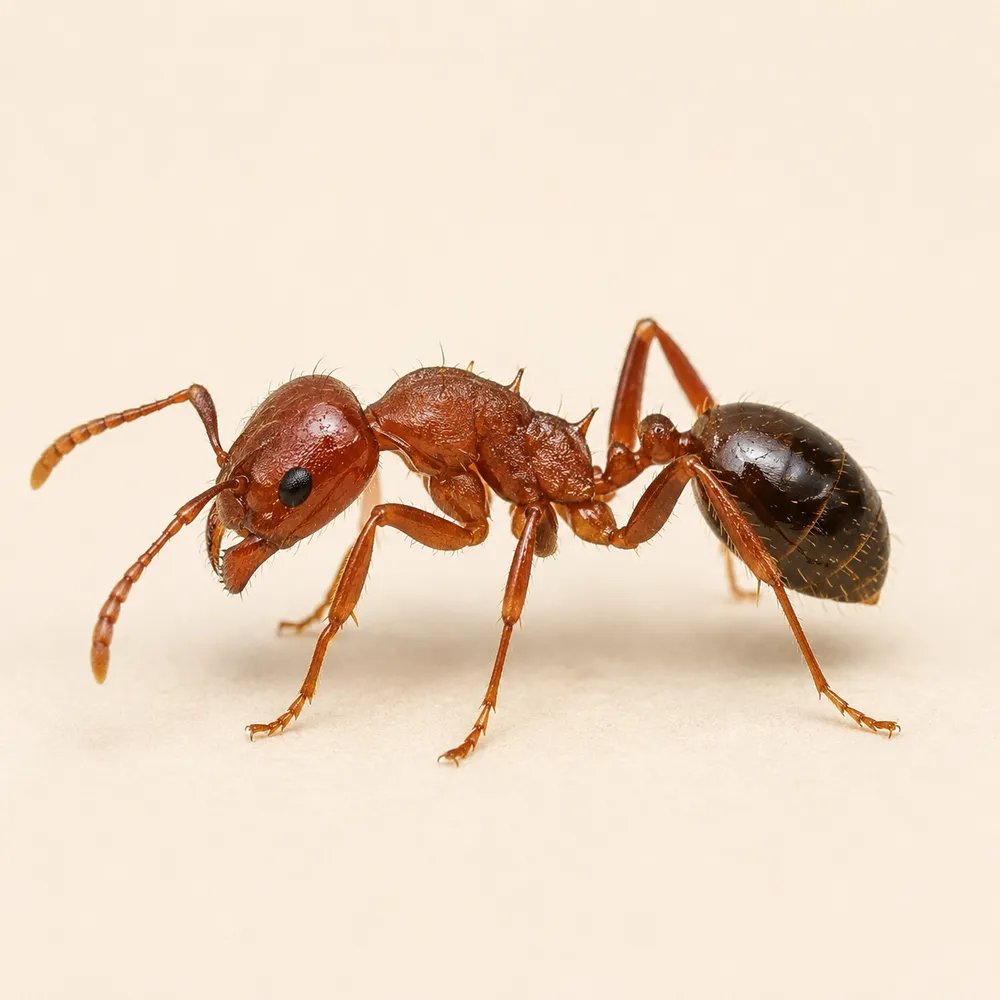
Red imported fire ant close-up STINGS

Red imported fire ant

1/8 to 1/4 in
Behavior
Ground-nesting, aggressive, swarms when the mound is disturbed. Stings raise white pustules and the venom can cause serious reactions in sensitive people.
What makes them tricky
Mound-drenching one nest just moves the colony. Broadcast baiting the whole yard is what actually clears them.
How we approach them
  • Broadcast baiting across the whole yard
  • Mounds near play areas treated first
  • Re-baiting rides the spring and fall visits
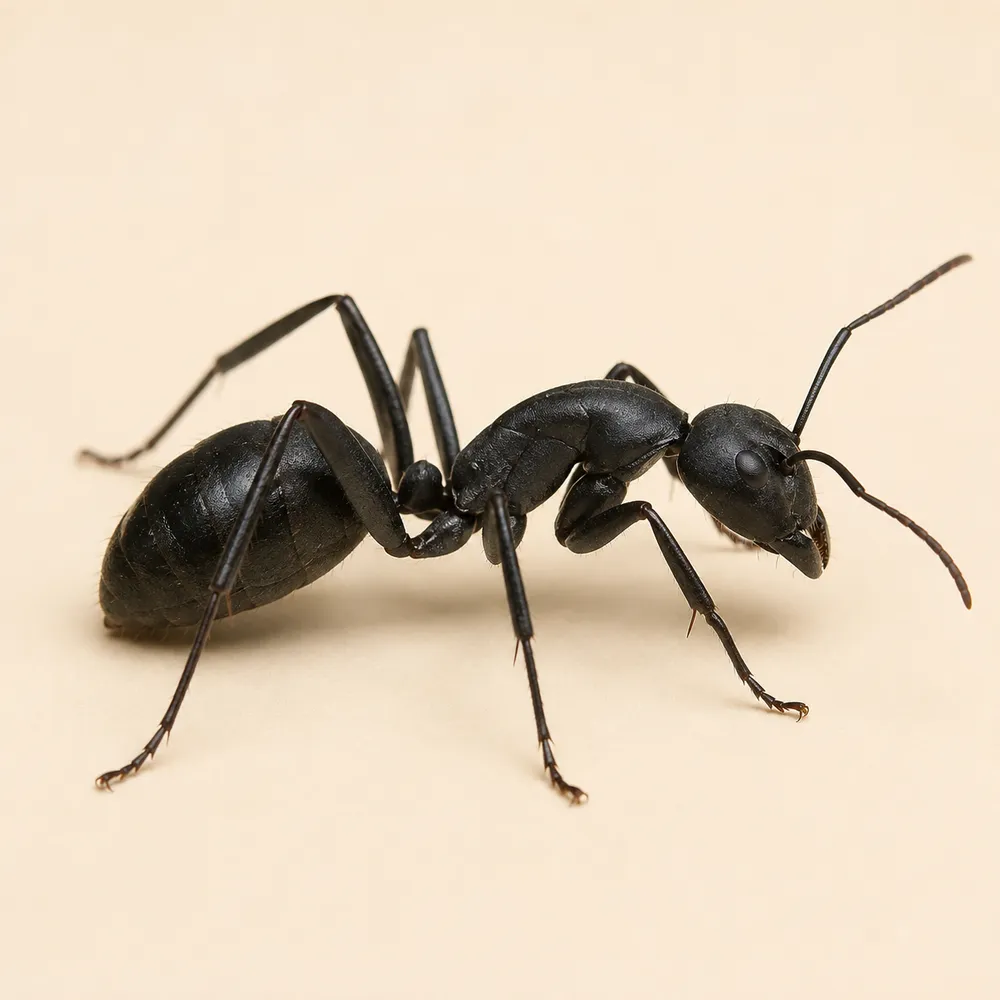
Carpenter ant close-up STRUCTURAL

Carpenter ant

1/4 to 1/2 in
Behavior
Texas's biggest ant. Does not eat wood but excavates it for nesting, favouring moisture-damaged wood around windows, decks and rooflines.
What makes them tricky
The nest is inside the structure, so surface sprays never reach it. Finding the moisture source is half the treatment.
How we approach them
  • Wet-wood inspection finds the nest
  • Non-repellent treatment reaches the galleries
  • Moisture fixes listed in writing
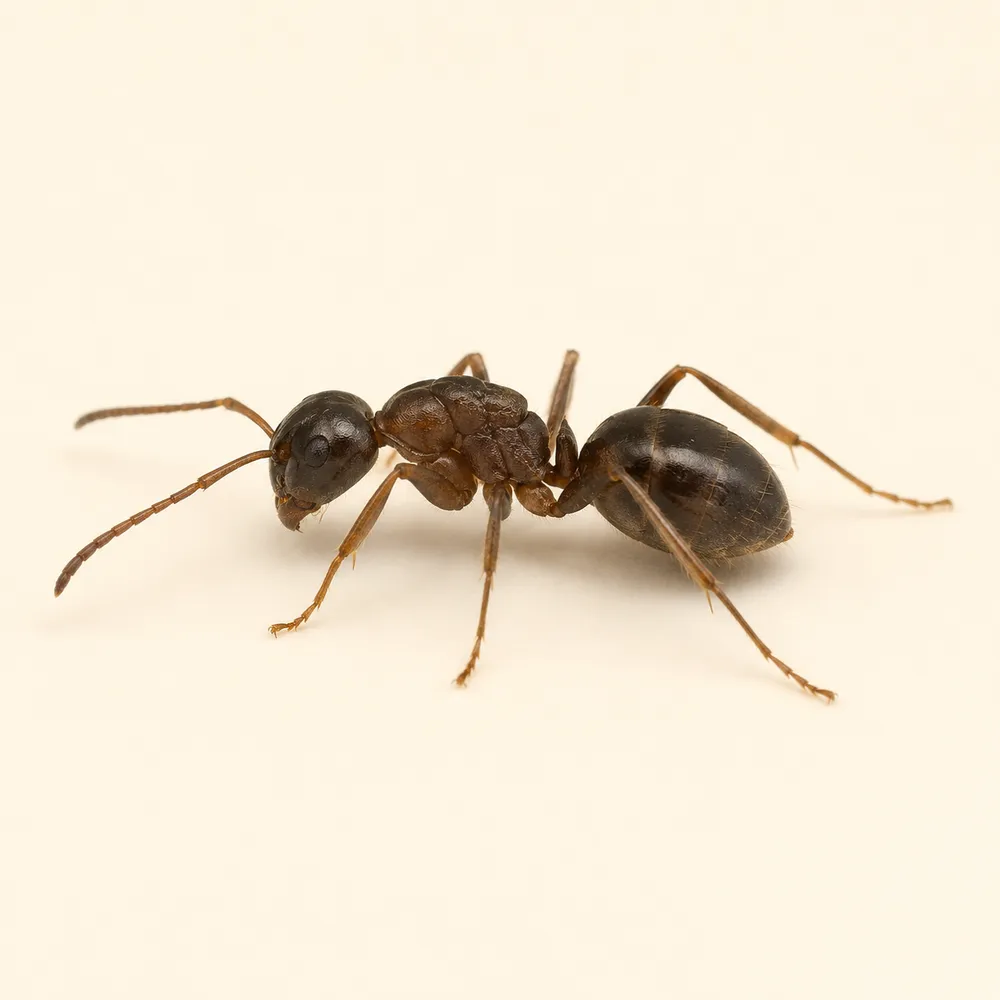
Odorous house ant close-up KITCHEN

Odorous house ant

1/16 to 1/8 in
Behavior
The little brown 'sugar ant' on the counter. Crushed, it smells like rotten coconut. Colonies have many queens and split under stress.
What makes them tricky
Repellent sprays fracture the colony into several new ones, a problem called budding. Baits and non-repellent sprays are the only clean kill.
How we approach them
  • Baits and non-repellent sprays, never repellents
  • Trail-to-nest tracing indoors
  • Entry cracks sealed after the kill
Why baiting beats spraying

We treat the colony, not the trail.

Spray the trail and the colony reroutes overnight. Ant control that lasts kills the queen, and everything in our method is built backward from that fact.

Stage 01
01

Identify species

Fire ant, carpenter ant and sugar ant fail to different treatments.

Fire ant, carpenter ant and odorous house ant each fail differently. Five minutes of identification decides the whole treatment plan.

Stage 02
02

Bait colonies

Workers carry the bait home and feed it to the queen for us.

When the nest can be found, we treat the colony directly. When it cannot, baits and non-repellent sprays go where the trails are, and the workers carry the product home to the queen and brood, slower, but it is how a colony actually dies.

Stage 03
03

Seal routes

The routes get sealed and the quarterly barrier keeps pressure outside.

Ants enter through gaps a credit card can't fit. The Zero Gap perimeter treatment closes the routes, and quarterly visits keep the pressure outside.

Ready when you are. Real prices online in about 60 seconds, phones answered 24/7.

Your yard, from above

Where the ant battle actually happens, zone by zone.

These are the six zones every ant treatment works, and what each one contributes to the colony you see in the kitchen.

PROPERTY LINE HOUSE DECK GARAGE FENCE-LINE BEDS open lawn 1 2 3 4 5 6
Aerial view of a typical DFW yard. Numbers match the list.
  1. 01

    Foundation band

    The perimeter line where trails cross into the house. The Zero Gap band here is what separates yard ants from kitchen ants.

  2. 02

    Fence-line beds

    Fire ant mounds pop up in the open lawn, not along cover. Single mounds get individual treatment; a yard that keeps producing them gets broadcast granular bait across the whole lawn.

  3. 03

    Shaded beds

    Moist mulch under trees hosts odorous house ant colonies, the 'sugar ants' that split when sprayed.

  4. 04

    Under the deck

    Protected soil that never gets raked, a favorite nesting void for multiple colonies at once.

  5. 05

    Garage corner

    Sweet spills and pet food make the garage the ants' first indoor stop. targeted spray work live here.

  6. 06

    Garden beds

    Trees are nests too. Carpenter ants love crape myrtles, and ants trailing one near the house almost always means a colony in it. Beds and trunks get checked together.

The ant visit

Forterra's ant process, step by step.

Price first, species second, treatment third. The whole ant process runs in that order so the number never changes after the work starts.

  1. 01

    Transparent quote

    Answer a few questions about the home online and the exact ant-service price is on screen in about a minute, or call the office and hear the same number. Nothing is scheduled until you have it in writing.

    Online or by phone
  2. 02

    Identify on the first visit

    The technician confirms which ant you actually have, where the colony lives, and customizes the treatment to it, direct colony treatment when it can be found, baits and non-repellent sprays carried home when it cannot.

    Species decides the plan
  3. 03

    Treat yard and home

    Broadcast baiting for fire ants, targeted baits and non-repellent sprays indoors, and perimeter treatment on the Zero Gap System.

    Most homes, one visit
  4. 04

    Guaranteed results

    If ants show up between visits, the re-service is free. The plan carries Forterra's money-back guarantee, so the risk of trying us stays on our side of the invoice.

    Re-service free · refund promise
DFW ant pressure

When ants hit hardest in North Texas.

Ants never fully stop in Texas, but pressure follows rain and warmth. Fire ant mounds spike days after a spring storm.

CoverageYear-round quarterly planFire ant baiting rides the spring and fall visits
Jan
Low
Colonies deep in the soil, activity minimal.
Feb
Low
Indoor sightings possible near warmth and water.
Mar
Building
First warm rains wake the colonies.
Apr
Active
Mounds appear after storms. Baiting season starts.
May
Peak
Peak foraging and swarming. Trails reach kitchens.
Jun
Peak
Full pressure, fire ants at their most aggressive.
Jul
Heat-driven
Colonies chase water indoors during dry spells.
Aug
Heat-driven
Kitchen and bathroom trails, drawn to moisture.
Sep
Second peak
Fall rains restart mound building.
Oct
Active
Last strong foraging month of the year.
Nov
Declining
Cold fronts push activity down.
Dec
Low
Quiet outdoors; established indoor colonies persist.
Lower pressure · coverage continues
Covered by the year-round quarterly plan
Peak pressure

When to start: Any time of year. Coverage is year-round on the quarterly plan, so the right month to start is the one you are in; the first visit targets whatever the current season is sending.

Frequently asked

Questions, answered plainly.

If you don't see yours, call (817) 665-6527 or text us, a human will answer.

Store sprays kill the workers you see and warn the colony, and species like the odorous house ant respond by splitting into multiple colonies. The queens never contact the spray, so the colony rebuilds within days. Baiting works in reverse, because the workers you see carry the treatment to the queens for you.

For most people they are painful and produce white pustules. For sensitive people, fire ant venom can cause serious allergic reactions that need medical attention. If a mound is near a play area or a pet run, treat it as a priority, and do not disturb it in the meantime.

Carpenter ants have pinched waists, elbowed antennae, and wings about the length of their body or shorter; termite swarmers are straight-waisted with equal wings clearly longer than the body, up to twice its length. Coarse sawdust piles point to carpenter ants, mud tubes point to termites. Both deserve a same-week inspection, and ours is free.

Yes. Baits are placed in inaccessible spots and use tiny amounts of active ingredient targeted at ant biology, and the perimeter treatment is applied dry-to-touch. We will tell you exactly what went where after every visit.

The quarterly General Pest plan covers ant treatment at $49 a month on a typical home. Severe fire ant yards or carpenter ant structural work get an itemized number of their own first, by phone or online, so nothing starts without a price you have seen.

Near you

Ant Control, city by city.

The ant treatment reads the same in every city below; the office running it and the drive time are what change.

Ready when you are

Start at $49/mo.
Quote in 60 seconds.

No phone call. No credit card up front. See the real price for your home, pick a start date, and a technician will be at your door in about two business days.

TX LicensedTPCL #850046
5.0 ★ · 2,900+ reviewsGoogle verified
100% money-backForterra Guarantee
BBB A+Rated
Starting at $49/mo
  • Quarterly Zero Gap treatment
  • 50+ pests covered
  • Free re-treats between visits
  • Licensed W-2 technicians, never subcontractors
  • Flexible contracts
  • Money-back guarantee
See my price →
Typical DFW home, 2,000–3,000 sq ft. Your price may vary.
Call Get my free quote · 60 sec Get my (free) online quote