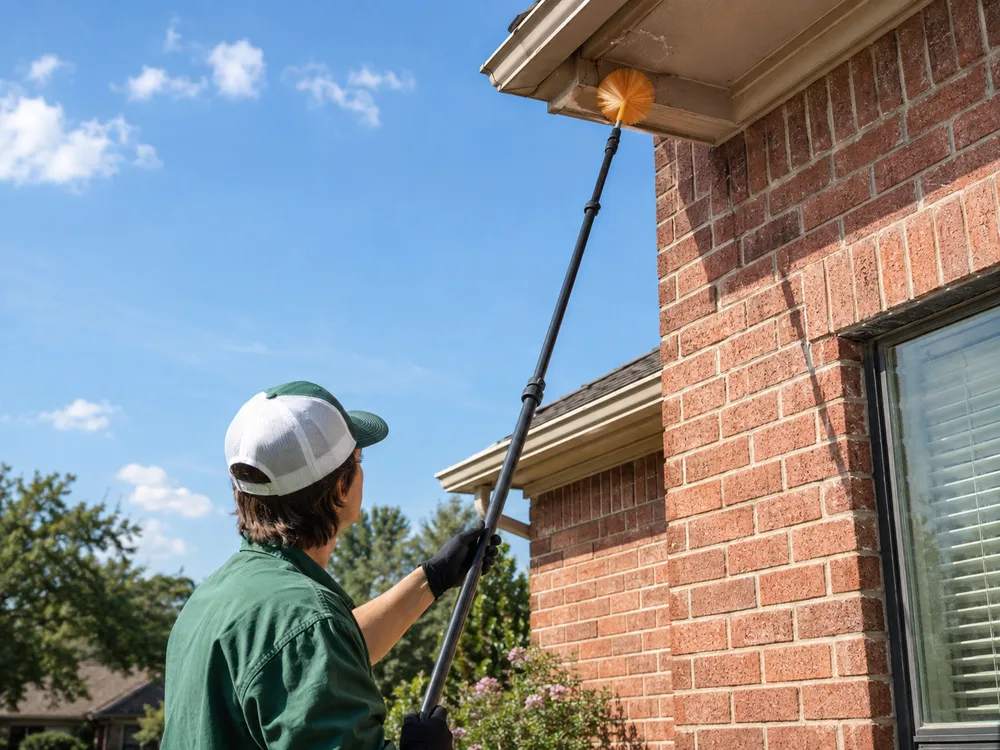

"Thank you for coming out to service my home! You did a great job clearing all the spider webs!"
Spider Control in North Texas
Spiders set up where their food already lives. Our spider control treats North Texas homes at the source. We de-web eaves and corners, knock down the insect supply, and keep both suppressed on a recurring schedule.
in progress
Forterra Spider Control is part of the quarterly plan from $49/month, with de-webbing on every visit, treatment of the corners and voids spiders hold, and control of the prey insects that feed them. Black widow and brown recluse harborage gets targeted work under the same plan, with no infestation surcharge on any of it. Because spiders follow their food, the recurring schedule matters more than any single visit. Knock down the insect supply and the spiders thin with it. Money-back guarantee, licensed under TPCL #850046.
2,900+ five-star reviews.
All public. All verifiable.
"Excellent service. I am very pleased with the job , I have not seen one bug or spider. I had quite a few inactive wasps nest, knocked them all down and cleaned up the nest so my dogs did get into them."
"Cody did an excellent job and was very thorough in getting rid of spider webs and wasps nests around my property in addition to treating the interior of my house! Highly recommend!"
"Miles, from Forterra, did our quarterly Pest Control today. I was very impressed. He did a very thorough job inside and outside my home. He even got rid of spider webs and wasp nests and things that were hanging outside on my house, that I hadn't even seen before. He was very knowledgeable and professional. I highly recommend Forterra pest control."
"Ellis did a thorough job of spraying for ants and dusting away the webs. I am happy with the convenience and services provided. Thank you!"
"It’s nice to set out in the breezes and not be attacked by mosquitoes and spiders. Chad’s work is thorough inside and out."
Spider service where you live.
De-webbing poles ride every truck in Southlake, Dallas and Aubrey. The recurring schedule holds across all six counties, corner by corner.
HQ Southlake
Forterra Pest Control
935 S Kimball Ave Ste. 162
Southlake, TX 76092
2 Dallas
Forterra Pest Control
8300 Douglas Ave Ste. 800 - #802
Dallas, TX 75225
3 Aubrey
Forterra Pest Control
9053 Ike Byrom Rd Ste 2C
Aubrey, TX 76227
Signs spiders have settled in, not just wandered in.
A single spider is a visitor. These four patterns mean your home is producing enough insect prey to support a resident population.
Webs in low corners
Tangled, messy webs close to the floor, in garage corners, water meter boxes and under patio furniture, are widow territory. Orderly webs up high are harmless orb weavers. Where the web sits tells you who built it.
Egg sacs
A papery cream or tan sphere tucked into a web or corner can hold hundreds of eggs. One overlooked sac is how a spider sighting becomes a spider problem a month later.
Plenty of insect prey
Spiders settle where the hunting is good. If crickets, flies or roaches are getting in, spiders follow them in. A spider population is usually a symptom of a wider insect problem.
Spiders in storage and closets
Recluses favor exactly what the name says, undisturbed boxes, stored clothes and closet clutter. Most bites happen when someone reaches into storage that has sat untouched for months.
Spotted any of these? Get your exact price online in about 60 seconds, or call the office and we will take it from there. See my price →
Two DFW spiders are actually dangerous.
Most Texas spiders are harmless insect hunters. Identification matters because two locals are not, and both like the quiet corners of your home.
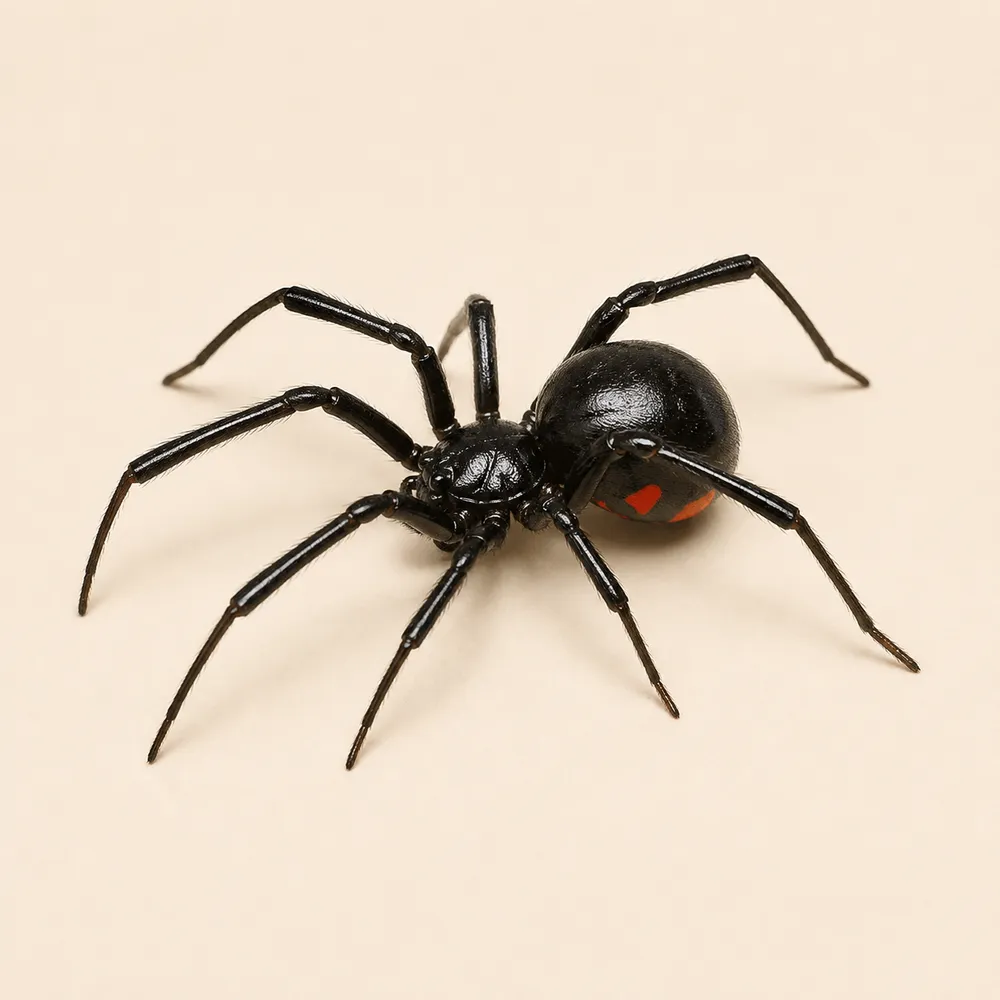
DANGEROUS Black widow
- Behavior
- Glossy black with the red hourglass underneath. Builds strong, messy webs in low, sheltered spots like garages, meter boxes, grills and under outdoor furniture. Shy, but defends the web.
- What makes them tricky
- Widow venom is a neurotoxin; a bite is a medical event. She rarely leaves her web, so control means finding and removing every web site, not spot-spraying.
- How we approach them
-
- Every web site found and physically removed
- Targeted treatment in low, sheltered corners
- Meter boxes and grills checked each visit
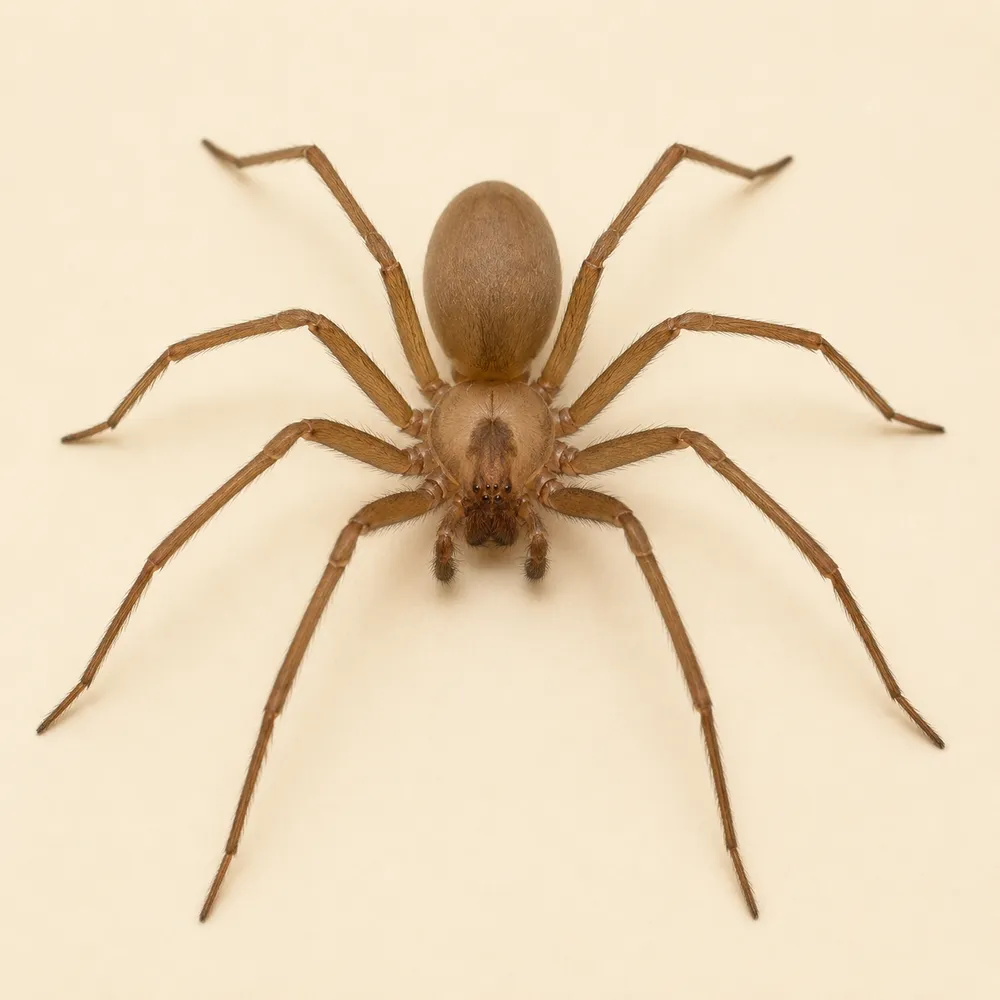
DANGEROUS Brown recluse
- Behavior
- Uniform tan-brown with a violin shape behind the head and six eyes rather than eight. Hunts at night and hides by day in storage boxes, stored clothing and undisturbed closets.
- What makes them tricky
- Recluse bites can kill tissue and heal slowly. They avoid webs and open space, so treatment goes at harborage, cracks, voids and cluttered storage.
- How we approach them
-
- Crack-and-crevice work in closets and storage
- Glue monitors to confirm the cleanout
- Sealed-bin storage guidance for keepsakes
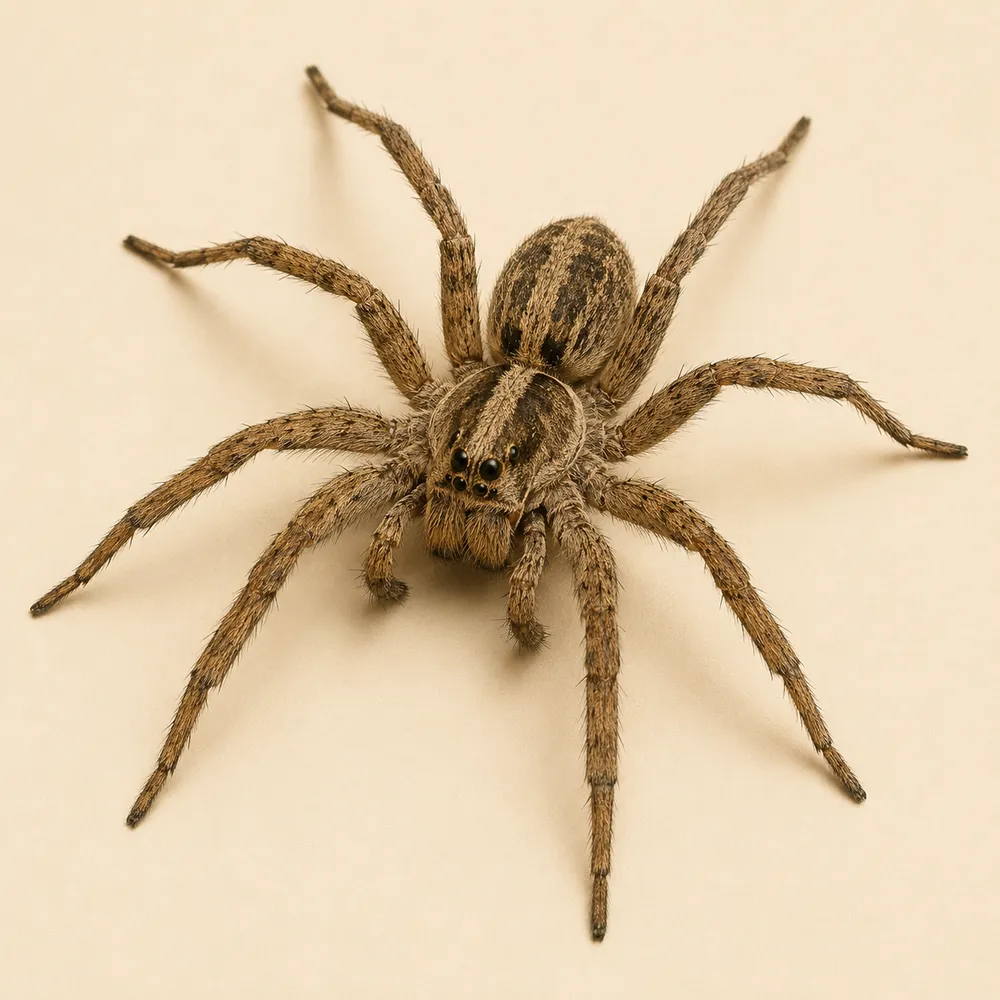
HARMLESS Wolf spider
- Behavior
- The big, fast, hairy spider that darts across the floor and makes people call us. Chases prey on foot instead of building webs, and wanders indoors hunting insects.
- What makes them tricky
- It looks alarming but is not medically significant. A wolf spider indoors is really a sign of insect prey indoors, which is the thing worth treating.
- How we approach them
-
- Prey-insect control removes the food draw
- Door sweeps close the ground-level routes
- No panic treatment, ID first, always
Control the insects, the spiders follow.
Spiders are in your house because their food is. Treat the spider and you get a week of relief; treat the hunting grounds and they stop showing up.
Starve them
No prey insects, no reason for spiders to stay.
Spiders live where they can hunt. The quarterly general pest treatment removes the crickets, flies and roaches they feed on, which is the only spider control that lasts.
Clear webs
Every web and egg sac comes down on every visit.
Every service includes sweeping webs and egg sacs from eaves, corners and covered areas. Each removed sac is hundreds of spiders that never hatch, and a rebuilt web tells the technician exactly where to treat.
Treat corners
Widow and recluse harborage gets targeted, not surface-sprayed.
Targeted treatment goes into the low, dark places widows and recluses actually use, weep holes, garage corners, storage areas and voids, backed by Zero Gap exclusion at the entry points.
Ready when you are. Real prices online in about 60 seconds, phones answered 24/7.
The web line around your house, point by point.
Spiders build where structure meets shelter and the porch light delivers dinner. The de-web pass follows this exact route every visit.
- 01
Eaves and soffits
The de-web pass starts here, where orb weavers rebuild on the overhang nightly in season.
- 02
Porch light
This is the buffet. Light draws prey insects, and spiders anchor webs around the glow.
- 03
Window frames
Corner webs and egg sacs tuck into frame joints; swept and treated each visit.
- 04
Weep holes and brick base
Widow territory, low, dark and sheltered. The brick line gets the targeted treatment.
- 05
Deck rails and undersides
Web anchors under rails hold widows at hand height; checked on every pass.
- 06
Gable vent
Attic access for cobweb spiders; screening keeps the void from becoming a colony.
Forterra's spider process, step by step.
From quote to quiet corners in four steps, with identification doing the heavy lifting early so the treatment fits the spider you actually have.
- 01
Transparent quote
The price is public. Run the online quote in about a minute or take two on the phone. What you see is what the spider service costs, written down before any visit lands on the calendar.
- 02
First-visit inspection
Visit one covers the garage, eaves, weep holes, storage and yard. Species matters here, since a widow corner and a recluse closet call for different handling, so identification comes before treatment.
- 03
De-web, treat, repeat
Webs and egg sacs come down, harborage areas get treated, entry gaps get closed, and the prey insects that attracted the spiders get handled in the same visit.
- 04
Guaranteed results
Webs rebuilt or spiders spotted again means a free return visit. The money-back guarantee sits under the whole plan, and recurring service is what keeps it rarely needed.
Questions, answered plainly.
If you don't see yours, call (817) 665-6527 or text us, a human will answer.
Two, the black widow and the brown recluse. A widow bite is a neurotoxin event with severe pain and illness; a recluse bite can kill tissue around the wound. Both warrant medical attention. Everything else you are likely to meet here, wolf spiders included, is essentially harmless to people.
Look for three things. A uniform tan-brown body with no stripes or patterns, a dark violin shape on the back just behind the head, and size under an inch. Recluses also hide in undisturbed storage rather than sitting in webs. If you find one in a closet or box, assume there are more and have it inspected.
Yes. De-webbing of eaves and covered areas happens on every quarterly visit, egg sacs included. When an inspection turns up a widow or recluse harborage, that spot gets targeted treatment under the same plan, no add-on charge.
Spider work comes standard with quarterly service, from $49 a month, and every visit includes de-webbing. No infestation surcharges exist on this page. The number quoted online or by phone is the number billed.
Spider Control, city by city.
Spider pressure differs street to street; the city pages show what your local office sees most.
Start at $49/mo.
Quote in 60 seconds.
No phone call. No credit card up front. See the real price for your home, pick a start date, and a technician will be at your door in about two business days.
- ✓Quarterly Zero Gap treatment
- ✓50+ pests covered
- ✓Free re-treats between visits
- ✓Licensed W-2 technicians, never subcontractors
- ✓Flexible contracts
- ✓Money-back guarantee