
Mice Exterminator in DFW
Closing every gap wider than a dime comes first, which makes the mice inside a finite number to trap. As your mice exterminator in DFW, we then maintain bait boxes outside each quarter so new arrivals meet them first.
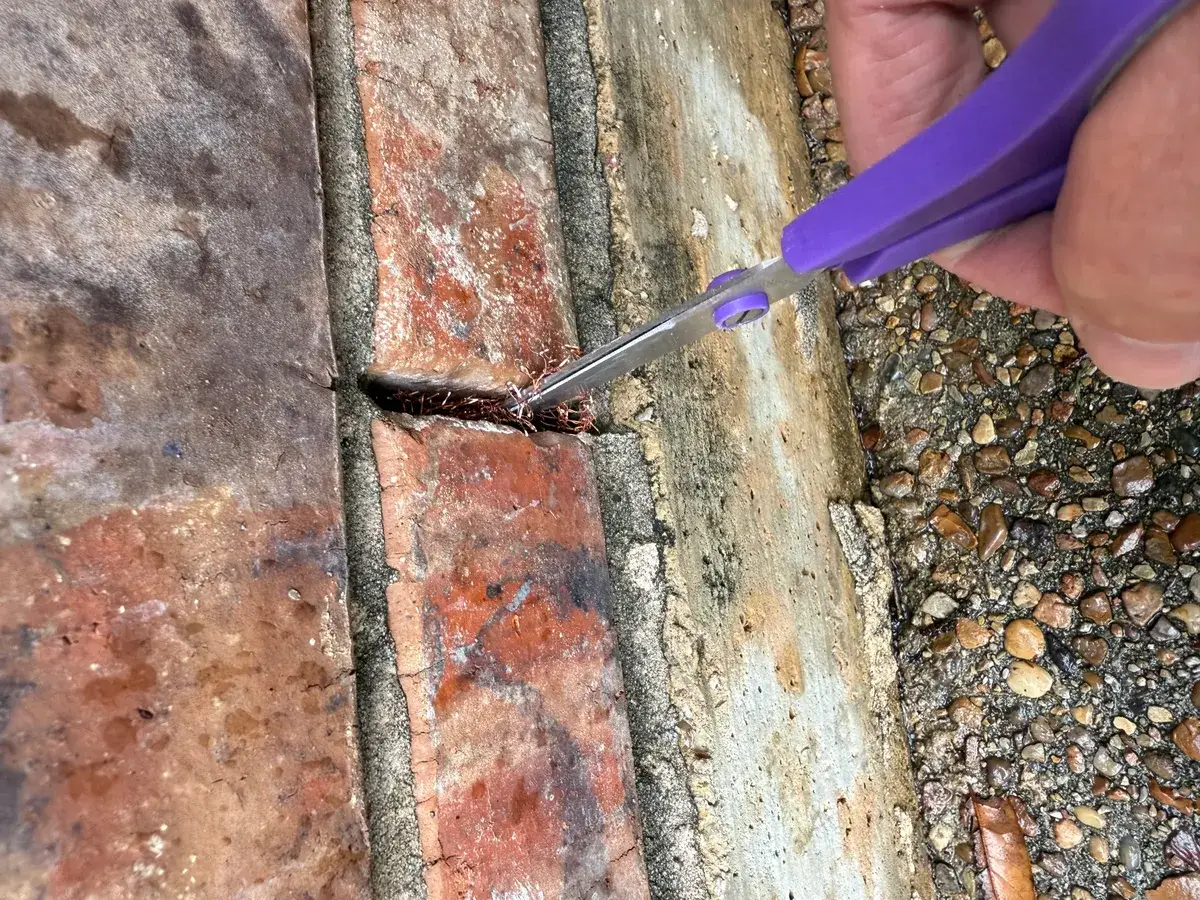
in progress
Why choose Forterra for mice
Mice breed continuously once established indoors, so the number you see bears no relation to the number present. A litter reaches breeding age in about six weeks, which means the timing of the follow-up decides whether the population falls or recovers. Forterra returns on that biological schedule and closes the entry with the Zero Gap System™. Licensed TPCL #850046. Interior rodent issues get a free inspection.
3,000+ five-star reviews.
All public. All verifiable.
"Courteous, professional service!"
"Gabrael treated my home for pests. I have not seen any bugs at all. Thank you, Gabrael!"
"Raul did an excellent job"
"Bronson did a very thorough job!"
"Raul did an excellent job. He was on time and courteous, answered all my questions and performed my service efficiently."
"Casey is always very polite and kind. He does a great job and is very knowledgeable. I give him an A+!!"
Mouse control near your kitchen.
Dime-sized gaps are a short-drive problem, so local technicians from three offices handle mice control, sealing and quarterly bait-box upkeep close to home.

HQ Southlake
Forterra Pest Control
Pest control service in Southlake, Texas
935 S Kimball Ave Ste. 162
Southlake, TX 76092
2 Dallas
Forterra Pest Control
Pest control service in Dallas, Texas
8300 Douglas Ave Ste. 800 - #802
Dallas, TX 75225
3 Aubrey
Forterra Pest Control
Pest control service in Aubrey, Texas
9053 Ike Byrom Rd Ste 2C
Aubrey, TX 76227
Signs of mice before you ever see one.
A house mouse weighs less than an ounce and works at night, so evidence arrives long before a sighting. Any of these signs means more than one mouse.
Rice-sized droppings

Mouse droppings are dark, pointed and the size of a grain of rice, concentrated where they feed and travel, pantry shelves, drawer corners, under the sink. Fresh droppings are dark and soft; faded ones mean history. Rat droppings are several times larger.
Scratching in the walls at night

Light scratching, gnawing or skittering inside walls or the ceiling in the evening hours is mice commuting between the nest and food. The sound is fainter and faster than a rat's, and it usually starts within an hour of the lights going out.
Chewed food packaging

Small ragged holes gnawed in the corners of cereal boxes, rice bags and pet food sacks, with crumbs and shavings left behind. A mouse feeds fifteen to twenty times a night, so it works close to the pantry, and it contaminates everything it touches.
Nests of shredded material

A softball-sized wad of shredded paper, fabric and insulation tucked in a drawer, behind an appliance or in a garage box is a mouse nursery. With up to ten litters a year, one occupied nest is an infestation on a schedule.
Spotted any of these? Get your exact price online in about 60 seconds, or call the office and we will take it from there. See my price →
Every dime-sized gap, found and sealed.
Mice squeeze through openings the width of a dime and climb brick without effort, so a home that looks sealed rarely is. These are the nine routes we check on every DFW house, sealed with materials mice cannot chew.
- 01
Roof / ridge vents
Mice ride fence lines and shrubs to the roof, then slip under ridge vents with worn flashing. We seal them from underneath.
- 02
Gable & attic vents
Standard vent screening stops birds, not mice, so we re-screen at a gauge they cannot pass or chew.
- 03
Soffit / fascia gaps
Where the roof meets the wall, framing gaps open with age. A dime-sized opening is a mouse door, and we close each one we find.
- 04
Roofline / dormer junctions
Dormer, valley and chimney flashing joints leave finger-width gaps into the attic, where the nesting insulation is.
- 05
HVAC penetrations
Refrigerant lines and condensate drains pass through oversized holes in the wall, and we close the gap around each line.
- 06
Dryer vent
Plastic vent flaps warp and stick open, and mice chew the rest, so we replace the vent or reinforce it with a working damper.
- 07
Garage door bottom
A worn weatherstrip corner leaves exactly the gap a mouse needs, and the garage's clutter and pet food do the rest. Replaced with a rodent-resistant seal.
- 08
Foundation cracks / weep holes
Brick weep holes are mouse-sized by design. Open weeps get screens that keep mice out and let the wall breathe.
- 09
Sewer / utility penetrations
Where plumbing and conduit enter the foundation, builders leave the largest gaps on the house, and we close them properly.
Ready when you are. Real prices online in about 60 seconds, phones answered 24/7.
Close the house, then remove the mice.
Mice re-enter faster than any trap can clear them, so mouse control starts with exclusion, then mouse traps on the runs, and a house that stays closed.
Seal gaps
We close the house first, every dime-sized gap.
We close every entry point from the inspection with chew-proof materials matched to each gap. Sealing first turns an open-ended problem into a finite one. Whatever is still inside is all there will ever be.
Trap inside
Traps then clear whatever the sealing shut inside.
With the routes closed, trapping clears the remaining mice quickly, on the runs they actually use. Most homes go quiet within a week or two of the seal.
Maintain outside
Exterior bait boxes keep the population down.
Tamper-resistant bait boxes on the exterior knock down the surrounding population before it finds the next gap, renewed on the quarterly rotation.
"A mouse needs a dime of space and a warm wall, that is the whole entry ticket. We take the ticket away. Sealing done right turns trapping into a short cleanup instead of a subscription you pay forever."
Forterra's mouse process, step by step.
The free interior inspection opens every mouse control job; the written price follows the same day, and the sealing work leads the plan.
- 01
Free interior inspection
Kitchen, garage, attic and the full perimeter. We confirm mice rather than rats from the droppings, map the active runs and find every entry point.
- 02
Transparent quote
You get the trap plan, the sealing scope and a firm number in writing the same day as the inspection, with trapping and sealing priced as separate lines.
- 03
Seal and trap
We seal the entry points first, then traps clear whatever the sealing shut inside. The order matters. Sealed first means a finite number of mice to remove.
- 04
Quarterly bait-box upkeep
Outside, bait boxes hold the surrounding pressure down, serviced as part of each quarterly visit so the sealing never gets stress-tested.
Questions, answered plainly.
If you don't see yours, call (817) 665-6527 or text us, a human will answer.
Almost certainly. Mice are nocturnal and shy rodents, so the one you saw is the overflow, not the population. A single female can produce up to ten litters a year with four to eight pups each, which is how a couple of stowaways becomes a full infestation in one season. Treat one sighting as the start of the clock.
Size the evidence. Mouse droppings are rice-sized; rat droppings run half an inch or more. Gnaw holes the size of a dime with light scratching sounds point to mice; fist-sized holes and heavier thumping point to rats. The distinction matters because the trap sizes and the whole plan change with it, and the free inspection settles it.
Not in DFW. Our winters are mild enough that mice stay active year-round, and a house with food, water and nesting insulation beats the outdoors in any season. Populations only move in one direction until someone cuts off the food, removes the mice and seals the entry points. That is the only way to get rid of mice for good.
Yes. Wherever we use bait at all, it is inside locked, anchored, tamper-resistant stations that children and pets cannot open, placed out of reach in attics, garages and exterior runs. Inside living spaces we rely on traps placed behind and beneath, never open bait. You get a clear walkthrough of the work.
Mouse control pricing follows the free inspection rather than a flat teaser rate, so the number reflects your actual house. Small trap-and-seal jobs stay modest; a full nine-point exclusion spans the same $500 to $3,000 range as other rodent work, and we itemize it before you sign anything.
Anything wider than a dime is enough for an adult, and a young one manages less than that. The figure surprises most owners, because it means a gap nobody would describe as a hole is a working entrance. It is also why the standard for closing one has to be considerably tighter than it looks necessary. Closing to a standard that feels excessive is the right standard.
Because it does not choose where the animal dies. Something that takes bait indoors frequently dies behind plasterwork or under a floor where nobody can reach it, and the odor then runs for weeks. Snap traps and exclusion keep the outcome somewhere accessible, which is the practical reason we use them instead. An accessible outcome is worth a great deal more than a fast one here.
Rarely, and relying on one delays the actual fix. A cat may take the occasional individual crossing a floor while the population breeding inside a wall carries on untouched, and the entry point stays open throughout. Sealing the way in is what ends it, with or without anything hunting in the house. A cat changes the count in a room and not the population in a wall.
Mice Exterminator, city by city.
Every city page names the office that covers your mice and what local homes usually need sealed to prevent the next mouse.
Start at $49/mo.
Quote in 60 seconds.
No phone call. No credit card up front. See the real price for your home, pick a start date, and a technician will be at your door in about two business days.
- ✓Quarterly Zero Gap treatment
- ✓50+ pests covered
- ✓Free re-treats between visits
- ✓Licensed W-2 technicians, never subcontractors
- ✓Flexible contracts
- ✓Money-back guarantee