

Residential Pest Control
Starting from
$49 /mo
Ants, roaches, spiders, scorpions, crickets, wasps, fleas, ticks. Quarterly Zero Gap treatment™, the foundation of Forterra's treatment plan.
Learn more about residential pest control →Your regular visits cover earwigs, spiders, ants and roaches inside and around your home. Anything that appears between two visits gets a free re-treatment as part of pest control in Krum, and sealing starts on day one.

Old Krum houses lose ground at the foundation while the new streets at the edges lose it at the roof and the vents. Forterra looks in the place that matches your building. Get that wrong and the treatment simply repeats every quarter. Openings close with the Zero Gap System™, under Texas Pest Control License TPCL #850046.
"Love your employees, thanks."
"Cobie Clay has always been very professional, and thorough, when coming to my home quarterly to perform pest control services for me. He calls/texts me and covers all the bases, prior to his arrival, to make sure he obtains any new pest issues, that may have come up between the upcoming visit and his last. Once he has my permission to take care of those issue, he does a great job of tackling them, along with his regular routine pest control treatments. I am very satisfied with the Forterra Pest Control company and Cobie Clay’s performance. I would highly recommend Forterra Pest Control services!"
"Did a great job."
"Parker was excellent and very accommodating."
76249 covers Krum whole, grid streets and the acreage edges together. An address that reads fuzzy against the Denton line or the unincorporated stretches gets its plain answer at (817) 670-2835 before booking happens, and the calculator prices each property from measurements, with western-edge geography contributing wind, mice and sunsets but nothing whatsoever to the monthly figure. West stays honest.
The Aubrey office reaches Krum in 17.0 miles, a western run kept since 2026, and Krum households hold their own in the 343-deep review record at ★ 5.0. Edge-of-map position moves nothing in the terms, the windows stay honest, the returns stay free, the prices stay posted, and the crew knows exactly what a north wind does to garage-mouse traffic.
Most DFW pest companies hide prices to size you up. We don't. Here's what our four core services cost, no hidden surprises. A 12-month plan takes about $200 off your first service, or go month to month at the full first-service price. We do one-time treatments too.
Ants, roaches, spiders, scorpions, crickets, wasps, fleas, ticks. Quarterly Zero Gap treatment™, the foundation of Forterra's treatment plan.
Learn more about residential pest control →
Sentricon® Always Active baiting and annual monitoring. Subterranean termites cause 98% of DFW termite damage, catch them early.
Learn more about termite control →
Monthly yard + perimeter fog treatment April–October. Knocks down adults and kills larvae in standing water. Backyards you can actually use.
Learn more about mosquito control →
Exclusions to stop entries, trapping to catch what's there, and monitoring and prevention with bait stations. We do it all so you are rodent-free.
Learn more about rodent control →Prairie on three sides keeps field mice and fire ants in steady supply, stock ponds feed mosquito evenings from May onward, and the settled grid blocks walk in ants and spiders through decades-old gaps. Every Krum pest page below explains what a field-mouse or fire ant infestation looks like, what it damages and its going rate, one quarterly visit covering town and edge alike.
Termite Control Rodent ControlMosquito ControlAnt Control
 Cockroach Control
 Spider Control
 Wasp & Hornet Removal
 Flea Control
 Tick ControlRat ControlMouse ControlCarpenter Ant Control
 Scorpion Control
 Fly Control
 Silverfish Control
 Beetle Control
 Earwig Control
 Chigger Control
 Moth Control
 Cricket Control
 Pantry Pest Control
 Mite Control
Quarterly coverage does Krum's heavy lifting, sealing first on grid homes that have had generations to settle, exclusion work answering the field-mouse pressure that prairie towns simply live with. The mosquito program serves pond-adjacent properties, single problems book as individually quoted jobs, and no service reaches a calendar before its figure reaches you. Most of the small grid runs on quarterly pest control, and edge homes move to customized pest management with rodent exclusion for field mice.
Prairie edges, zero open seams. Open land tests a perimeter harder than any suburb, so the survey hunts golf-ball openings one by one, screens weep patterns, packs the utility penetrations and lingers on the garage lines where field mice probe first. The quarterly barrier then holds the prairie transition, pest prevention that protects a house with open country on three sides.
Your tech walks all 6 zones, foundation, eaves, entry points, doors/windows, garage, yard, and logs what they find. They're then able to customize the treatment.
Perimeter treatment at the foundation, eave sweep, targeted spot treatments in high-pressure zones. We use the minimum effective product, not the maximum billable volume.
This is the part everyone else skips. Weep holes, utility penetrations and seals that failed years ago, each closed with the material that suits it. It's slower. It's better. And it stays with your house forever.
Before we leave, you get a detailed report of what was treated, what was sealed, and what we flagged for the next visit. See a pest between services? Text us. We come back free.
Ready when you are. Real prices online in about 60 seconds, phones answered 24/7.
The prairie writes a blunt calendar, fire ants erupting once the spring rains land, mosquito evenings running the stock ponds from May, crickets swarming the grid's porch fixtures come September, and field mice charging every warm slab when the first norther blows through. Seasonal pest control meets that plain rhythm year-round, renewing the barrier ahead of each surge.
When to start: Any time, but new customers who start in January–March typically see the smoothest first summer. Mid-summer starts still work (we just treat a little harder on visit one).
Denton's five ZIPs spread east of Krum, Pilot Point and Aubrey hold the north, and each neighbor occupies a page assembled from its own facts here. Prairie towns and county-seat blocks read from one identical price sheet, edge of the map included. All part of Pest Control in Denton County, TX, documented town by town without shortcuts.
The same promise in Krum. See a pest between visits? Text us. We re-treat free as many times as it takes. Still not satisfied? We refund your last service. Still in your first year? We'll cancel with no fees.
Krum asks about cost, garage mice and how regular the coverage really is out west, and the three plain answers sit below. We talk through anything about your particular place at (817) 670-2835 any weekday, then document it before the calendar hears of it. Small-town customers get big-town paperwork here, because the prairie is informal and the promises are not.
Yes, at any hour, since there is no need to wait for evening. Your exterminator treats the nest and knocks it down, using an extendable pole for porch ceilings and high corners. Old nest paper can leave a mark that needs a scrub afterwards. Wasps like the same sheltered corners every year, so the quarterly visits check those spots before new nests get large.
By looking, on the first visit. The survey establishes the construction, the age, what has changed and where the ground meets the building, and that decides whether a visit spends its hour down low or up high. On a Krum property the two answers lead to genuinely different work, so the walk round always comes before any treatment starts.
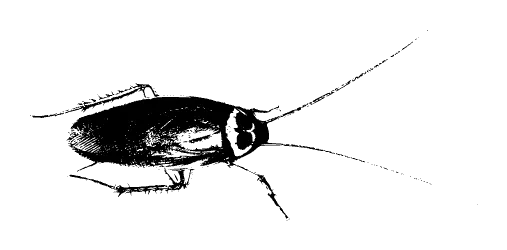
Yes. German cockroaches live entirely indoors, usually in kitchens and bathrooms, and they arrive in bags, boxes or appliances from somewhere already infested. Gel bait and growth regulators, reserved for this one species, do the work along with a return visit to finish it, so the first service carries a surcharge. After that, the regular plan keeps them from building back up.
It lengthens the outdoor half. An acreage address at the edge of Krum has more boundary, more outbuildings and more open ground feeding it than a grid street does, so the first visit runs longer and the treated band goes wider. The recurring work afterwards settles down to something fairly similar once we have closed all the openings.
Usually up high. New houses at the edge of Krum have tight foundations but often leave gaps at gable vents, soffit returns, roof-to-wall joints and the attic end of plumbing vents. Wasps, roof rats and mice use those openings, and treatment at ground level never reaches them. Your exterminator checks the roofline and attic on the first visit and closes those openings before they become a habit.
Prairie on three sides of Krum holds an endless supply of colonies, and each spring rain triggers mating flights that drop new queens into nearby lawns. Within weeks the first small mounds appear along sidewalks, driveways and sunny lawn edges. Broadcasting bait over the full lawn in spring, while workers forage hard, catches young colonies before they grow. Your technician also treats established mounds individually.
They can, along with buckets, old tires and tarp folds on any Krum property with animals. A trough nobody empties or stirs for a week gives mosquitoes time to complete a generation. Scrub and refill troughs weekly, or keep a float valve and pump moving the water. The mosquito program never treats water animals drink, so it focuses on the shade around the house and on MosquitoCon stations nearby.
Older houses on the Krum grid give way low on the walls. Decades of settling widen weep holes, drop thresholds and pull siding away from the sill, and ants and spiders find those gaps from the beds outside. Looking for daylight under doors and along baseboards shows the worst spots. Your technician closes them from the outside, treats the beds and foundation band, and removes webs at entries.
No phone call. No credit card up front. See the real price for your home, pick a start date, and a technician will be at your door in about two business days.