Crickets in the House
Crickets in the house usually arrive during the late-summer and fall field cricket swarm, when thousands gather around porch and garage lights and slip under doors. Most are black field crickets, which can't breed indoors and die off within weeks. Tan house crickets and humpbacked camel crickets are the ones that can settle in.
On this page
Why Crickets Suddenly Show Up Inside
DFW gets a cricket wave almost every year. Texas A&M AgriLife entomologists note that field crickets peak around buildings in late summer and fall, usually August and September. The rise comes once rain and cooler weather break the summer dry spell. A swarm tends to last four to six weeks before the numbers drop.
The crickets aren't looking for your house. Adults are out mating and feeding at night, and bright lights pull them out of lawns and fields toward walls and doors. Once a crowd builds up at the threshold, some find their way through the gap underneath. That is why crickets seem to appear all of a sudden, and why the same doors see them every year.
Three Crickets Found in DFW Homes
Not every cricket inside is the same insect, and the difference decides whether they'll stick around. The table below compares the three you're likely to find.
| Cricket | How to recognize it | Where it shows up | Breeds indoors? |
|---|---|---|---|
| Field cricket | Black or dark brown, shiny, loud chirp | Near doors, garages and lit windows in late summer and fall | No |
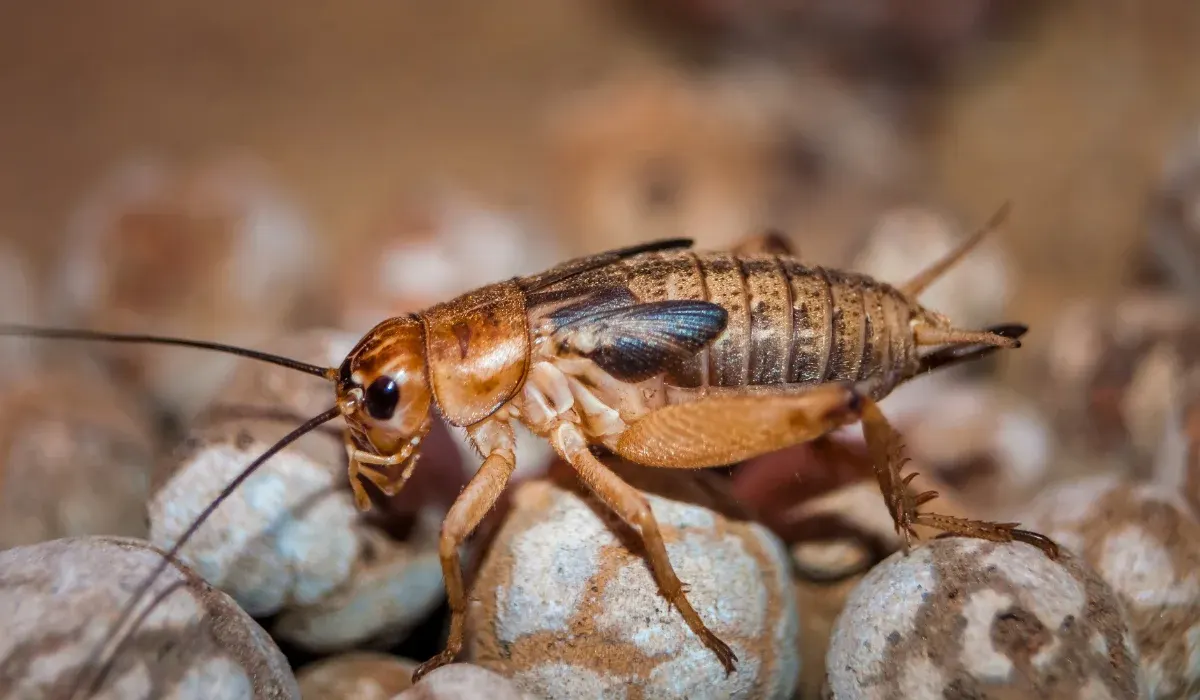
| House cricket | Light tan with dark bands on the head | Warm spots such as kitchens, laundry rooms and behind appliances | Yes |
| Camel cricket | Humpbacked, wingless, long spider-like legs | Damp garages, crawl spaces and storage areas | Can live in damp spaces year-round |
Field crickets are the swarm species, and Texas A&M's fact sheet calls them accidental indoor invaders that don't set up permanent indoor colonies. House crickets are the pet-store crickets, and they can breed inside a warm house. Camel crickets don't chirp at all. They hop away in long jumps when disturbed and point to a moisture problem.
Why Porch Lights Bring Crickets In
Lighting matters more than anything else. Texas A&M's fact sheet on fall cricket control names outdoor lighting as the single most important cause of heavy cricket infestations around homes and businesses. Brightly lit storefronts and gas stations often collect piles of crickets in September for the same reason.
The fix starts at the bulbs. Yellow bug lights and low-pressure sodium lamps draw fewer crickets than standard incandescent, fluorescent, mercury vapor or halogen bulbs, and warm or yellow LEDs draw fewer flying insects as well. During the swarm, turn porch and garage lights off as early in the evening as you can, and close the garage door after dark.
Do Crickets Cause Damage?
Mostly they cause noise. A male field cricket's chirp can carry through a whole house at night, and a few dozen dead crickets in the garage are part of every fall. Crickets don't bite people in any way that matters, and they don't carry diseases to people.
Large numbers indoors can damage fabric, though. Texas A&M notes that crickets may stain clothing, drapes and wall coverings and feed on them, with soiled clothing most at risk. Camel crickets can chew stored linens and clothes packed in boxes, so keep stored fabric in sealed bins in a damp garage.
How to Keep Crickets Out
Sealing the low gaps does the most good. Crickets come in at ground level through door thresholds, gaps under garage doors, weep holes and cracks along the foundation. Check door bottoms for daylight and close any gaps you find. Keep mulch and ground cover about a foot back from the foundation, and move firewood away from the walls.
Indoor sprays aren't worth it for field crickets, according to Texas A&M, since the crickets die off on their own and new ones keep arriving from outside. Treatment belongs outdoors, along the slab, door thresholds and garage door seals. Crickets stay low, so our technicians treat that ground-level band rather than the roofline, and regular visits keep it fresh through swarm season. See how cricket control for DFW homes handles the fall wave.
For camel crickets, fix the moisture first. NC State Extension's camel cricket guide recommends drying out crawl spaces and basements, sealing gaps around vents and crawl space doors, and storing items off the floor.
Crickets in the House FAQ
Why are there crickets in my house at night?
Crickets are active at night, when they feed, mate and move toward light. A lit window or porch draws them to the house, and the males chirp to attract females, which is why you hear them after dark.
How do I find a chirping cricket?
Follow the sound low, along baseboards, behind appliances and under furniture. The cricket usually stops chirping when you get close, so wait quietly and let it start again before you move.
Do crickets mean I have another pest problem?
Not on their own. Field crickets point to bright lights and gaps under doors. Camel crickets point to a damp crawl space or garage, which can also draw other moisture-loving pests.
If the fall swarm keeps finding its way inside, pest control in Southlake covers it on regular visits, and a quote takes a minute online.