Striped Bark Scorpions in DFW
The striped bark scorpion is the only scorpion that lives in DFW and the most common one in Texas. It grows to about 2½ inches, is yellowish tan with two dark stripes down its back, and hides in attics, walls and yard debris by day. Its sting is painful, but in most people it causes only a moderate reaction.
On this page
How to Identify a Striped Bark Scorpion
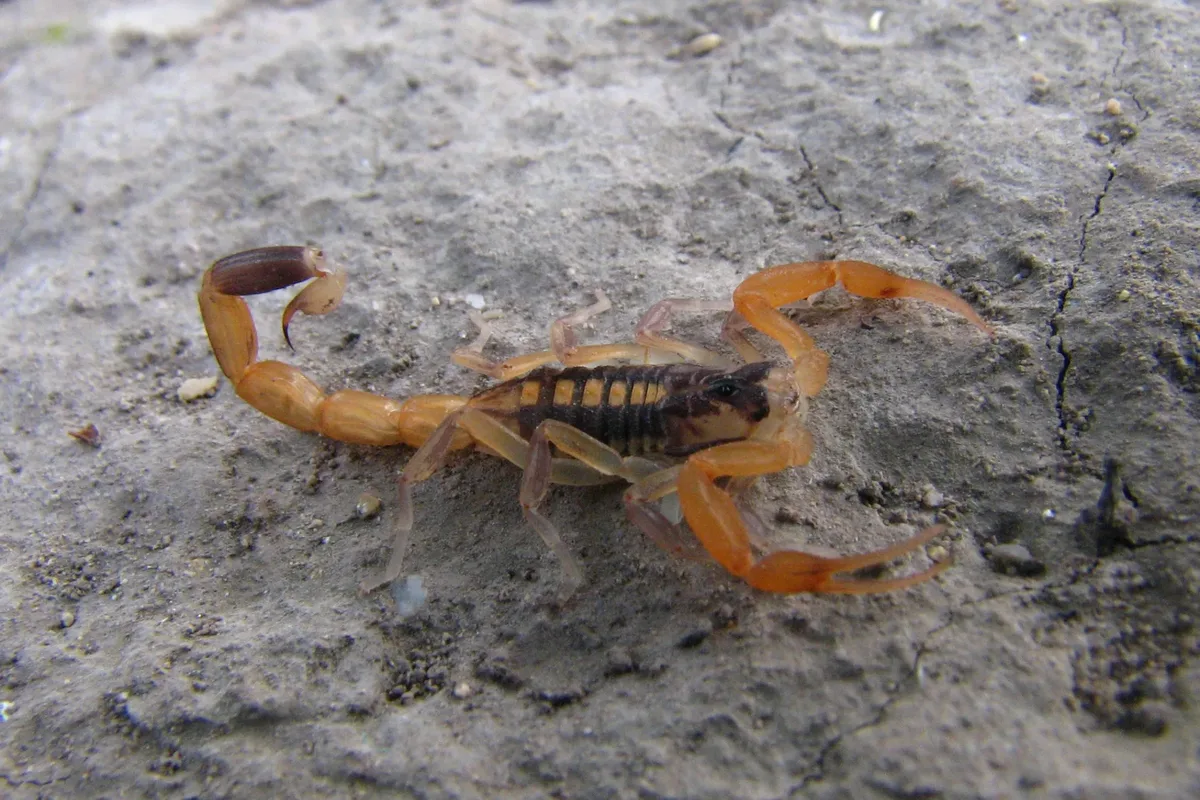
The two stripes give it away. Texas A&M AgriLife's scorpion fact sheet describes adults as about 2½ inches long and yellowish tan. Two broad dark stripes run the length of the back, and a dark triangle marks the front of the head. It has slender pincers and a long, thin tail, and males carry longer tails than females. Young scorpions look paler.
Like other scorpions, the striped bark scorpion glows a bright greenish blue under ultraviolet light. That makes a handheld UV flashlight the easiest way to check walls, fences and the base of the house after dark, when the scorpions come out to hunt.
Not the Arizona Bark Scorpion
Many people search for "bark scorpion" and find warnings about a far more dangerous species. That's the Arizona bark scorpion, which lives in the desert Southwest. According to Texas A&M, no other scorpion species turns up anywhere in the eastern half of the state, and that half takes in all of DFW.
This table shows how the two compare.
| Trait | Striped bark scorpion | Arizona bark scorpion |
|---|---|---|
| Where it lives | All of Texas, and the only scorpion in DFW | Arizona and the desert Southwest |
| Adult size | About 2½ inches | About 1 to 1½ inches |
| Color | Yellowish tan with two dark stripes | Varies, so color alone won't identify it |
| Sting | Painful, with a moderate reaction in most people | The most venomous scorpion in North America |
Why Striped Bark Scorpions Get Inside
These scorpions climb. Unlike many species, they don't dig burrows, and they often scale trees and walls to reach attics. Texas A&M notes that during hot weather they may move down from the attic into living areas to escape the heat. That explains a scorpion in the bathtub or on a bedroom ceiling in July.
Outdoors they shelter under rocks, boards, firewood, landscape timbers and leaf piles, then hunt insects and spiders at night. A Texas A&M AgriLife report on pests in Texas heat adds that scorpions push indoors in search of water and relief from the heat. They slip through small gaps along doors and walls.
A female carries her young on her back after they're born, usually 13 to 47 of them and about 31 on average. The babies can already sting, and they leave her within a couple of weeks. A striped bark scorpion lives about four years, so one hiding spot can produce scorpions season after season.
What to Do If a Scorpion Stings You
A sting hurts right away, and the swelling, itching or numbness around it can last a few days. Texas A&M advises an ice pack on the spot to ease the pain and watching the person closely for any unusual reaction. Get medical help right away if pain or swelling keeps getting worse or if breathing becomes difficult.
Young children and people with allergies to insect venom need more caution. For any sting on a small child, call Poison Help at 1-800-222-1222 for guidance, even if the child seems fine at first.
Keeping Scorpions Out of the House
Texas A&M notes that scorpions are hard to control with insecticides alone, so changing the area around the house comes first. Clear boards, bricks, stones and debris away from the foundation, keep grass mowed short near the walls, and stack firewood away from the house. Trim branches back from the roof, because they give scorpions a path to the attic.
Tight-fitting door sweeps, screened weep holes and sealed gaps around pipes and eaves close most of the ways in. Shake out shoes, towels and clothes left on the floor before you use them. When scorpions keep turning up after that cleanup, our scorpion treatment for DFW homes adds a barrier around the foundation and the entry points. The Dallas scorpion control team handles homes near our Dallas office the same way.
Striped Bark Scorpion FAQ
What happens when a striped bark scorpion stings you?
You'll feel a sharp, burning pain, then swelling, itching or numbness that can linger for several days. Most people recover without treatment beyond ice, but watch for signs of an allergic reaction.
Are striped bark scorpions aggressive?
No. They sting when disturbed, such as when someone steps on one, reaches under a board or puts on a shirt with one inside. They run from people when they can.
How big do striped bark scorpions get?
Adults reach about 2½ inches long, including the tail. Males have longer, thinner tails than females, and young scorpions are smaller and paler.
Scorpions on the walls in summer often mean a group of them is living in the attic or the woodpile. Get your price online or call our office, and we'll start with the spots they hide.