Fall Armyworms in Texas Lawns
Fall armyworms are moth caterpillars that can strip a Texas lawn in a few days, most often in late summer and early fall after a good rain. They chew grass blades down to brown stubble, starting at the edges and moving in a front across the yard. Healthy bermudagrass usually grows back, because the caterpillars eat the leaves and leave the roots alone.
On this page
What Fall Armyworms Look Like
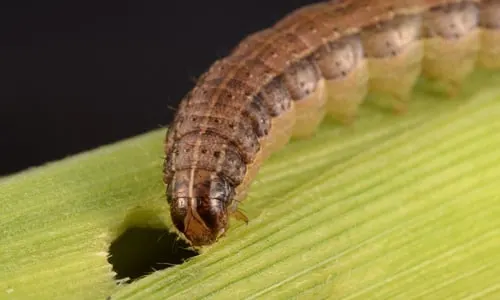
The caterpillar gives itself away up close. Look for a pale, upside-down "Y" on the front of a dark head and four large dark spots on top of the last body segment. Its body runs from light tan to green, with a wide yellowish-gray band down the back.
Full grown, the caterpillars reach 1 to 1½ inches. The adult is a gray, mottled moth with a wingspan of about 1½ inches and silvery-white hind wings. You'll rarely notice the moths, but you may see them fluttering around porch lights in late summer.
Texas has four common armyworms, and the fall armyworm is the one that hits lawns hardest. This table uses Texas A&M AgriLife's guide to armyworms in Texas pastures and lawns to tell them apart.
| Armyworm | How to recognize the caterpillar | Where it causes trouble |
|---|---|---|
| Fall armyworm | Upside-down Y on the head and four dark spots on the last segment | Lawns, pastures and hay after late-summer rain |
| Yellowstriped armyworm | Bright yellow stripes along the sides with black triangles | Gardens and field crops |
| Beet armyworm | Usually green, with one dark spot just behind the head | Vegetables and cotton, mostly in hot, dry weather |
| Armyworm | Dark band down the back, no Y and no four spots | Pastures and small grains |
Signs of Armyworms in a Lawn
The first sign usually looks like drought. A patch of grass turns brown and thin, even though you've been watering, and the brown area grows every day. Look closely, and you'll see chewed blades rather than dried ones. Young caterpillars scrape only the green surface of the leaf, leaving a clear "window pane" look.
Other clues show up around the damage. Birds gather in one part of the yard and peck at the grass, often early in the morning. The caterpillars feed most in the early morning and late evening and hide in the thatch during the hottest part of the day. On bad years, they cross sidewalks and driveways looking for fresh grass.
How to Check With a Soap Flush
A soap flush brings hidden caterpillars to the surface in minutes. AggieTurf's fall armyworm page suggests mixing a couple of tablespoons of lemon-scented dish soap into 2 gallons of water. Pour it over about one square yard of healthy grass right next to the brown edge, then watch for 10 minutes.
Count what comes up. Texas A&M suggests considering treatment once counts average three or more caterpillars per square foot in a lawn. Check a few spots along the edge of the damage, since that's where the feeding front is.
When Armyworms Hit DFW Lawns
Fall armyworms don't spend the winter in DFW. They survive as pupae in South Texas, and the moths fly north as the weather warms. Each generation takes about 28 days, so numbers build through the summer until outbreaks hit in late summer and fall.
Rain sets them off. Texas A&M notes that above-average rain in August and September helps more eggs survive, and outbreaks often follow a rain or heavy irrigation. A wet stretch after a dry summer is the classic setup for a DFW armyworm year. Field crickets peak around buildings in August and September too. Both pests respond to the rain that breaks a summer dry spell, so they tend to arrive in the same weeks.
How to Save the Lawn
Act fast once you confirm them. Armyworms do most of their eating in their last stages of growth, so a lawn can go from fine to brown in a few days. If the soap flush turns up three or more per square foot, treat the damaged area and a few feet of green grass around it. Use a lawn insecticide labeled for armyworms and follow the label exactly.
Then help the grass recover. Water deeply and hold off on mowing until the damaged area greens up again. Natural enemies help too. Parasitic wasps and flies, ground beetles and birds all feed on armyworms, and Texas A&M notes that weather and these enemies usually keep outbreaks small.
Forterra doesn't treat lawns for armyworms, but late summer brings other pests into the house. When the late-summer rain pushes crickets toward your doors, cricket treatment in DFW keeps them outside. For pests that surge with the weather all year, see our seasonal pest treatment. Homes on larger lots around Aubrey can set up the same visits through pest control in Aubrey.
Fall Armyworm FAQ
Will my lawn come back after armyworms?
Established bermudagrass and other warm-season lawns usually recover, because armyworms eat the blades and not the roots or runners. A young or stressed lawn may need reseeding in the worst spots.
What do armyworms turn into?
They turn into moths. Full-grown caterpillars burrow into the soil, form a pupa and come out as gray moths that mate and lay eggs on lush grass, starting the next generation.
How long are armyworms active in Texas?
From midsummer through early November in most years. Cold weather in late fall ends the season, and the next year's outbreak starts over with moths flying north from South Texas.
Armyworms in the lawn often arrive in the same weeks as crickets at the door. Call or price a visit online, and we'll handle the pests that make it to the house.