Common House Spiders in Texas
Most house spiders in Texas are harmless. The ones you'll see most in DFW homes are American house spiders, cellar spiders, southern house spiders, wolf spiders and jumping spiders. Two species deserve a careful look, the brown recluse and the black widow, and a few quick checks rule them in or out.
On this page
The Most Common House Spiders in Texas
Size is the easiest place to start. The University of Kentucky's urban spider chart compares house spiders to coins with their legs stretched out, and that habit makes a spider easier to judge from across the room. The table below adds what each one builds and where it turns up in a DFW home.
| Spider | Size with legs out | Web or hunter | Where you see it | Often mistaken for |
|---|---|---|---|---|
| American house spider | About a nickel | Messy tangled cobweb | Corners, closets, garages | Black widow or recluse |
| Cellar spider | About a half-dollar, mostly legs | Loose web that keeps growing | Garage ceilings, closets, crawl spaces | Daddy longlegs |
| Southern house spider | Females larger and darker, males slim | Flat web fanning out from a crack | Cracks around windows, eaves, old sheds | Brown recluse |
| Wolf spider | From a pencil eraser to a silver dollar | Hunter, no web | Floors at night, near doors and lights | Brown recluse |
| Jumping spider | About a dime | Hunter, no web | Windowsills, walls, patio furniture | Rarely confused |
Kentucky's entomologists rate the bites of the house, cellar, wolf and jumping spiders as harmless except to allergic people, and southern house spiders rarely bite. Most house spiders bite only when trapped against skin.
Cobweb Spiders in Corners and Garages
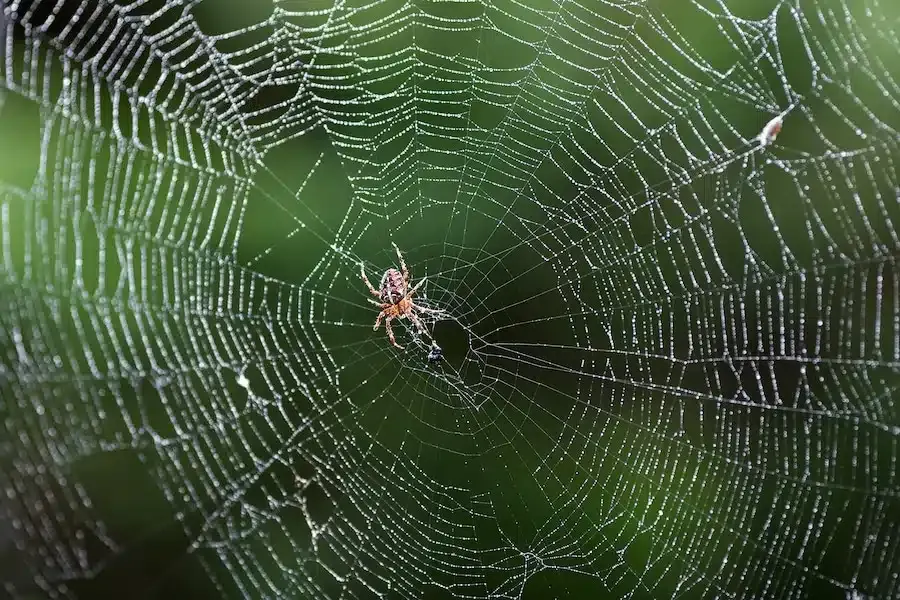
The American house spider is the cobweb builder behind most dusty corners. It is brown and tan with darker patterns, and it stays in its web, retreating to a protected corner when disturbed. Because of its round abdomen, people sometimes mistake it for a widow, but it lacks the widow's glossy black body and red marking.
Cellar spiders hang upside down in loose webs on garage ceilings and in closets, and they shake the web hard when touched. Their long, thin legs earn them the name daddy longlegs, which also belongs to a different, web-less relative. The webs are the real nuisance, since cellar spiders keep adding to the same web until it fills with dust and dead insects.
Southern House Spiders and Recluse Look-Alikes
The southern house spider worries more DFW homeowners than any other harmless spider, and Texas A&M notes that people often mistake it for a recluse. Both are brown, but the southern house spider is larger, and its web fans out from a central hole or crack like a small flat sheet. Females are dark and stout. Males are slimmer and lighter, with long front appendages that look like an extra pair of legs.
Two checks settle it. Texas A&M's brown recluse profile lists six eyes arranged in three pairs and a violin-shaped mark on the back. A southern house spider has eight eyes clustered together and no violin. A hand lens or a close photo of the head makes the comparison easy. Recluses also hide in closets, under furniture and behind baseboards, not in a web on the window frame.
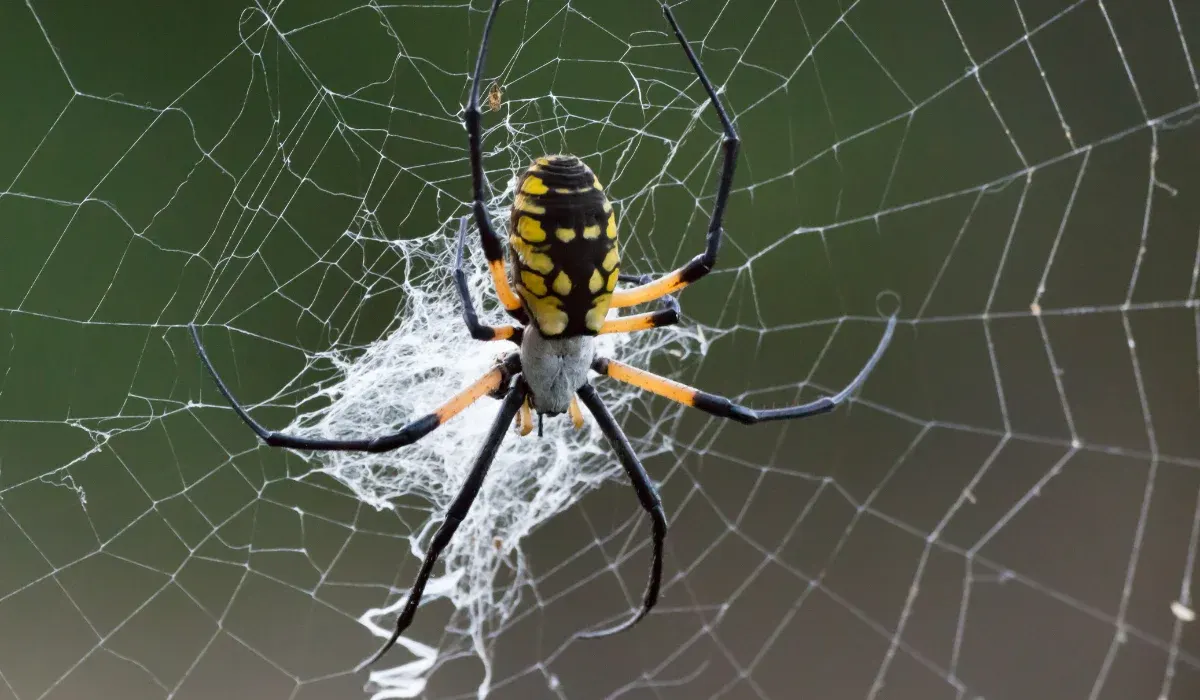
The black widow is easier. A female is glossy black, usually with a red hourglass under the abdomen. She hangs in a tangled web in a low, sheltered spot such as a meter box or woodpile.
Wolf Spiders and Other Hunters
Wolf spiders are the big, fast spiders that cross the floor at night. Texas A&M describes them as brown and black, often striped, and notes that their eyes shine back when you sweep a flashlight across the yard. They hunt at night, rest in silk shelters by day, and come indoors through gaps under doors. Texas A&M says they pose no danger to people or pets.
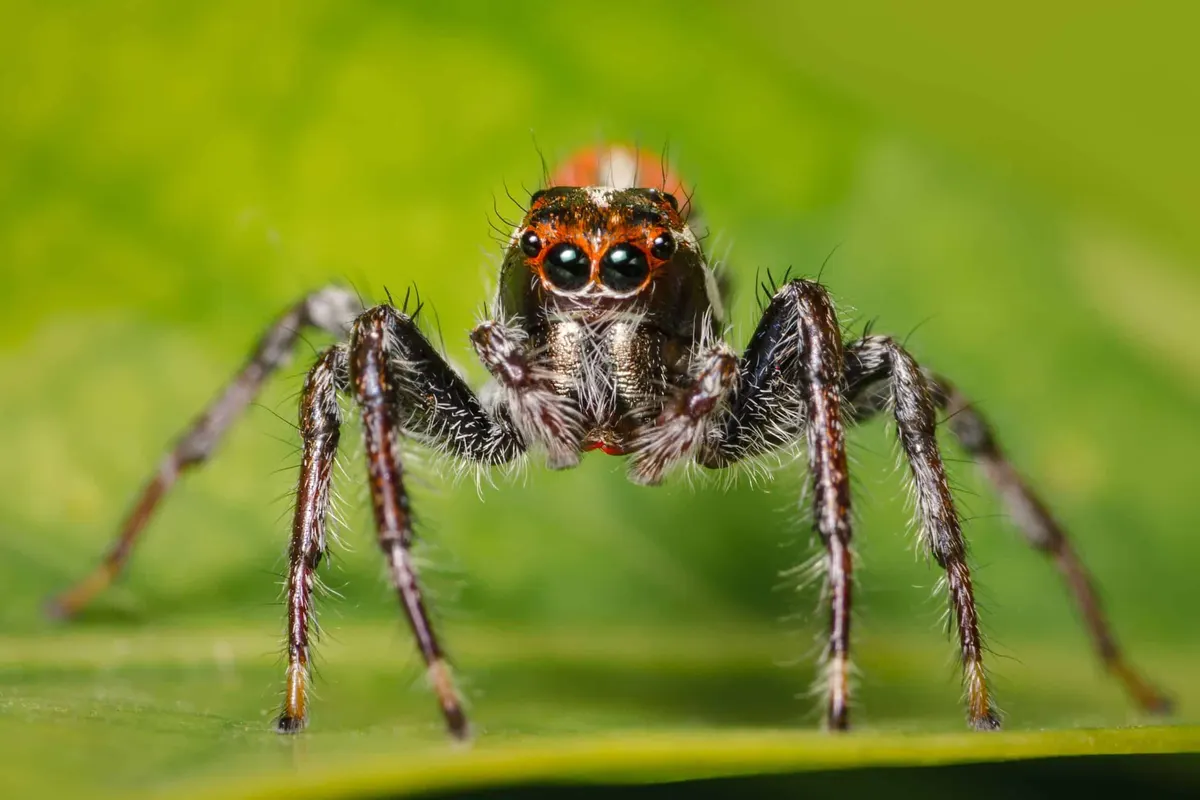
Jumping spiders are the small, fuzzy hunters that turn to look at you from a windowsill. They don't build webs, and they often wander in from the outside walls. Both hunters help by eating the insects that draw them inside.
Why House Spiders Come Inside
Spiders follow food. Porch lights, garage lights and bright windows pull in moths, crickets and other night fliers, and spiders settle where that supply lands. Warm or yellow bulbs draw fewer flying insects, so swapping the bulbs by your doors cuts the spider traffic too.
Gaps under doors let wolf spiders walk right in, and clutter gives every species a place to hide. Stacks of boxes in the garage, firewood against the house and unused corners in closets are where webs and egg sacs build up.
Keeping Spiders Down at Home
Vacuuming webs and egg sacs every few weeks removes most house spiders before they multiply. Seal gaps under doors and around windows, clear clutter from the garage floor and keep firewood away from the walls.
Spiders return because insects return, which is why one treatment never solves them for good. On regular visits, our technicians sweep webs and egg sacs from eaves, patio covers and light fixtures and treat the cracks where spiders shelter. See how spider control for DFW homes works across the year.
House Spider FAQ
Are house spiders in Texas dangerous?
Almost never. The common house spiders bite rarely, and their bites are harmless except to allergic people. Black widows and brown recluses are the exceptions, so rule them out with the checks above if a spider has a violin mark or a red hourglass.
What are the big spiders in my house?
In most DFW homes, a big brown spider running across the floor is a wolf spider. A large dark spider in a web at the edge of a window frame or door is usually a female southern house spider.
Should I kill house spiders?
You don't need to. House spiders eat insects, so a few in the garage aren't a problem. Vacuum webs and egg sacs where they bother you, and focus on cutting the insects that feed them.
If webs come back faster than you can clear them, spider control in Dallas covers regular sweeps, and pricing is online.