How Much Blood Can a Mosquito Drink in a Bite?
A mosquito can drink about 5 millionths of a liter of blood in one full meal. A full meal ranges from 1 to 10 millionths of a liter, depending on the mosquito. The typical meal is roughly 1/1,000 of a teaspoon. It sounds tiny, but it weighs more than twice as much as the mosquito herself.
On this page
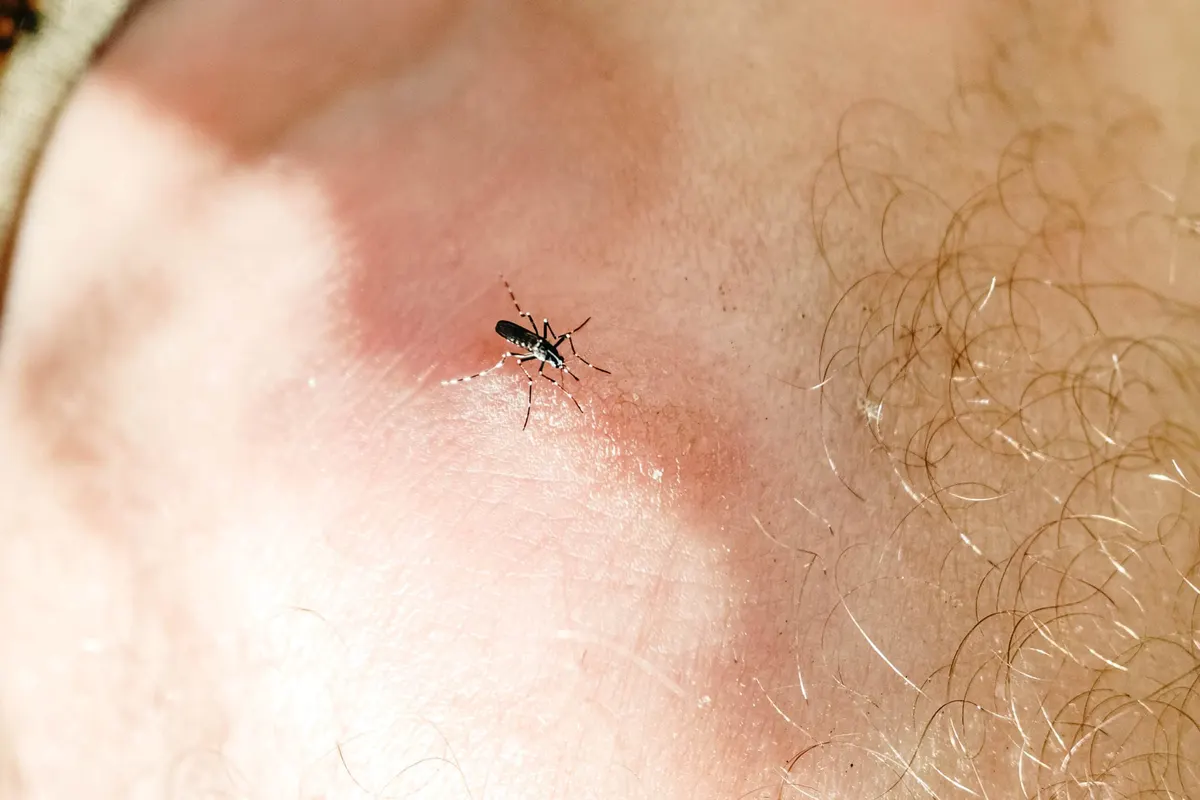
How Much Blood Does a Mosquito Take?
An adult female mosquito takes about 5 millionths of a liter of blood in a single meal, according to a mosquito fact sheet from Yale's Powell Lab. The same page puts her weight at about 1/15,000 of an ounce. Blood is slightly heavier than water, so that meal outweighs her more than two to one.
The exact amount depends on the mosquito. The American Mosquito Control Association puts a full meal anywhere from 0.001 to 0.01 milliliter, which is 1 to 10 millionths of a liter. In one study, the yellow fever mosquito, Aedes aegypti, averaged about 2.8 millionths of a liter per meal. That species is worth knowing in DFW, because Dallas County's health department has reported it circulating alongside the Asian tiger mosquito.
Texas A&M AgriLife counts 85 mosquito species identified in Texas, so no single number fits every mosquito in a DFW yard.
A Mosquito Blood Meal in US Measures
Millionths of a liter are hard to picture. The table below converts a full meal of about 5 millionths of a liter into kitchen and blood bank measures. Each number is simple math from the Yale figure, rounded.
| Amount of blood | US measure | Full mosquito meals |
|---|---|---|
| One mosquito meal | About 1/1,000 of a teaspoon | 1 |
| A teaspoon | 1 teaspoon | About 1,000 |
| A cup | 48 teaspoons | About 47,000 |
| One blood donation | About 1 pint | About 95,000 |
| All the blood in an adult | 10 to 12 pints | About 950,000 to 1.1 million |
The last row answers a question people often ask. It would take roughly a million full mosquito meals to equal all the blood in an adult body. In a DFW backyard, the blood a mosquito takes doesn't matter. What matters is the germs she can pass along while she feeds.
Why Only Female Mosquitoes Bite
Male mosquitoes don't bite people or animals at all. Females do, and most of them can't produce eggs without a blood meal, as the CDC's page on mosquito bites explains. Both sexes get their energy from flower nectar and other plant sugars. A female doesn't need your blood to stay alive. She needs it to build eggs.
A hungry female finds you by the carbon dioxide you breathe out, then closes in on body heat and skin odors. Not every mosquito wants people, though. Some species prefer birds, others prefer mammals, and some are opportunists that feed on both.
What Mosquitoes Use the Blood For
Blood gives a female the protein and fat she needs to develop a batch of eggs, according to Penn State Extension's guide to the mosquito life cycle. Once she has her fill, she rests for a couple of days while she digests the meal. Then she lays her eggs on or near still water, and a single batch can hold up to 300 eggs.
The eggs don't need much water. A University of Maryland researcher notes that mosquitoes can lay eggs in as little as a teaspoon of water. A pet bowl or a toy left in the yard can become a nursery. A meal that fills about 1/1,000 of a teaspoon can start a batch of eggs laid in a single teaspoon of water.
Then the cycle repeats. A female can feed and lay eggs more than once over a life that usually lasts a few weeks. That is how one mosquito can lay hundreds of eggs in her lifetime.
How Mosquito Blood Meals Spread West Nile
A blood meal is also how a mosquito picks up a virus. When a mosquito feeds on a bird infected with West Nile virus, the virus enters with the blood and ends up in her salivary glands. At a later meal, it can pass into a person along with her saliva.
In Texas, the main carrier is Culex quinquefasciatus, the southern house mosquito, according to Tarrant County Public Health. It feeds on birds and mammals through the night, which links infected birds to people. Each week from April through mid-November, Dallas County's health department publishes West Nile results from the female Culex it traps. Tarrant County tests all year. Even after a bite from an infected mosquito, most people never fall ill. Still, Dallas County urges residents to use an EPA-registered repellent and limit time outdoors from dusk to dawn. Dallas homeowners can see how monthly yard treatments work on our Dallas mosquito control page.
Our mosquito program runs April through October, with a monthly visit that treats the shady places adults rest and tops up MosquitoCon stations so fewer larvae survive. You can read how our mosquito program works and price your yard online, or call at any hour.
Mosquito Blood Meal FAQ
Can a mosquito drink too much blood?
No. Stretch receptors in her abdomen tell her brain when she is full, and she stops feeding. In lab experiments where scientists cut that nerve signal, mosquitoes kept drinking far past a normal meal, and some burst.
How many times can a mosquito bite you?
A female keeps feeding until she is full. Mosquitoes often sip feed, which means they take several smaller meals from more than one person or animal, according to the Cleveland Clinic. A mosquito you interrupt may bite you again or move on to someone else.
What's the lifespan of a mosquito?
Most adult females live two weeks to a month, and males usually live about a week, according to the City of Mansfield's mosquito FAQ. Some females that spend the winter in sheltered spots like garages and culverts can live for months.