Do Mosquitoes Come Out in the Rain?
Not in heavy rain. Most mosquitoes stop flying in a downpour and wait it out under leaves, shrubs and eaves. Light rain barely slows them, and they come back out the moment it stops. The bigger change comes about a week later, when eggs in rain-filled puddles and containers hatch into a new wave of biters.
On this page
Can Mosquitoes Fly in the Rain?
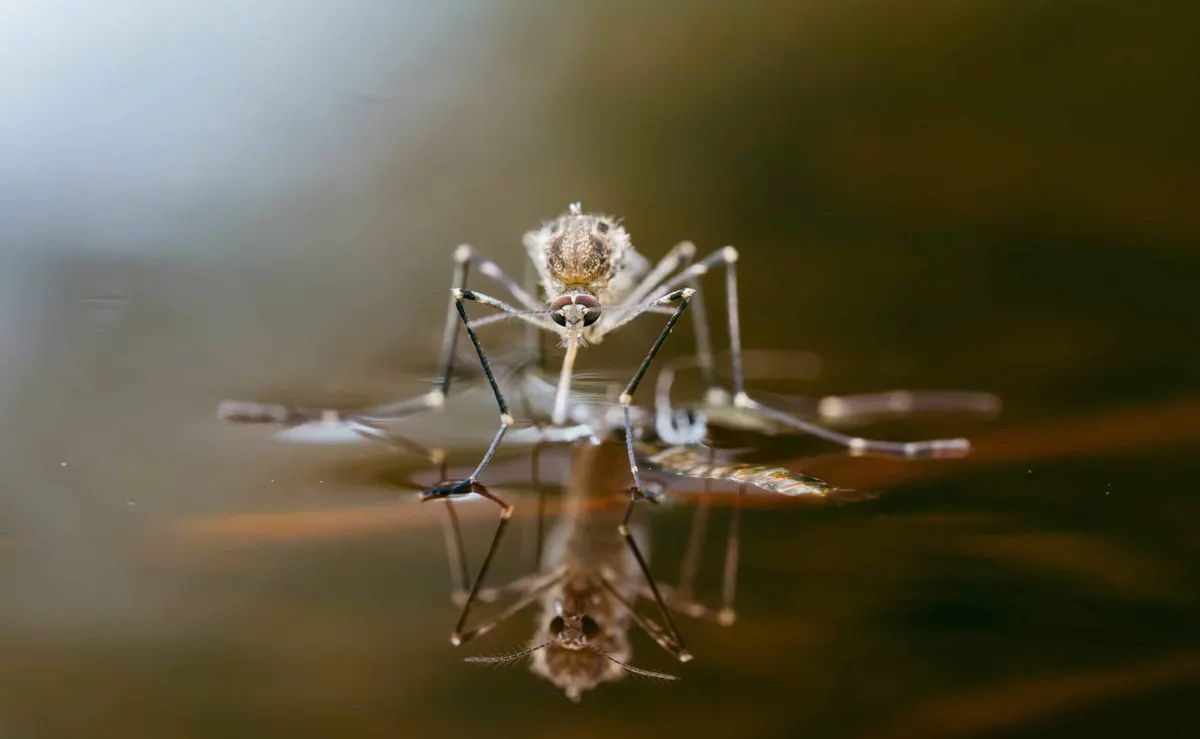
Mosquitoes can fly in light rain, and they survive direct hits from raindrops. Researchers at Georgia Tech filmed mosquitoes flying through artificial rain and found that a falling drop carries the insect a short way and then slides off. A mosquito weighs so little that the drop barely slows down, so the impact passes through without crushing it.
Heavy rain is different. A steady downpour, strong gusts and the cooler air behind a storm front make flying hard work, so most adults land and wait. Mosquitoes rarely bite during a real Texas thunderstorm. In a light drizzle on a warm, humid evening, you still can.
Where Mosquitoes Go When It Rains
During a storm, adult mosquitoes rest anywhere that blocks the rain and wind. Mosquitoes in a typical DFW yard hide under leaves, in dense shrubs and ground cover, and in tall grass along the fence. Decks, eaves, porch ceilings, open garages and sheds shelter them too.
Container mosquitoes, the most common backyard biters, rarely travel more than a few hundred feet from where they hatched. When the rain stops, the same mosquitoes come straight back out, and the humid early evening after a storm is when they bite hardest.
Why Mosquitoes Are Worse After Rain
Rain does not wash mosquitoes away. It gives them water to breed in. Females lay eggs on or near still water, and some species lay eggs that sit dry for months or even years, waiting for the next rainfall to flood them. A mosquito can go from egg to biting adult in about a week of DFW summer heat. That's why a big storm often turns into a bad mosquito week 7 to 10 days later. The EPA's guide to the mosquito life cycle walks through each stage, from egg and larva to pupa and adult.
Texas A&M AgriLife entomologist Sonja Swiger describes what follows a rainy spell as a series of waves. Each wave comes from a different kind of standing water, as AgriLife's report on mosquito populations after rain explains. The table below shows what each wave looks like in a Texas yard.
| Wave | Where they breed | When they show up | When they bite |
|---|---|---|---|
| Floodwater mosquitoes | Puddles and low spots in lawns and ditches | First, within days of heavy rain | Dawn to dusk, and aggressively |
| Container mosquitoes (Aedes) | Buckets, gutters, tires, pet dishes | Next, while containers stay full | Mostly during the day |
| Culex mosquitoes | Stagnant, dirty water as puddles shrink | Last, as weather turns hot and dry | Dusk and night |
The last wave is the one health officials watch. Culex mosquitoes carry West Nile virus, which is why Dallas and Tarrant counties trap and test mosquitoes through the warm months.
Rain and Mosquito Season in DFW
Mosquito season in DFW runs roughly from April through October, and rainfall decides how bad each stretch gets. May is usually the wettest month of the year here, and fall storms in September and October bring a second round. Each of those rainy spells lands on warm ground, which shortens the time from egg to biter.
The soil adds to the problem. Much of DFW sits on dense clay that drains slowly. Water lingers in low spots of the lawn, along the foundation and in flower beds for days after a storm. In older neighborhoods with mature trees, leaves clog gutters and hold water long after the sky clears. In newer subdivisions, regraded lots and buried downspout lines can leave pockets of water nobody sees. The water that breeds mosquitoes is rarely the obvious puddle. It is the inch sitting in a gutter, a plant saucer or the fold of a grill cover.
What to Check in Your Yard After Rain
Mosquito larvae need only a small amount of still water, so a 15-minute walk around the yard a day or two after a storm does more than any spray. AgriLife gives the same advice and suggests a round of the property after every rain. Start with these spots.
- Tip out buckets, plant saucers, toys, wheelbarrows and pet dishes that caught rain.
- Clear gutters and downspouts so water drains instead of sitting for days.
- Change birdbath water at least once a week, and keep pools and fountains circulating.
- Fill or rake out low spots in the lawn where water stands for more than two days.
- Shake out tarps and grill covers, which hold water in their folds.
Water you can't drain, like a pond or an unscreened rain barrel, needs a different approach, and larvicide dunks made for ponds and rain barrels treat it without draining it. When you head outside on a damp evening, wear long sleeves and use an EPA-registered repellent with DEET, picaridin or oil of lemon eucalyptus.
If every storm brings a new wave, seasonal mosquito control treats the resting spots and breeding water around your home from spring through fall. Dallas homeowners can see how the program works on our Dallas mosquito control page, and you can get a price online or by phone.
Mosquitoes and Weather FAQ
Do mosquitoes come out in thunderstorms?
Rarely. Heavy rain and gusty wind keep most mosquitoes grounded under leaves and eaves until the storm passes. They often come back out within an hour if the evening stays warm.
Do mosquitoes come out in the wind?
Mosquitoes are weak fliers, so a steady breeze of about 10 miles per hour keeps most of them down. That is why a patio fan helps on still DFW evenings. When the wind drops, they return.
Do mosquitoes come out in the cold?
Mosquitoes slow down below about 60°F and stop flying near 50°F. DFW winters are mild, so a warm spell in January or February can bring a few back for a day or two.
Will mosquitoes bite you if you're wet?
Yes. Water on your skin doesn't stop them, because mosquitoes find people by carbon dioxide, body heat and sweat. Rain and sweat wear repellent off, so reapply it as the label directs.