Bugs That Look Like Termites in DFW Homes
The bugs that most often look like termites are flying ants, carpenter ants, acrobat ants, carpenter bees and powderpost beetles. Three body checks settle most cases. A termite has a thick waist, straight antennae and four equal wings longer than its body. An ant has a pinched waist, elbowed antennae and front wings bigger than the back pair.
On this page
Flying Ants vs Termites at a Glance
Winged ants and winged termites cause the most confusion because they show up on the same warm days. Texas A&M AgriLife's carpenter ant guide notes that in Texas, carpenter ants and termites often swarm at the same time. The table below compares a termite swarmer with two flying ants that swarm in DFW, the fire ant and the carpenter ant.
| Feature | Termite swarmer | Fire ant swarmer | Carpenter ant swarmer |
|---|---|---|---|
| Waist | Thick, no pinch | Pinched, with two small bumps | Pinched, with one small bump |
| Antennae | Straight and beaded | Bent like an elbow | Bent like an elbow |
| Wings | Four of equal size, up to twice the body length | Front pair larger, about body length or shorter | Front pair larger, about body length or shorter |
| Size and color | About 3/8 inch, dark brown to black | About 1/3 inch | Up to 3/4 inch, black, reddish or both |
| What it leaves | Piles of matching wings, mud tubes | Mounds in the lawn | Cone-shaped piles of wood bits and insect parts |
| When it swarms in Texas | Spring days, mostly April and May | Spring and fall, soon after rain | Spring and early summer |
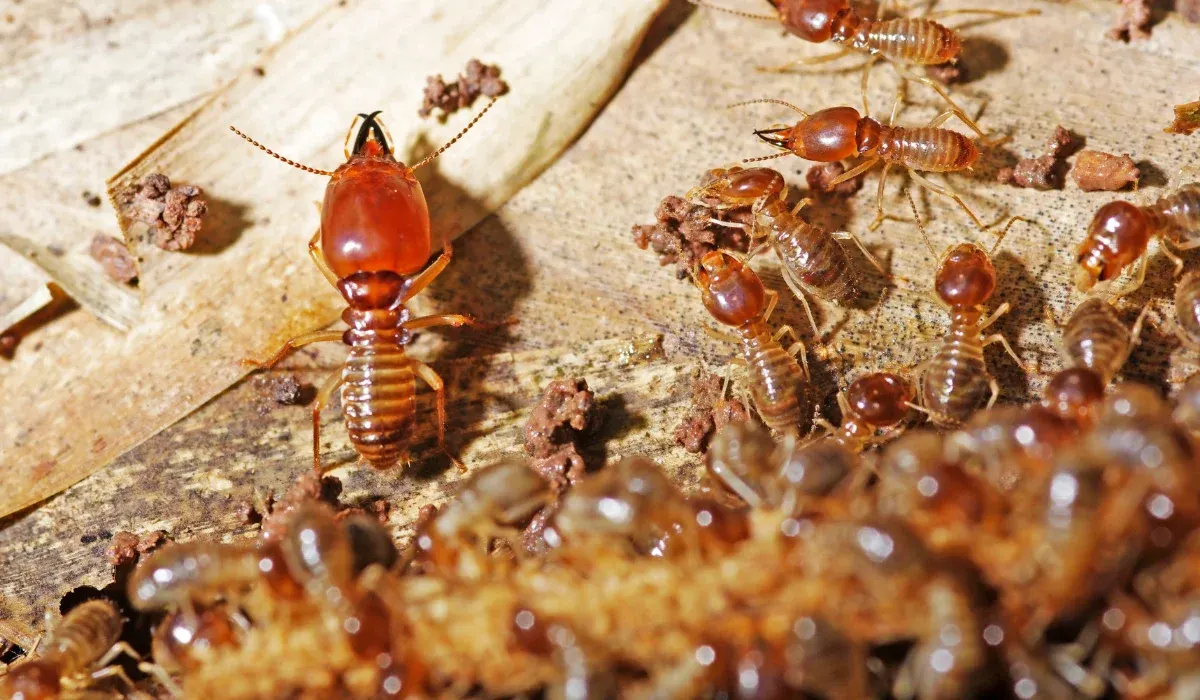
Wings are the fastest check when you find a pile of them on a windowsill. Termite wings all match and reach well past the end of the body. Ant wings come in two sizes and are about as long as the body or shorter. A dead termite swarmer also keeps tiny wing stubs where its wings broke off, while an ant leaves no stubs.
Termite vs Ant Without the Wings
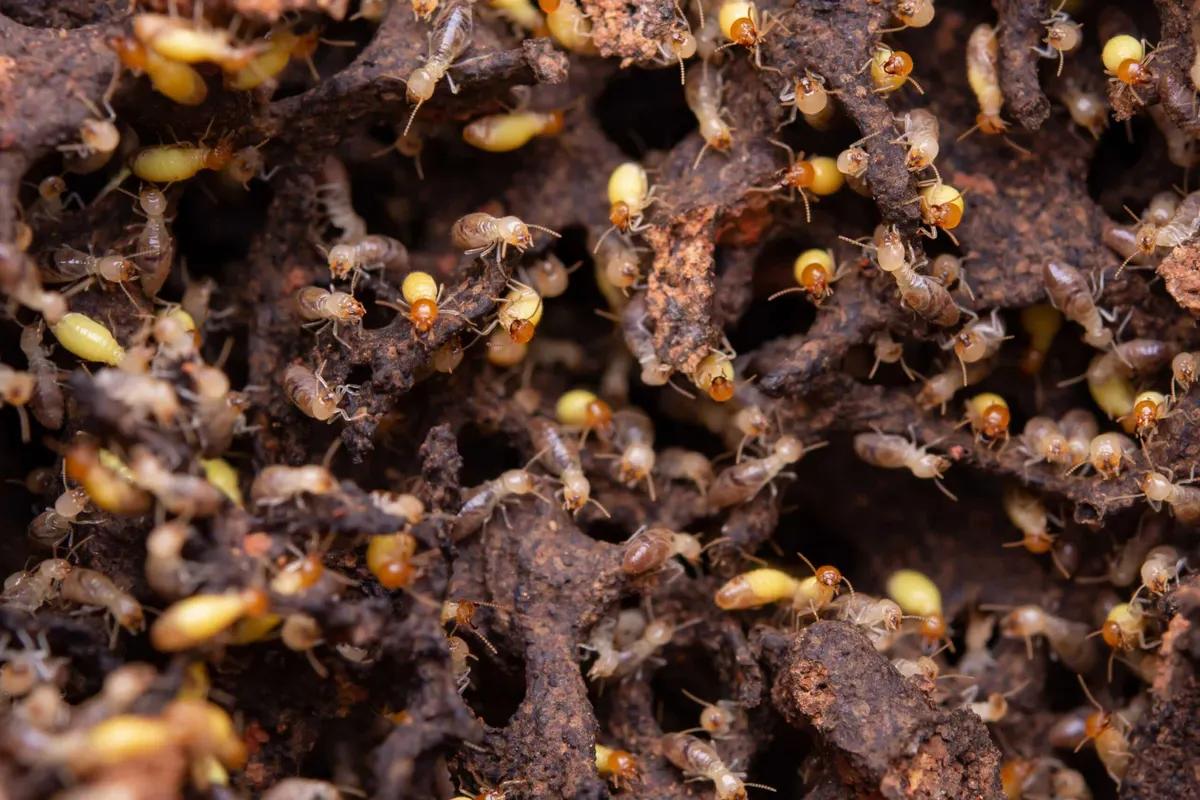
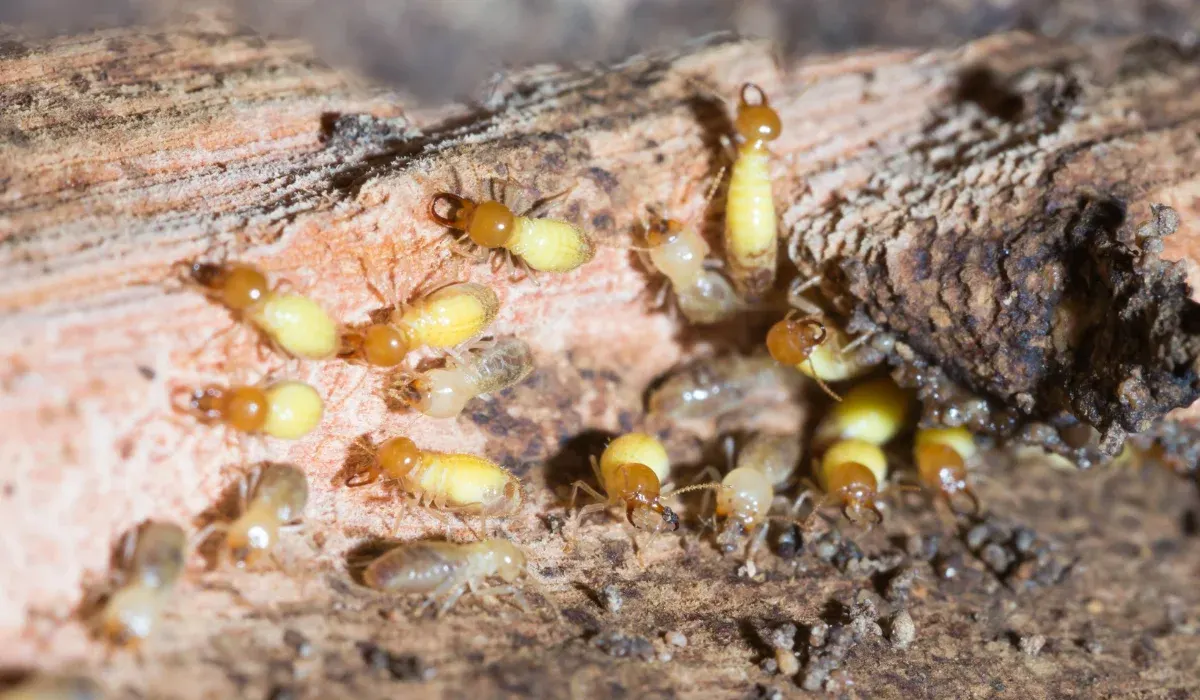
Most of the year, you won't see wings at all. Termite workers are pale, soft-bodied and blind, roughly a quarter to three-eighths of an inch long, and they stay hidden inside wood, soil and mud tubes. They dry out fast in open air, so they almost never walk across a floor or a patio in daylight.
Ant workers look tougher and darker, and they travel in the open along trails. A pale, waistless insect inside a mud tube is a termite. A dark insect with a pinched waist on your kitchen counter is an ant.
Carpenter Ants Cause the Most Confusion
Carpenter ants confuse people because both insects live in wood and both swarm in spring. The difference is what they do with the wood. Termites eat it. Carpenter ants only hollow it out for their nests, and Texas A&M notes that they usually pick wood that is already wet, rotting or damaged by termites. Their tunnels are clean and smooth, while termites line their tunnels with mud.
The debris tells them apart too. Carpenter ants push cone-shaped piles of shredded wood and dead insect parts out of small holes. The subterranean termites in DFW leave no sawdust or pellets at all, so a pile of coarse wood bits points to carpenter ants.
Texas A&M also notes that Texas carpenter ants do less structural damage than carpenter ants elsewhere and rarely harm framing lumber. Their nests still point to a moisture problem, and they count as a potential wood-destroying organism when you sell a home in Texas.
In DFW, check the trees first. Carpenter ants nest in trees, especially crape myrtles. When a crape myrtle grows near the house, in Plano or anywhere in DFW, our technicians almost always find carpenter ants trailing up and down it. Our carpenter ant control page covers how we find and treat the nest.
Fire Ants, Acrobat Ants and Other Flying Ants
Fire ant swarms are easy to mistake for termites. Texas A&M's fire ant program says their mating flights happen most often in spring and fall, usually soon after a rainy spell. Fire ant swarmers are about 1/3 inch long, with a pinched waist, elbowed antennae and front wings longer than the back pair. They come from mounds in the yard, not from your walls, and they don't eat wood. Alabama's extension service notes that swarmers like to land on shiny surfaces, which is why they often end up in backyard pools.
Acrobat ants look like small carpenter ants, 1/8 to 3/8 inch long, with a heart-shaped rear end. They nest in dead wood and often move into tunnels that termites left behind, so finding them can point to old damage. If ants keep coming back around your home, our page on pest control in Plano shows how we handle ants, termites and the other local pests.
Carpenter Bees, Beetles and Other Look-Alikes
A few look-alikes fool people with the damage they do, not their looks. Carpenter bees resemble bumblebees, but their abdomens are shiny, black and hairless. They drill round holes into wood and live alone, so you see one bee at a hole, not a swarm.
Powderpost beetles are hard-shelled beetles, reddish brown to black, that leave pinhead-size holes and fine, flour-like powder in wood. Forterra doesn't treat wood-boring beetles. That job calls for heat, cold or fumigation by a different kind of specialist, and we refer it out.
Mayflies near lakes and creeks, and green lacewings in gardens, can pass for swarmers because both have four wings. Mayflies trail two or three thin tail threads, and lacewings have long antennae and clear, lacy wings.
If the insect you found has a thick waist, straight antennae and long matching wings, it is a termite. A free termite inspection settles whether the insect is a termite at all and, if it is, where it gets in.
Termite Look-Alike FAQ
Why do flying termites suddenly appear?
A colony starts producing swarmers once it matures, which takes 3 to 5 years, according to Texas A&M. Warmth and moisture trigger the flight. In Texas, most swarms happen in April and May, often on a warm day after rain.
Are there black termites without wings?
Yes, for a short time. Swarmers are dark brown to black, and they drop their wings soon after they land. A black termite with no wings still has a straight waist, straight antennae and tiny wing stubs. Termite workers are always pale.
What should you do if termites swarm inside?
Swarmers inside a house usually mean an active colony in or under it. NC State Extension's guide to termite swarmers explains that indoor swarmers usually die from lack of moisture, and that killing them doesn't stop the colony. Vacuum them up, save a few in rubbing alcohol for identification, and have the house inspected.