What Do Baby Termites Look Like?
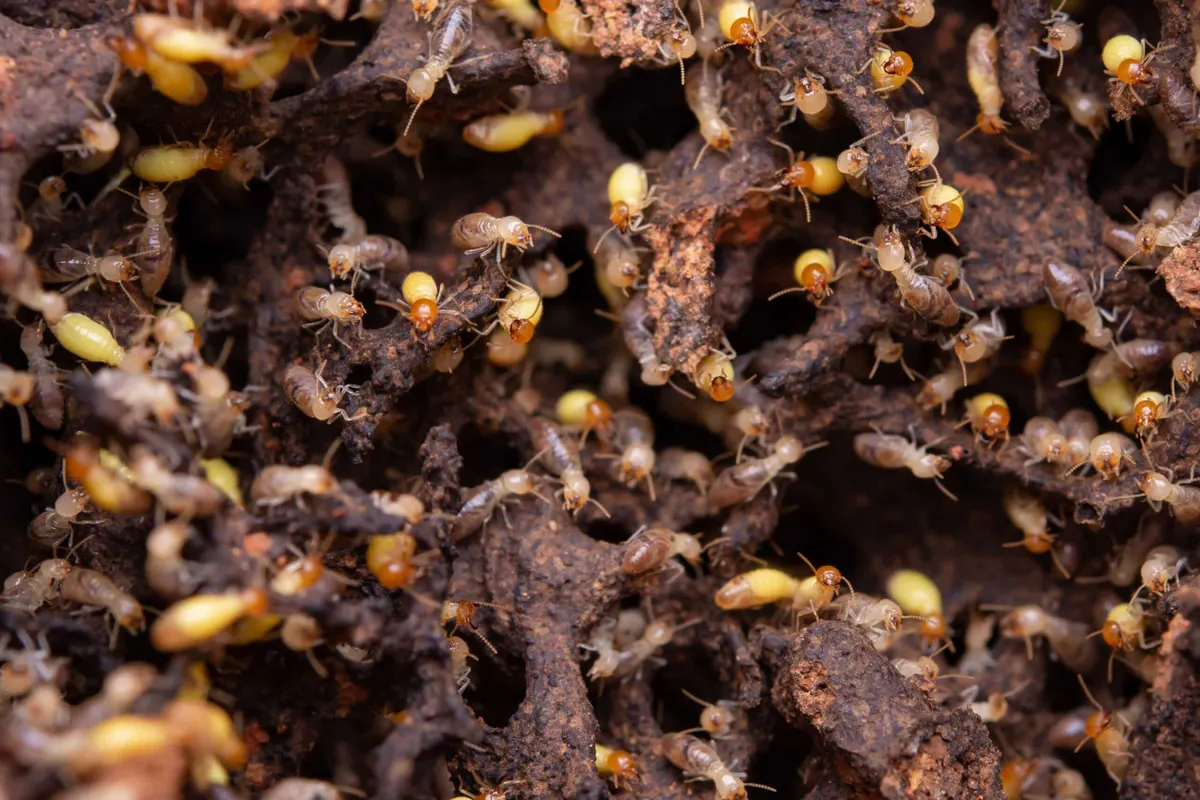
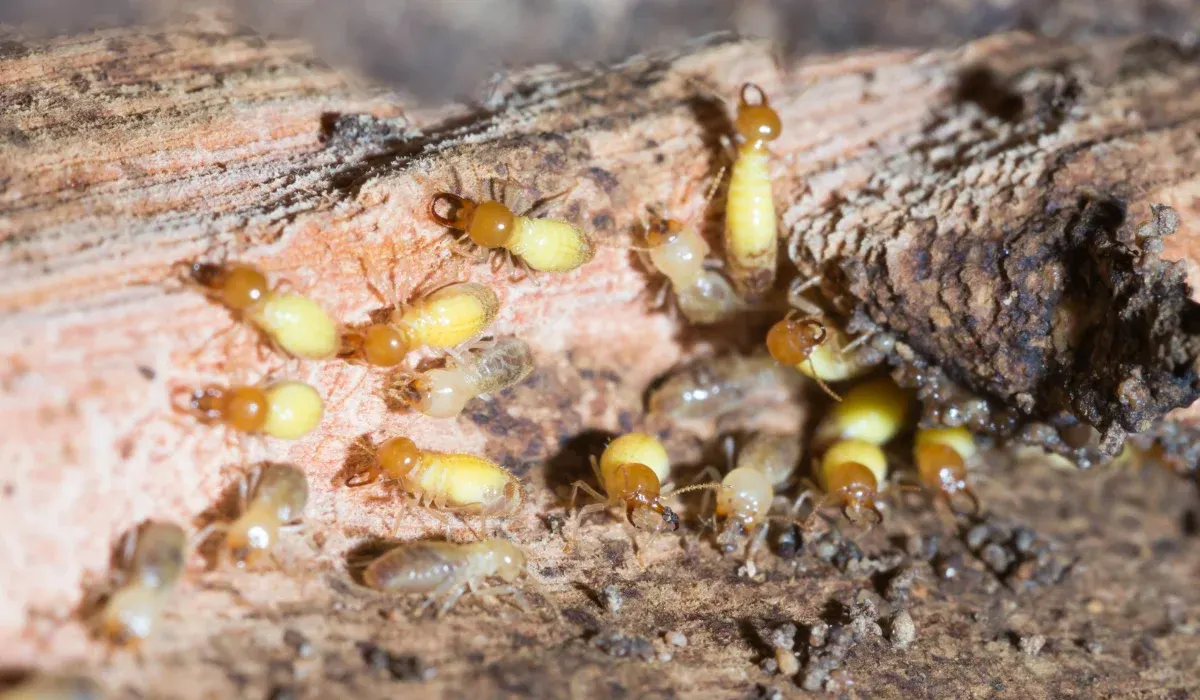
Baby termites look like tiny, soft, creamy white ants without the pinched waist. They have straight antennae, six short legs and no eyes or wings. A newly hatched termite is only about 1/16 inch long. The pale termites most people actually find are workers, 1/4 to 3/8 inch long, which stay pale and wingless even when fully grown.
On this page
What Baby Termites Look Like Up Close
Termites hatch looking like small, pale copies of the workers that raise them, and they grow by molting. Look for four things.
The color is creamy white to almost clear, and the body is soft. The body is one long tube with no narrow waist between the middle and the rear. The antennae are short and straight, made of tiny beads, with no bend in the middle. And there are no eyes, because the termites that do the colony's work are blind.
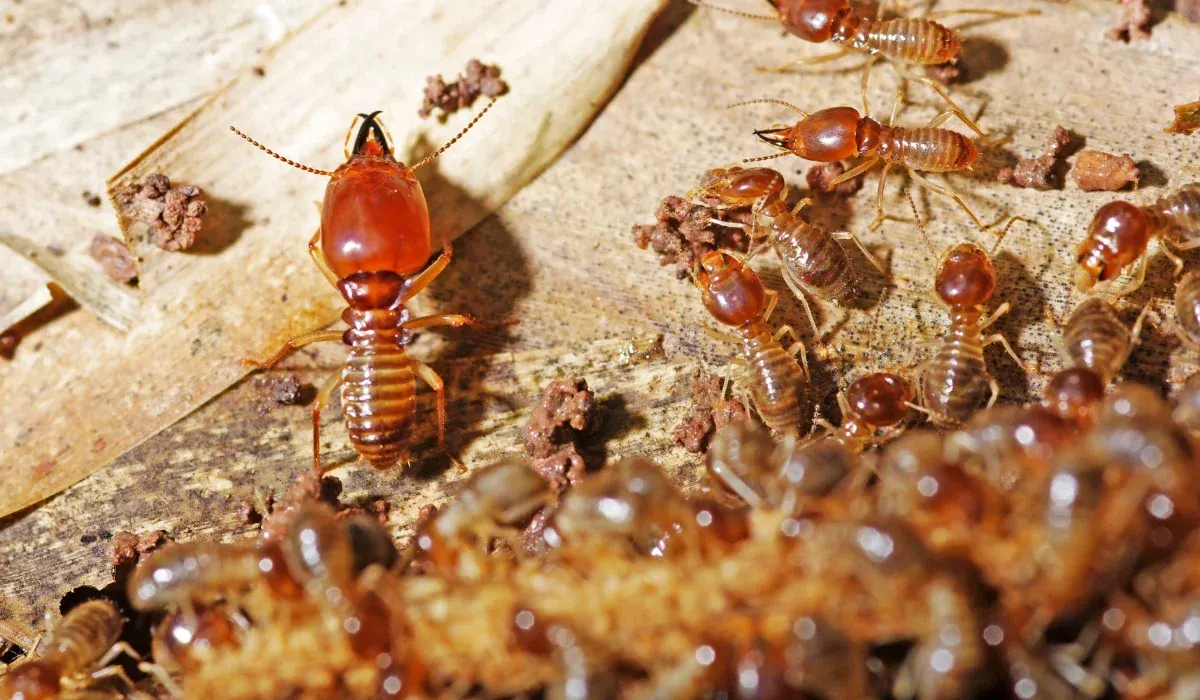
Two other kinds of termites can confuse the picture. A termite with the same pale body but a large brownish head and strong jaws is a soldier, which guards the colony. A dark brown or black termite with wings, or with short stubs where wings broke off, is an adult swarmer.
Termite Nymphs, Workers and True Babies
Many people call any baby termite a nymph, but entomologists use the word more narrowly. In the subterranean termites that infest DFW homes, the newest hatchlings are larvae. Nymphs are a later stage with small wing buds, and they become swarmers. Ohio State's extension service notes that nymphs are slightly darker than workers and show up in mature colonies.
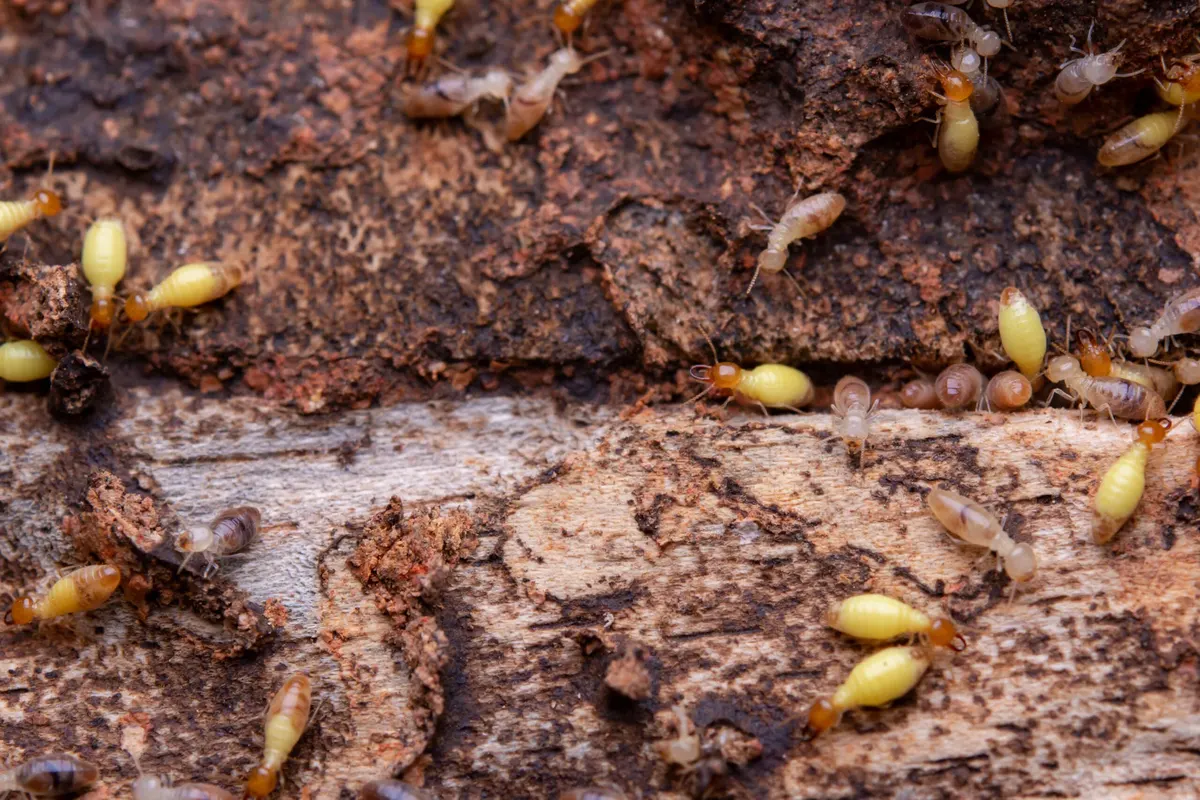
Size tells you even more. Texas A&M AgriLife's subterranean termite guide puts young termites at 1/16 to 1/4 inch, depending on age, and workers at 1/4 to 3/8 inch. The true babies stay in the protected center of the colony, where workers feed them. What you see in a mud tube or damaged wood is almost always a worker. It looks like a baby because it never darkens or grows wings while it does a worker's job.
Baby Termites vs Baby Ants
Baby ants look nothing like baby termites, which makes them easy to rule out. Ants go through a full change from larva to pupa to adult. An ant larva is a worm-shaped grub with no eyes and no legs, according to Arizona State University's Ask a Biologist. It can't walk, and it depends on worker ants for every meal. An ant pupa looks more like an adult ant, but its legs and antennae lie folded against its body, and it doesn't move.
The ant that fools people is a pale young adult. Ask a Biologist notes that newly emerged ants are often lighter in color and darken as they age. A pale ant still has a pinched waist and antennae with a sharp elbow in the middle. A baby termite has neither. If the insects you found have a narrow waist, they are ants, and our ant control page explains how we find and treat the colony.
Other Small Pale Bugs Mistaken for Termites
Two more tiny, pale insects show up in homes and send people searching for baby termites. The table below compares them with termite workers and baby ants, using clues you can see with a hand lens.
| Insect | Size and color | Body clues | Where you find it |
|---|---|---|---|
| Baby termite (worker) | 1/16 to 3/8 inch, creamy white | Thick waist, straight beaded antennae, six legs | Mud tubes, damaged wood, soil under wood |
| Ant larva | Creamy white, size varies by species | Worm-shaped, no legs or eyes, can't walk | Inside an ant nest, tended by workers |
| Ant pupa | Whitish, darkens over time | Ant-shaped with legs folded, doesn't move | Inside an ant nest, sometimes in a cocoon |
| Booklouse | Under 1/10 inch, white or yellowish | Large head with eyes, long thin antennae | Damp books, paper and stored food |
| Springtail | 1/25 to 1/12 inch, whitish or gray | Forked tail that flings it into a jump | Sinks, tubs, potted plants |
Booklice and springtails point to moisture, not wood damage. Colorado State describes booklice as moving white or yellow specks that feed on mold in damp areas and stored food, and neither insect bites or damages wood. Springtails live in soil and move indoors when their outdoor habitat dries out, according to the University of Maryland Extension. That is why they can show up in DFW sinks and tubs during a hot, dry summer. Fixing leaks and drying the area often takes care of both.
Where DFW Homeowners Find Baby Termites
Subterranean termites live in the soil and dry out quickly in open air. Workers reach wood through mud tubes, so pale termites rarely walk across a floor or counter in plain view. In DFW, where slab foundations are common, the usual place to see them is inside a mud tube on the foundation. Texas A&M suggests cracking a tube open, because live, creamy white workers inside mean the colony is active.
You can also find them in damaged baseboards and door frames, and in wood that touches the soil, like landscape timbers, fence posts and old stumps. Pale insects crawling in the open on a counter or windowsill, with no mud or wood around them, are much more likely to be ants.
If you do find termites, drop a few into a small jar of rubbing alcohol. Texas A&M recommends alcohol for termite samples because it keeps them from drying out. Killing the ones you can see won't touch the colony, which is why termite treatment for DFW homes works in the soil around the foundation. A free termite inspection confirms whether those pale insects are termites and how the colony reaches your home.
Baby Termite FAQ
Do baby termites have wings?
No. Only adult swarmers have wings, and nymphs carry small wing buds. Dark winged termites are swarmers, and in Texas they appear mostly in April and May.
What do baby termites look like on a wall?
You rarely see them on the wall itself. Termites travel inside walls and through mud tubes, so the clues on a wall are thin lines of dried mud or bubbled paint. Break into a mud tube and you'll see the creamy white workers.
How do you get rid of baby termites?
Treat the colony, not the babies. Larvae stay deep in the soil colony, where store-bought sprays can't reach them. Bait stations around the foundation reach the larvae too, since workers carry the bait home and pass it to every member of the colony.