★★★★★
"Raul was absolutely wonderful. He told me the reason we were seeing bugs in the house. Sprayed inside and outside. Thank you so much."
Bait and traps are judged on the day that actually means something, several days in. A rat exterminator across North Texas should allow for that. Your entry points are sealed afterwards, and anything already indoors is assessed at no cost.
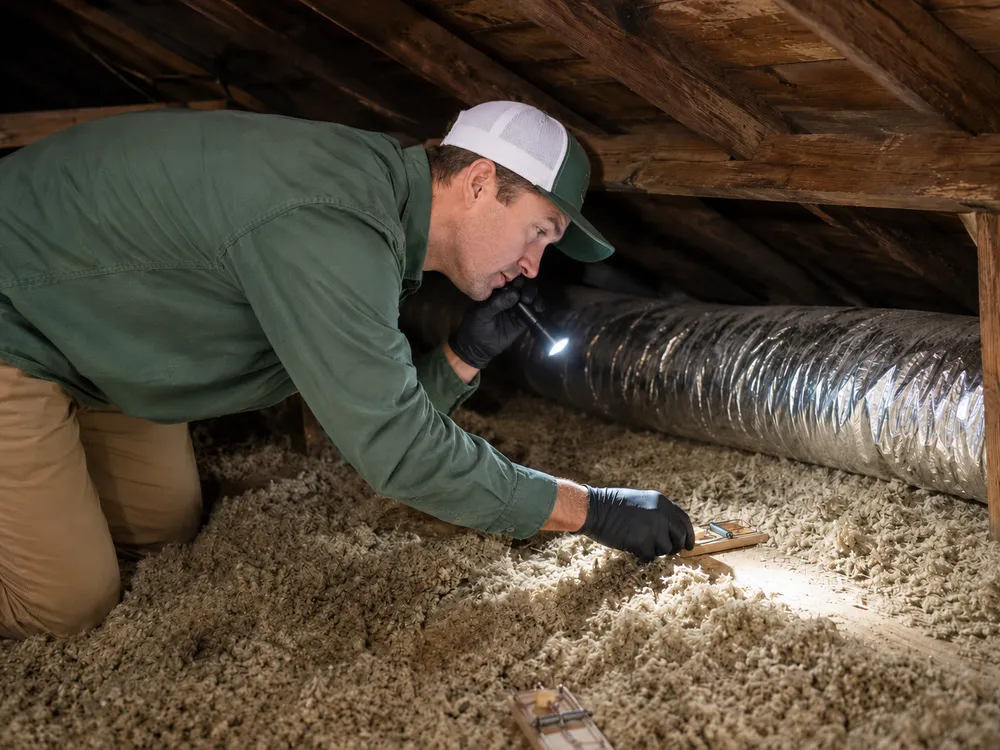
Rats avoid anything new in their environment for days, which means the traps and bait placed on a first visit are deliberately ignored at exactly the point most companies check them and leave. The absence of activity gets read as success. Forterra allows for that caution and judges your result on the right day, then closes the entry with the Zero Gap System™. Texas Pest Control License TPCL #850046, free inspection for interior rodent issues.
"Raul was absolutely wonderful. He told me the reason we were seeing bugs in the house. Sprayed inside and outside. Thank you so much."
"Very nice and efficient young man Check with us to ensure that he addressed any potential concerns we had and followed through"
"Good as always"
"We enjoy having Forterra as our pest control provider. Casey, our tech, listened to our concerns and took care of them immediately. The staff is friendly every time we need to contact them. Give Forterra a try and you will see why we recommend them."
"Great company and service. Just started with them and I have seen immediate results. Gabrael was my technician and he took his time to understand all my concerns and did a very thorough job! I highly recommend them (and Gabrael!)."
"Came to the door and treated everything I asked him to and did a thorough job."
Free interior inspections book fastest when the office is close. Southlake, Dallas and Aubrey each keep exclusion crews on local rotation.

Forterra Pest Control
935 S Kimball Ave Ste. 162
Southlake, TX 76092
Forterra Pest Control
8300 Douglas Ave Ste. 800 - #802
Dallas, TX 75225
Forterra Pest Control
9053 Ike Byrom Rd Ste 2C
Aubrey, TX 76227
Rats are cautious and mostly nocturnal, so you will hear and find evidence long before you see one. These four signs also tell us which rat you have.
Rat droppings run half an inch to three quarters, blunt-ended for Norway rats, pointed and curved for roof rats. Mouse droppings are rice-sized. The trapping plan stays the same either way; the difference tells us where to look, so leave them for the inspection.
Rat incisors grow continuously, so rats gnaw hard materials to wear them down, wood framing, plastic pipes, and the insulation on electrical wiring. Chewed wiring in an attic is a fire hazard, not just a pest problem.
Rats run the same routes nightly, hugging walls and pipes, and their oily fur leaves dark rub marks along those paths. A visible grease trail means an established population commuting through your home.
Scratching, scurrying or gnawing overhead in the first hours after dusk points to roof rats in the attic. The same sounds from under floors or inside lower walls point to Norway rats working up from the foundation.
Spotted any of these? Get your exact price online in about 60 seconds, or call the office and we will take it from there. See my price →
Roof rats attack from the roofline, Norway rats from the foundation. Identification decides where the traps and the sealing work go.
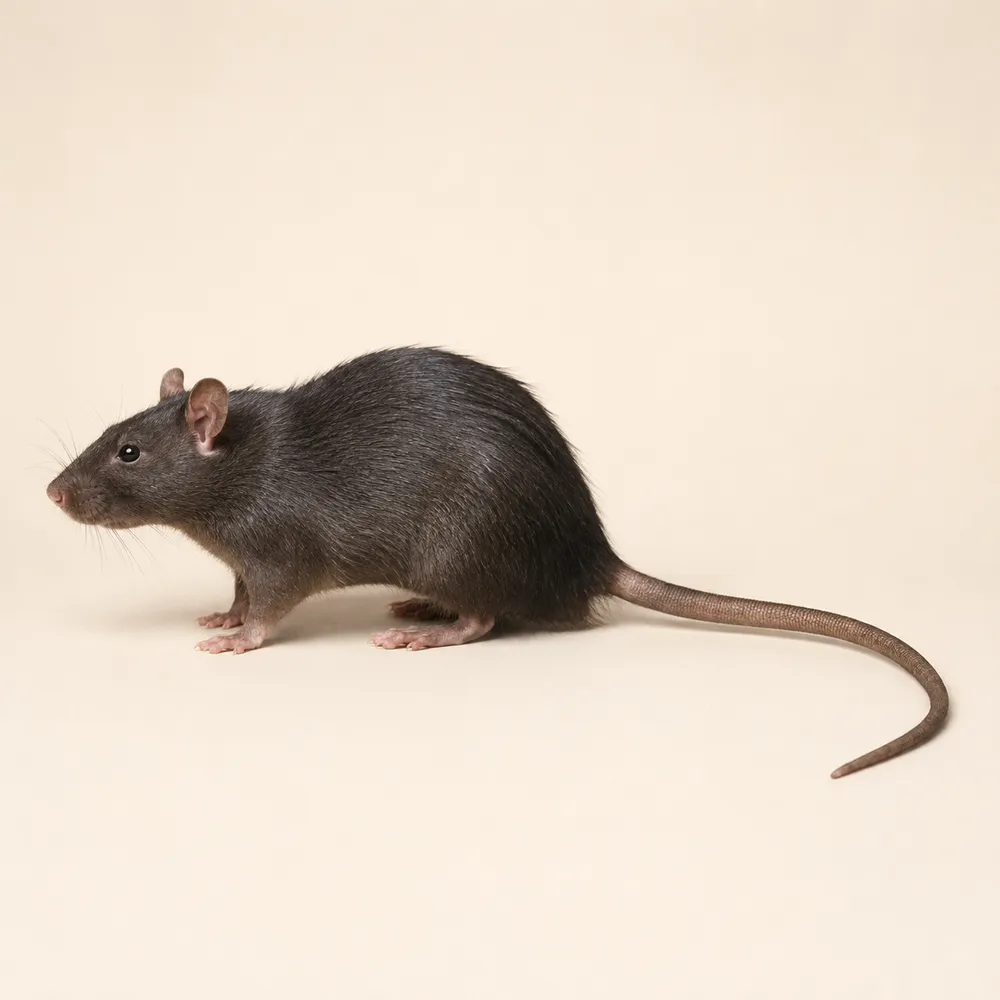 FROM ABOVE
 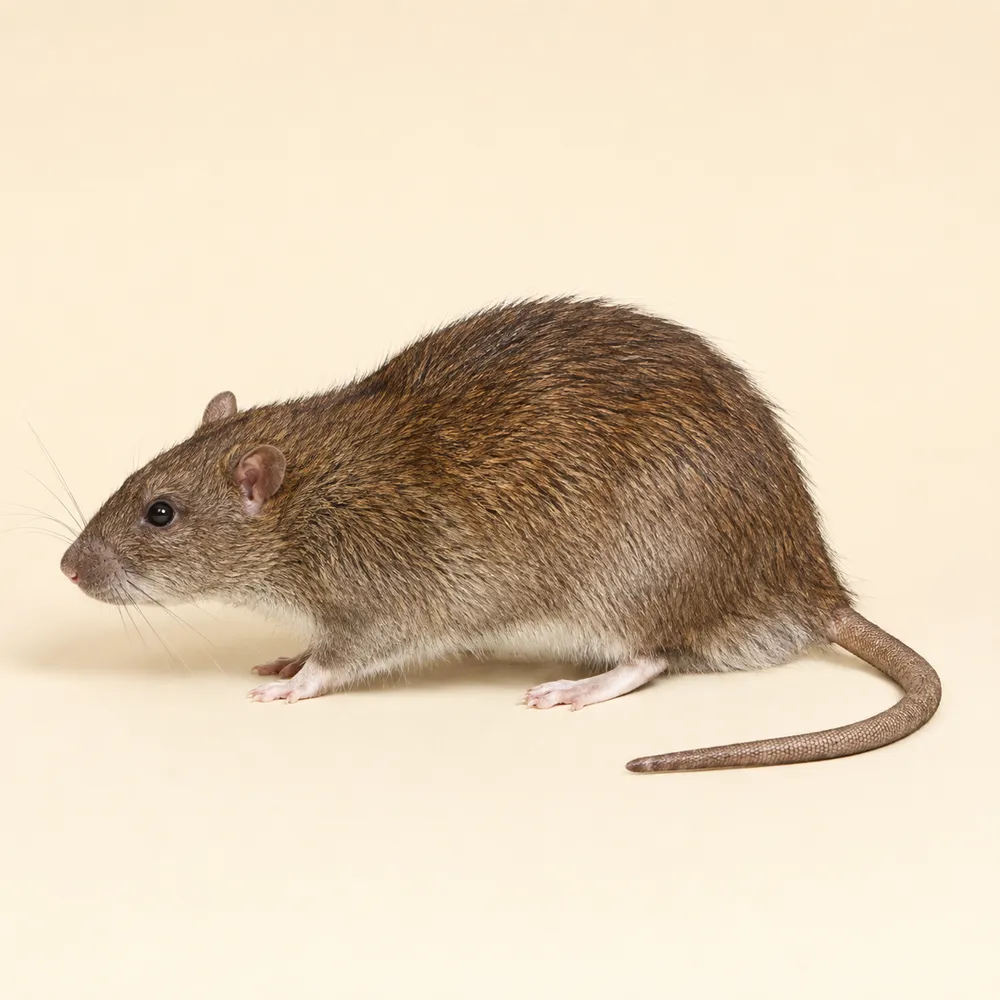 FROM BELOW
 Trapping rats without sealing the building is a subscription to more rats. We seal the building first, then trap to clear the house, and exterior bait stations keep the outside pressure down between visits.
The building gets closed first. That is the fix.
Every entry route from the inspection gets sealed shut with the right material for each opening. Sealing first makes the problem finite. Whatever is still inside is all we have to remove, and trap-shy rats have nowhere left to rotate to.
Whatever was sealed inside gets trapped out.
Traps go where the activity is actually seen, on the runs and rub marks, in secured stations wherever kids, pets or people could reach them. With the routes closed, most homes go quiet in about a week.
Exterior bait stations keep the pressure down.
Bait is a maintenance tool, not a shortcut, tamper-resistant stations on the exterior reduce the surrounding population before it ever finds a new gap, checked and refreshed on the quarterly visit.
"You can pay somebody to trap rats in your attic every quarter forever, or you can pay once to seal the building and stop the problem at the source. Trapping is somebody else's recurring revenue. Exclusion is the actual fix. We do exclusion because it's the part that holds, the rats either find a way in or they don't, and our work is what decides that."
Ready when you are. Real prices online in about 60 seconds, phones answered 24/7.
The rat inspection splits the house horizontally. Roof rats work the top four points, Norway rats the bottom, and the sealing plan follows whichever evidence we find.
The roof rat's front door, worn flashing at ridge vents, reached by fence-top and tree-limb.
Chewed screens here mean attic nesting; re-screened with hardware cloth after trapping.
The roofline seam opens with age; sealed in metal, not foam a rat chews through.
Dormer and chimney flashings are the climbing highway's on-ramps.
Norway rats walk under worn seals at night; replaced with rodent-resistant sweeps.
The Norway rat's route, slab gaps at plumbing, sealed shut and mortared.
Rats are the exception to quote-first. The interior inspection is free, and the exact trap and sealing price follows it in writing.
Attic, roofline, foundation and garage. We identify the species from droppings and gnaw evidence, map the runways and find every entry point.
Species, trap plan, sealing work and exact price before anything starts. Trapping and exclusion are itemized separately so you can see what each costs.
Sealing comes first. Every entry route closed with the right material for its opening. Traps then work the active runways inside, cleared and repositioned until the house goes quiet. No rats dying in your walls.
Exterior bait stations keep the surrounding population down, checked and refreshed on the quarterly Residential Pest plan. The sealed routes stay guaranteed, rats back through a sealed route, we come back free.
If you don't see yours, call (817) 665-6527 or text us, a human will answer.
In DFW, an attic rat is almost always a roof rat. They travel fence tops and tree limbs, enter at ridge vents, gable vents and soffit gaps, and nest in insulation. Norway rats, the other local species, stay low, burrowing along foundations. Noise overhead after dusk plus curved, pointed droppings confirms roof rats.
Poison and traps do different jobs. Inside the house, trapping is the tool. It removes the animal where you can retrieve it. Poison earns its keep outside, in locked tamper-resistant stations, as ongoing maintenance that keeps the surrounding population low. One is removal, the other is pressure control, and a real program uses each where it belongs.
It depends on the order. Trapping first sometimes gets lucky with one or two rats, but they are smart. Once traps read as danger they get avoided, and open holes replace every catch with a new arrival. Sealing everything first, then trapping whatever is stuck inside, is the fastest and most reliable way, and it typically takes about a week.
They will try. That is exactly why the work happens in this order. The entry points get sealed so they cannot get back inside, and exterior bait stations stay maintained on the quarterly visit to keep the outside population down. The sealed routes are guaranteed, and if rats break back through a sealed point, we come back free.
The trapping program and the exclusion work are quoted separately once the free inspection wraps, and most full exclusion jobs in DFW land between $500 and $3,000 depending on the roofline and the number of entry points. You see the exact number, itemized, before any work starts.
Because they avoid anything new in a territory they know well, sometimes for a week. An empty trap on day two measures caution rather than absence, and a company that reads it as success and leaves is misreading the situation entirely. The meaningful check comes later, which is why the visit sequence is spaced the way it is.
Frequently, and it catches people out because everything gets applied at ground level. A limb resting on a roof, a adjoining building or a fence line running to a wall all give a route that never touches treated ground, so bait placed around a foundation goes ignored while the scratching above a ceiling continues every night. Ground level work alone leaves the upper route completely open.
Not long, which is a useful weakness. Unlike mice, rats need a water source daily, so a leaking pipe, a condensate line or a pet bowl left out overnight anchors a population to one part of a building. Finding and removing that source shifts the problem more than most treatments manage on their own. Fixing a drip does more for a rat problem than most people credit.
Rat problems by city, coverage, the responsible office, and the seal-first plan applied to local housing stock.
No phone call. No credit card up front. See the real price for your home, pick a start date, and a technician will be at your door in about two business days.


