How Long Does Termite Pretreatment Last?
A termite pretreatment under a new slab usually protects the house for at least five years, and many modern products last longer. The warranty behind it is much shorter, often one year from closing. After that, the treated soil fades slowly, and anything that disturbs the ground around the house can open gaps well before the product wears out.
On this page
What a Termite Pretreatment Covers
A pretreatment puts termite protection in place while the house is still going up. Most often, a licensed applicator treats the soil under the slab before the crew pours concrete, then treats the outside perimeter after the grading and landscaping. Builders who miss that window can treat the wood frame or install bait stations after final grade instead.
Texas sets the standard for the soil method. Texas's rule on pre-construction termite treatments calls for a continuous horizontal and vertical barrier around the whole structure. It also sets the deadline for the final perimeter treatment at 30 days after the landscaping wraps up or one year after construction ends, whichever comes first.
How Long Termite Pretreatment Lasts
Federal rules set the floor. EPA's termiticide labeling notice requires soil termiticides to show at least five years of effectiveness against termites before registration. When EPA set that policy, USDA field data showed most registered products working for three to five years or more.
Newer products often do better. Mississippi State University Extension reports that some of the better soil termiticides control termites for 8 to 12 years or longer. Under a slab, the concrete shields the treated soil from sun and rain, which helps it last. The edges of the house are the weak point, since that soil gets dug, watered, mulched and regraded for years.
Product Life vs Warranty Length
New homeowners often mix up two different clocks, how long the product works and how long someone promises to fix a problem. The table below separates them.
| Clock | Typical length | What it means for you |
|---|---|---|
| Termiticide in the soil | At least 5 years, often longer | The product keeps working until it breaks down or the soil is disturbed |
| Builder's termite guarantee | Often 1 year from closing | Covers new infestations and repairs only within that year |
| Pest company service agreement | Usually 1 year, renewable | Re-treatment if termites appear, as long as you renew |
| Bait stations installed after final grade | As long as they are monitored | Protection continues while a technician checks the stations |
The product often outlasts the paperwork by years. The risk is the stretch between year one and year five, when the warranty has ended and nobody is checking the house.
What Wears a Pretreatment Down Early
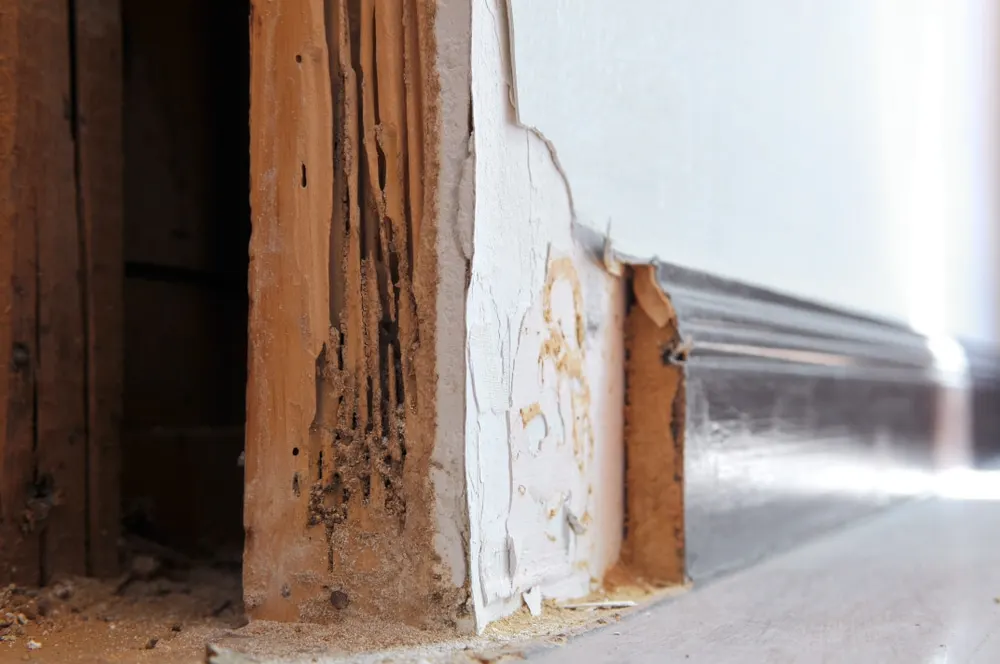
Time is rarely what breaks a pretreatment first. Disturbance is. Every time someone digs through the treated soil along the foundation, they cut a gap in the barrier and often replace treated soil with untreated soil.
The usual culprits in DFW are pools and patios added a few years after move-in, along with additions and room extensions. Irrigation trenching, French drains and new flower beds dug against the slab do the same. Fresh soil or mulch piled above the treated zone can let termites travel over it. Slabs also crack and shrink away from the foundation over time, according to North Carolina's structural pest control program, and DFW's shifting clay soil makes that common. Each crack is a possible entry point that the original treatment never covered.
Records to Ask Your Builder For
Ask for the pretreatment record at closing, not years later. It should show the date, the product used, the areas treated and the company that applied it. If the applicator couldn't reach part of the site, Texas requires a signed statement and a diagram showing exactly what got treatment, with a copy sent to the owner.
Keep your own copy. The Texas rule only requires the applicator to keep pretreatment records for two years, so a house sold in year six may have no paperwork left anywhere but your files.
Protecting the House After Year Five
The pretreatment isn't something you redo on a schedule, but you should check it. A yearly inspection catches mud tubes and swarmers before they become damage. The free termite inspection Forterra offers covers the slab edge, expansion joints and the places plumbing comes through.
If the house needs protection, there are two main paths. One is Sentricon, a ring of bait stations in the soil that a technician checks once a year, adding bait only when termites start feeding. The other is a liquid treatment, which has a higher upfront price but no ongoing fee beyond a yearly renewal to keep its warranty active. Forterra backs its own termite warranty either way. Builders planning the next house can see how new construction termite pretreatment works by building stage.
Termite Pretreatment FAQ
Is termite pretreatment required in Texas?
It depends on the city. Some cities, including Dallas and Grapevine, require documented termite protection on new construction before final inspection, while others don't. Your local building inspector can tell you the rule where you're building.
Does pretreatment stop drywood termites?
No. Soil pretreatments target subterranean termites, which live in the ground and cause nearly all termite damage in DFW. Drywood termites live inside wood and are rare in the area.
Can a house with a pretreatment still get termites?
Yes. Termites can get in where digging broke the treated zone, through slab cracks, or after the product fades. A pretreatment lowers the odds, but it doesn't replace yearly inspections.
If your pretreatment is more than a few years old, an inspection shows where the house stands, and booking takes about a minute online.