Mud Dauber vs Wasp Differences, Nests and Stings
A mud dauber is a wasp, but a very different kind from the ones that sting people. Mud daubers have a thread-thin waist, build nests out of mud, live alone and almost never sting. Paper wasps and yellowjackets build paper nests, live in colonies and sting to defend them.
On this page
Mud Dauber vs Wasp at a Glance
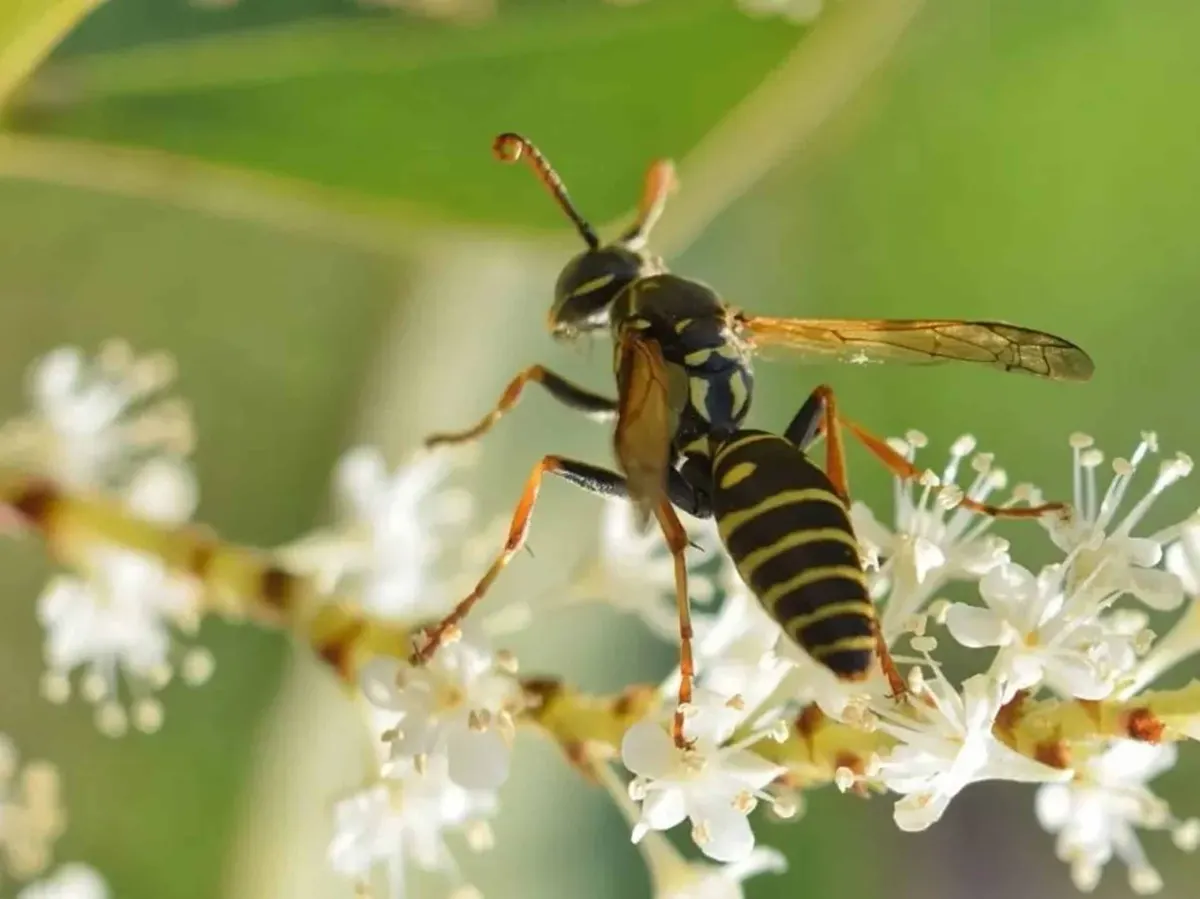
The quickest clue is the body. A mud dauber's abdomen hangs from the rest of its body on a long, narrow stalk, while paper wasps and yellowjackets have a short, thicker waist. The nest is the second clue, and it is often easier to spot than the insect. The table below compares mud daubers with the two stinging wasps DFW homeowners see most.
| Feature | Mud dauber | Paper wasp | Yellowjacket |
|---|---|---|---|
| Body | Long, thread-thin waist, about 3/4 to 1 inch | Slender, with long legs that dangle in flight | Stout, with a short waist |
| Color | Black, black and yellow, or metallic blue | Brown or reddish with yellow or orange marks | Bright yellow and black bands |
| Nest | Tubes or lumps of dried mud | Open paper comb shaped like an umbrella | Enclosed paper nest, often in the ground or a wall |
| Lives in | No colony, each female works alone | Small colonies | Colonies that can reach thousands |
| Stings | Rarely, only when handled or trapped | When the nest is disturbed | Readily, to defend the nest |
Do Mud Daubers Sting?
Mud daubers can sting, but they almost never do. Clemson's mud dauber factsheet describes them as non-aggressive insects that rarely sting unless threatened or touched by accident. Most stings happen when someone grabs one or presses it against skin.
The reason is how they live. A mud dauber has no colony and no queen to protect, so it gains nothing by chasing you away from a nest. Females use their sting mainly to paralyze spiders for their young. Paper wasps and yellowjackets behave very differently because a whole colony depends on the nest, and they will sting to defend it. If you are allergic to stings, treat any wasp with caution, and get emergency care if your face or throat swells after a sting.
What a Mud Dauber Nest Looks Like
Mud daubers build their nests from dried mud, and each species builds a different shape. Organ-pipe mud daubers build long parallel tubes that look like pipes on an organ. Black-and-yellow mud daubers build lumpy clusters of mud cells. Blue mud daubers often move into old nests that other mud daubers left behind.
A single mated female builds each nest, one cell at a time, according to Texas A&M's guide to mud daubers. She looks for a site with shelter from the weather, a source of mud and plenty of spiders nearby. That is why nests show up under eaves, on porch ceilings, in garages and sheds, and inside grills and outdoor equipment.
Small round holes in a nest mean the adults have already chewed their way out. A nest with no holes is likely still occupied.
Why Mud Daubers Hunt Spiders
Each nest cell is a pantry. The female catches spiders, paralyzes them with her sting and packs them into the cell. Texas A&M notes that a single cell can hold up to 25 spiders. She lays one egg on the first spider, seals the cell and starts the next one. The larva hatches, eats every spider in its cell and then pupates into an adult.
That diet makes mud daubers useful neighbors, since they remove a lot of spiders from around a house. It also means a large number of mud daubers often points to a large number of spiders nearby. If you notice both, spider control around the exterior treats the source and leaves the mud daubers less to hunt.
Mud Daubers and Wasps in DFW
DFW's long warm season gives mud daubers months to build. Females collect wet mud wherever they find it, and DFW yards supply plenty of it. Clay soil holds water at the edge of a sprinkler zone, under a dripping AC condensate line or around a pool long after the rest of the yard dries. Brick homes with deep soffits, covered patios and open garages add the shelter they need.
The same eaves and porch ceilings draw paper wasps, which is why people mix the two up. Yellowjackets are a different problem. They usually nest out of sight in the ground or inside a wall, and their colonies grow largest by late summer and fall.
When to Leave Mud Daubers Alone
Most of the time, a mud dauber nest can stay where it is. The insects rarely sting, they eat spiders, and an old nest does no harm. Remove a nest when it sits by a door, a vent or anywhere people touch often. Scrape it off with a putty knife. The easiest time is winter or early spring, before new nests start. To stop new nests, seal gaps in soffits and vents, fix drips that create mud, and cut down on the spiders that bring mud daubers in.
Paper wasp nests near a door and any yellowjacket nest are a different call, because those wasps defend their nests. Don't plug a yellowjacket entrance in a wall, since the wasps can chew their way inside. Our wasp and hornet removal service takes care of those nests whenever they turn up.
Mud Dauber FAQ
Should I destroy the mud dauber nest?
Only if it is in the way. An empty nest with exit holes can come down anytime. For an active nest, winter is easiest. No adults are around to defend it then, and scraping it off also removes the young that spend the winter inside.
Do mud daubers chase you?
No. Mud daubers don't defend their nests, so they have no reason to chase people. A mud dauber flying close to you is usually hunting spiders or looking for a nest site.
What time of year do mud daubers build nests?
Mud daubers build during the warm months. In DFW that usually means spring through early fall, with the most activity in summer.
What will keep mud daubers away?
Remove old nests, seal openings in soffits, vents and garages, and reduce the spiders around your house. Fake paper nests sold to deter wasps don't stop mud daubers, which often nest close to each other.