Where Do Wasps Go in Winter?
Wasps go into hiding in winter, and only the young mated queens survive the cold. They wait it out in sheltered spots such as attics, wall voids, gaps under siding, loose bark and leaf litter. Warm spells in a DFW winter wake some of them early, and the ones hiding in your house often crawl out indoors.
On this page
Which Wasps Survive the Winter
A paper wasp or yellowjacket colony lasts a single season. In early fall the nest raises males and new queens, the two mate, and the young queens fly off to find shelter. The workers and the old queen keep going until cold weather and the end of their food supply finish them. By winter the paper nest stands empty, and no wasp moves back into it next year.
Mud daubers handle winter another way. The adults die in fall, but their young stay sealed inside the mud tubes on your walls, eaves and garage ceiling. They finish growing over the winter and chew their way out in spring as new adults.
Where Wasps Go in Winter in DFW
Each wasp type picks a different kind of winter shelter, and that decides whether it can end up in your living room. This table shows the wasps DFW homeowners see most.
| Wasp | What survives winter | Where it waits | Can it come indoors? |
|---|---|---|---|
 Paper wasps and red wasps |
Mated queens, often in small groups | Attics, wall voids, chimneys, under siding and bark | Yes the most common winter visitor |
| Yellowjackets |
Mated queens, each one alone | Soil cavities, leaf litter, hollow logs, stumps | Rarely unless one hides behind siding |
| Mud daubers |
Young sealed in mud cells | Mud tubes on walls, eaves and garage ceilings | Rarely only when the mud nest is inside an attic or garage |
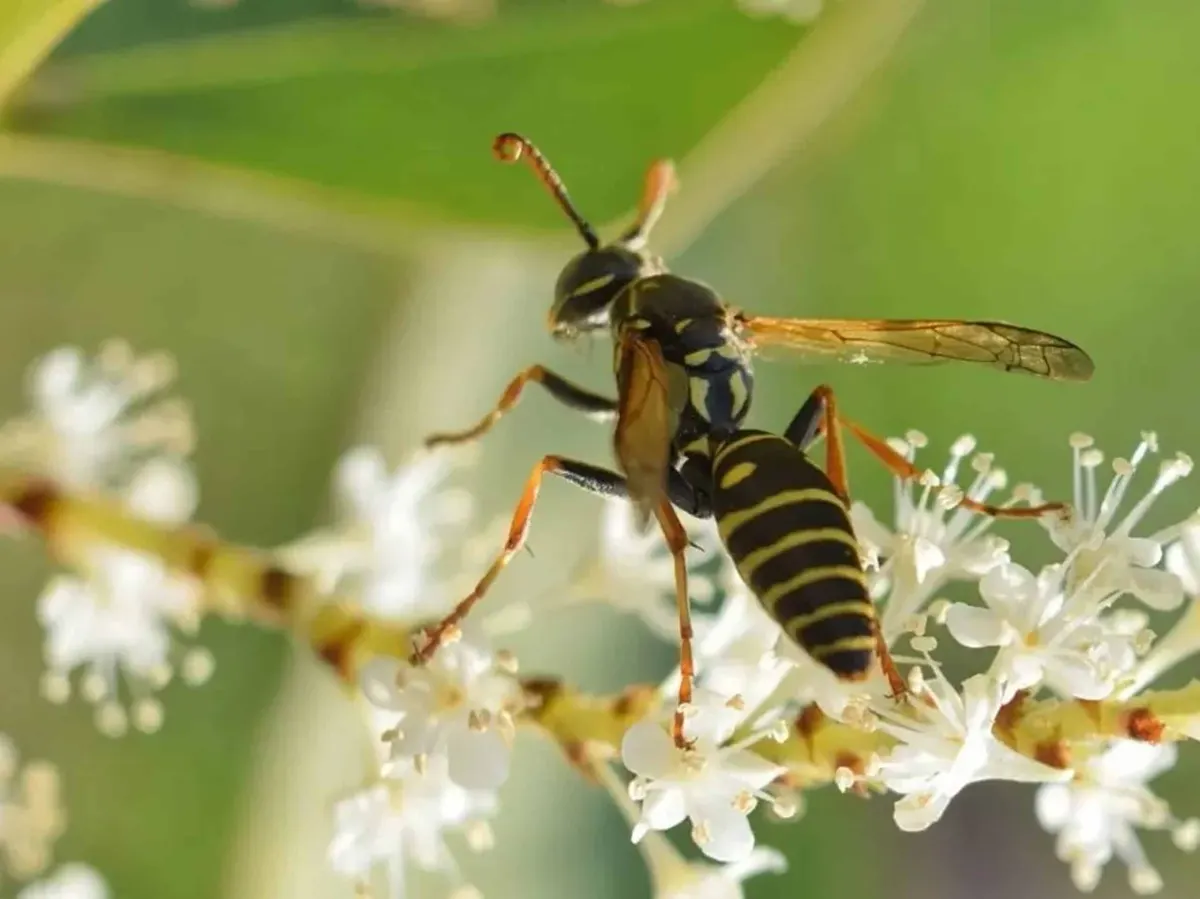
The reddish orange wasps many DFW homeowners call red wasps are paper wasps too. The Texas Apiary Inspection Service paper wasp guide notes they range from reddish orange to dark brown across Texas. They usually nest under eaves, a few feet from the attic they later use as a winter shelter.
How Wasps Get Inside Homes in Winter
Queens move in during fall, not in the middle of winter. They search the outside of the house for a sheltered crack and slip in around the roofline, through soffits, gaps beside attic vents, loose siding and chimneys. In DFW, wasp activity around homes runs high in October, and that's when most queens settle in for the winter.
From the attic or a wall void, a waking queen follows light and warmth. University of Arkansas Extension's note on overwintering paper wasps lists the usual ways out. The wasps crawl toward light coming through a gap in the baseboard, a wall fixture or the edge of a heater vent. Ceiling light fixtures, bath fans and the attic hatch work the same way. That's why winter wasps tend to appear at windows and lamps, far from any nest.
Seeing several wasps over a few days usually means a group of queens shares one hiding spot in the attic or a wall. Paper wasp queens often spend the winter clustered together, so one gap can let out a steady trickle.
Why Warm DFW Days Wake Them
A resting wasp's body runs at about the temperature of the air around it. Cold keeps an overwintering queen still, and a sunny afternoon warms an attic or a brick wall facing south fast enough to rouse her. DFW winters bring plenty of those afternoons between cold fronts.
A queen that wakes indoors has nothing to eat and no way to get back outside. Most soon die on a windowsill or inside a light fixture. The dead wasps you sweep up in January are usually these lost queens, not workers from a nest inside your home.
What to Do With a Winter Wasp
A winter wasp has no nest or young to defend, so it stings only if you press on it or step on it. Swat it, trap it under a cup or vacuum it up, and wear shoes if you keep finding them on the floor. Don't spray a fogger into the room, because the wasps are coming from a space you can't reach.
If they keep turning up, look at where they appear. Wasps by a bathroom fan or a ceiling fixture point to the attic above it. Ones near a baseboard or an outlet point to a wall void. Fall is the right time to close gaps along the roofline, before the next group of queens moves in. Our wasp and hornet removal service treats active nests in any season, and new queens rebuild every spring. In Dallas, our wasp removal team in Dallas treats new nests as soon as they show up.
Wasps in Winter FAQ
Do wasps hibernate in houses?
Some do. Paper wasp queens often pick attics, wall voids and spaces behind siding, because a house stays more sheltered than a hollow tree. They rest there until spring unless a warm spell wakes them early.
Do wasps leave their nest in winter?
Yes. The workers die and the young queens leave in fall, so the paper nest sits empty by winter. Paper wasps never move back into an old nest, and the surviving queens build fresh ones in spring.
Can a wasp sting you in winter?
It can, but only when it feels trapped, for example when you sit on one or pick it up. A sluggish queen crawling on a window won't chase anyone.
A few wasps at the window each winter is normal in DFW, while a steady stream points to a gap worth closing. The spring nests those queens start are the part worth treating, so check your price online or call our office once you spot one.