Signs of Termites and How to Spot Them
The clearest signs of termites are swarmers or shed wings near windows, pencil-wide mud tubes on the foundation, and wood that sounds hollow or blisters under the paint. In DFW, swarms usually come in spring after rain. Our termites live in the soil, so they don't leave the pellet droppings many lists describe.
On this page
Signs of Termites at a Glance
The table below lists the six signs that point to subterranean termites, the kind that get into DFW homes, and what each one tells you.
| Sign | What you see | Where to look | What it tells you |
|---|---|---|---|
| Swarmers | Dark winged insects about 3/8 inch long | Windows, doors and lights | Indoors, the colony is likely in the house |
| Shed wings | Small piles of clear wings, all the same size | Windowsills, spider webs, floors | Swarmers landed and paired off nearby |
| Mud tubes | Dirt tunnels about as wide as a pencil | Slab edge, plumbing, expansion joints | Workers travel between the soil and your wood |
| Hollow wood | Thin surface over tunnels lined with mud | Baseboards, door frames, window sills | Termites fed there, now or in the past |
| Blistered paint | Bubbling that looks like water damage, with no leak | Trim, baseboards, walls | Termites may be working under the surface |
| Mud stalks | Small tan mud tubes poking out | Drywall, ceilings, trim | Workers have tunneled up inside the wall |
You won't see pellet droppings, or frass, on this list. Those come from drywood termites, which live inside dry wood above the ground. DFW's subterranean termites leave mud instead.
When Termites Swarm in DFW
For most homeowners, a swarm is the first sign of termites. A mature colony sends out winged termites to start new colonies. Texas A&M AgriLife's guide to subterranean termites notes that swarms start as early as January and February in South Texas and hold off until April or May in the Panhandle. In DFW, most swarms come from March to May, often on a warm afternoon after rain.
Location matters. Swarmers inside the house usually mean the colony is in the structure. Swarmers outside mean a colony is nearby and may be feeding on your house or a neighbor's. The swarmers themselves don't damage wood, and most that fly indoors soon dry out and die.
Flying ants swarm in spring too. A termite's four wings are all the same size and longer than its body, up to twice as long. An ant's front wings are bigger than its back wings, and they reach about the length of its body or less. Save a few swarmers in a small jar so an inspector can confirm which insect you have.
Mud Tubes on Slab Foundations
Mud tubes show that subterranean termites are coming up from the soil. Workers build them from soil and saliva so they can cross concrete without drying out. On a DFW slab home, walk the whole slab edge and look closely at corners, cracks, and the spots where plumbing and utility lines enter the house. Check the expansion joints in the garage and patio too. Inside, look behind the bath trap access panel if your tub has one.
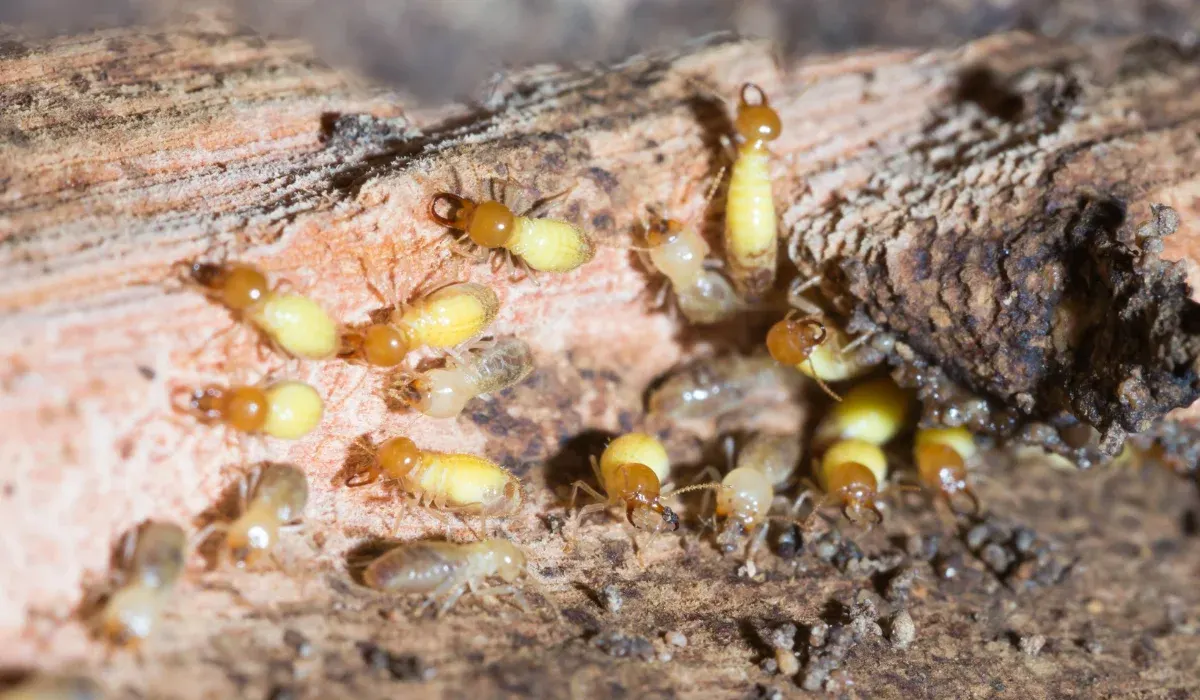
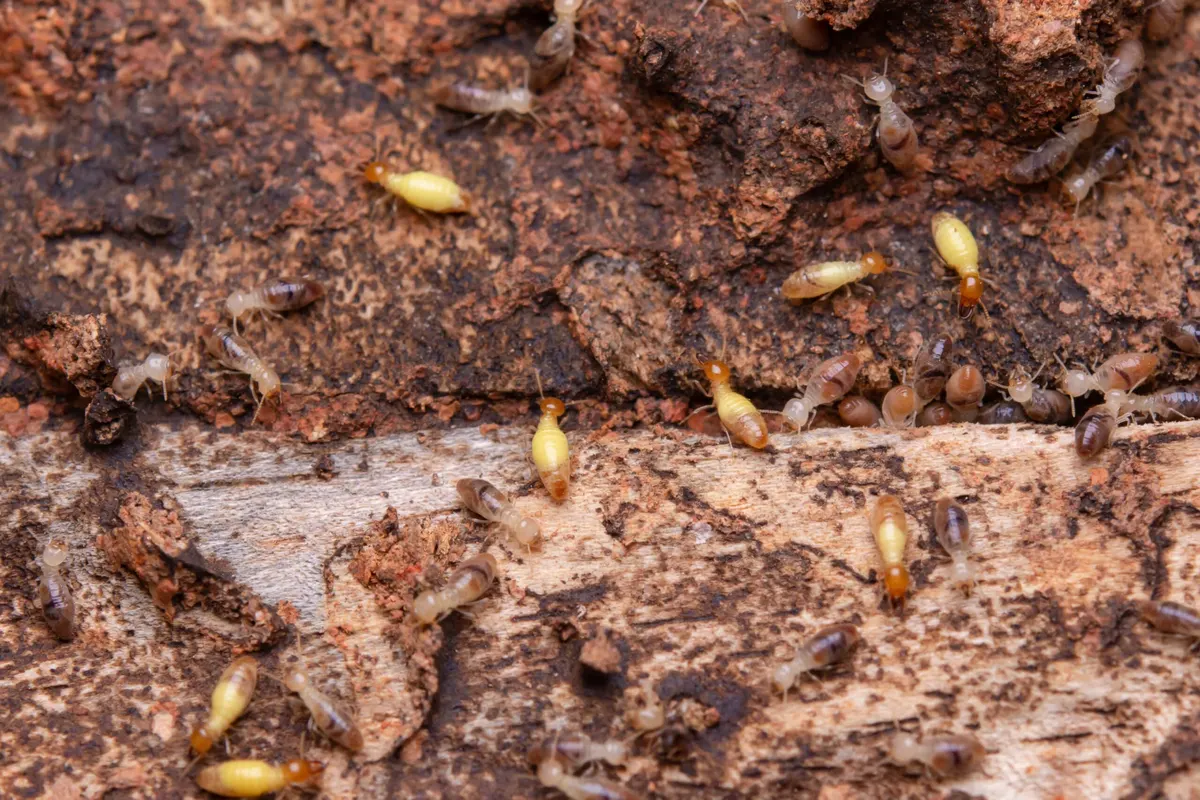
To see whether a tube is active, break open a small section. Live workers are creamy white and 1/4 to 3/8 inch long. An empty tube still means termites reached the house, so it deserves an inspection too.
Tubes hide easily. Texas A&M recommends keeping the soil 6 to 8 inches below the top of the foundation, so tubes stay in plain view. Flower beds and mulch piled against the slab cover that strip and give termites a hidden path to the wall.
Termite Damage Inside the House
Subterranean termites eat wood from the inside along the grain, so the damage hides behind paint. Tap baseboards, door frames and window sills with the handle of a screwdriver. Wood that sounds dull or hollow where it used to sound solid needs a closer look.
Paint can give termites away too. Bubbled or peeling paint on trim or baseboards that looks like water damage, with no leak nearby, can mean termites are working underneath. Small mud stalks can push out of drywall or a ceiling. A door that suddenly sticks, or a floor with a soft spot, can point to damage in the frame or subfloor.
Texas A&M warns that wood rot can look like termite damage. Damp, rotting wood also draws termites in, so the two problems can turn up in the same spot.
What to Do When You Find Signs
Don't panic. Termites take a long time to cause structural damage, so you have time to get an inspection and compare options. Start with this checklist.
- Take photos of the tubes, wings or damage before you disturb anything.
- Save a few swarmers or wings in a small jar or a sealed bag.
- Break open one short section of mud tube to check for live termites, and leave the rest for the inspector.
- Skip the store-bought spray, since it kills the termites you can see and leaves the colony in the soil.
- Look for a termite treatment sticker beside the water heater, at the breaker box or under the kitchen sink.
- Book a termite inspection before you plan any repairs.
The sticker is a Texas detail worth knowing. The Texas rule on termite treatment stickers requires one after every termite treatment or bait system install, with the company, the product and the date. If you find one, call that company first, since the house may still be under its warranty.
Forterra's termite inspections are free. Our termite inspections in Dallas cover the slab edge, plumbing entries and wood trim. If we find active termites, we explain how Sentricon treats subterranean termites and put the prices in writing. Since the inspection is free, it makes sense to have one before any treatment decision.
Termite Signs FAQ
What are the first signs of a termite infestation?
For most people, it's a spring swarm or a pile of wings on a windowsill. Mud tubes can show up first, but they blend in with soil and concrete and are easy to miss low on the foundation or behind shrubs.
Can I check for termites myself?
Yes. Walk around the house each spring, check the slab edge for tubes, and tap the trim in rooms near bathrooms and the kitchen. A colony can work unseen for years inside walls and under flooring, so a yearly professional inspection is still worth it.
How can you tell if a house has had termites before?
Look for a treatment sticker, old mud tubes, patched trim, or small filled holes drilled in a garage slab or patio, which can mean an earlier liquid treatment. If you're buying a home, ask for a WDI report, the wood-destroying insect report that Texas lenders and buyers use.