What Do Termites Eat?
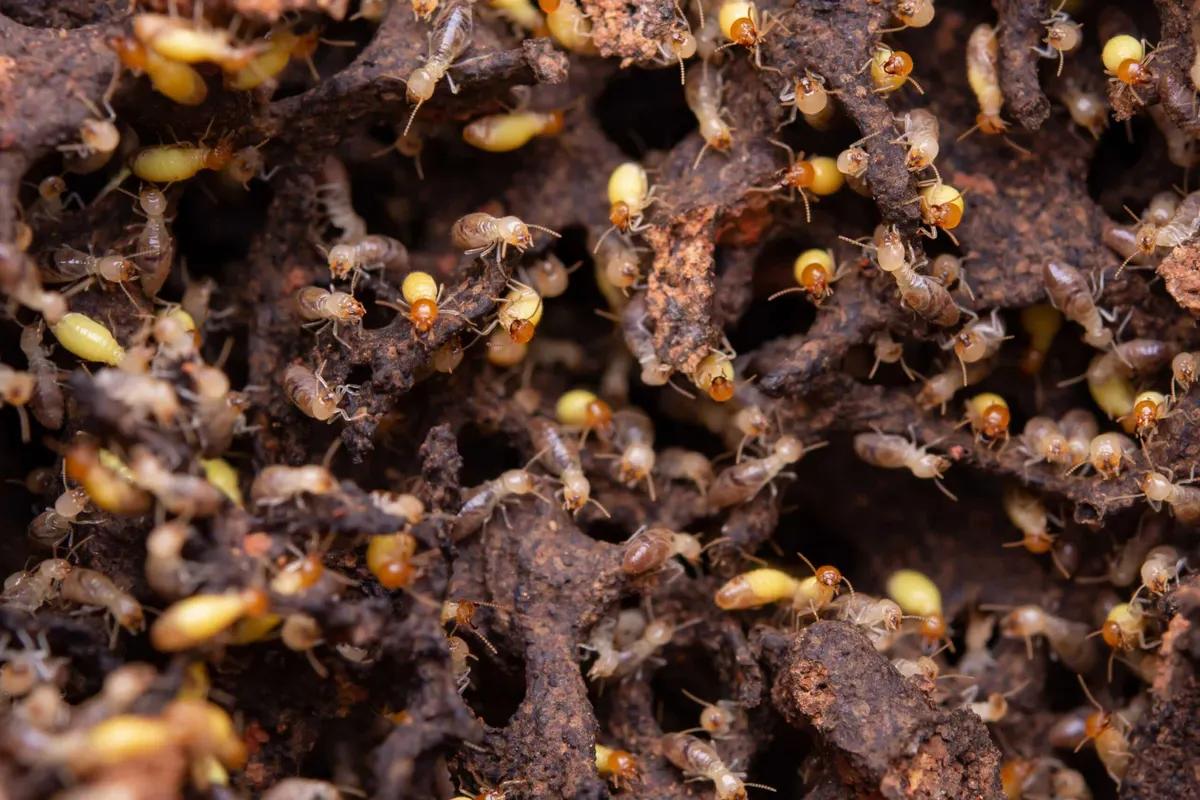
Termites eat cellulose, the tough plant fiber in wood, paper, cardboard and dead plants. They can't digest it alone, so microbes in their gut break it down for them. In a DFW home, that puts framing, trim, the paper face of drywall and boxes stored in the garage on the menu.
On this page
How Termites Digest Wood
Cellulose is hard to break down, and most animals can't use it at all. Termites manage it with help. Texas A&M's subterranean termite guide explains that single-celled protozoans and bacteria living in the termite's hindgut do the digesting. The termite chews, and its gut partners turn the fiber into food.
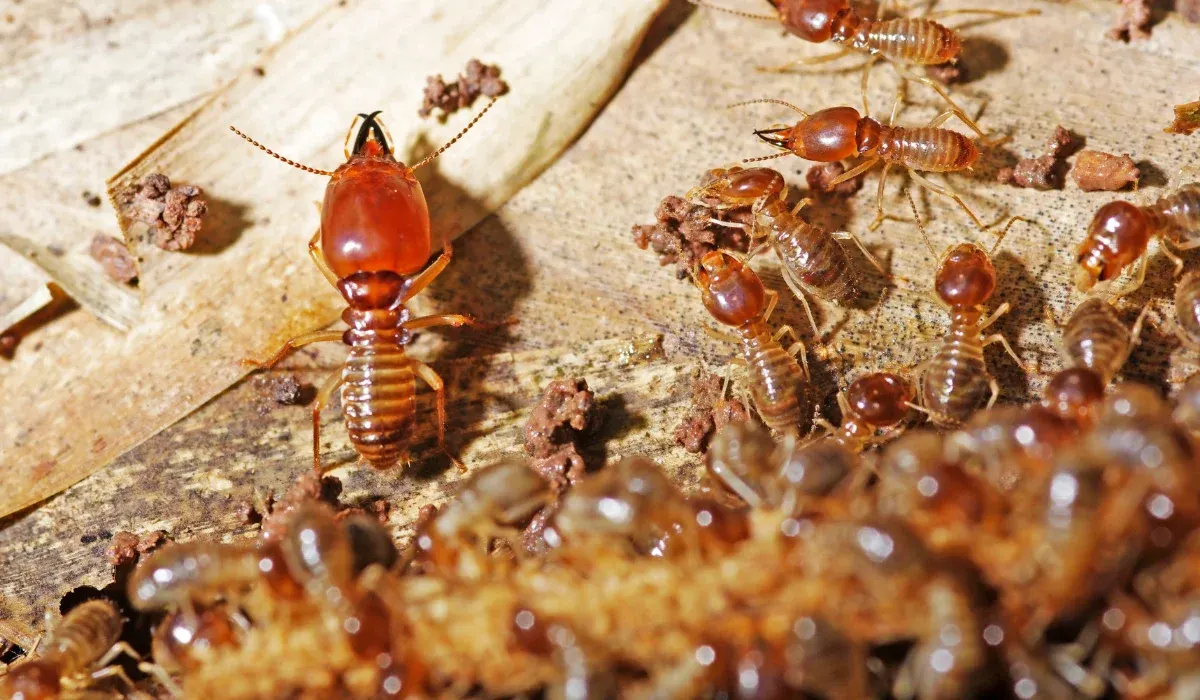
Only the workers feed on wood directly. They pass digested cellulose to the larvae, the soldiers and the king and queen, so one busy group of workers feeds the entire colony. That sharing is also why bait works, since workers carry it home the same way they carry food.
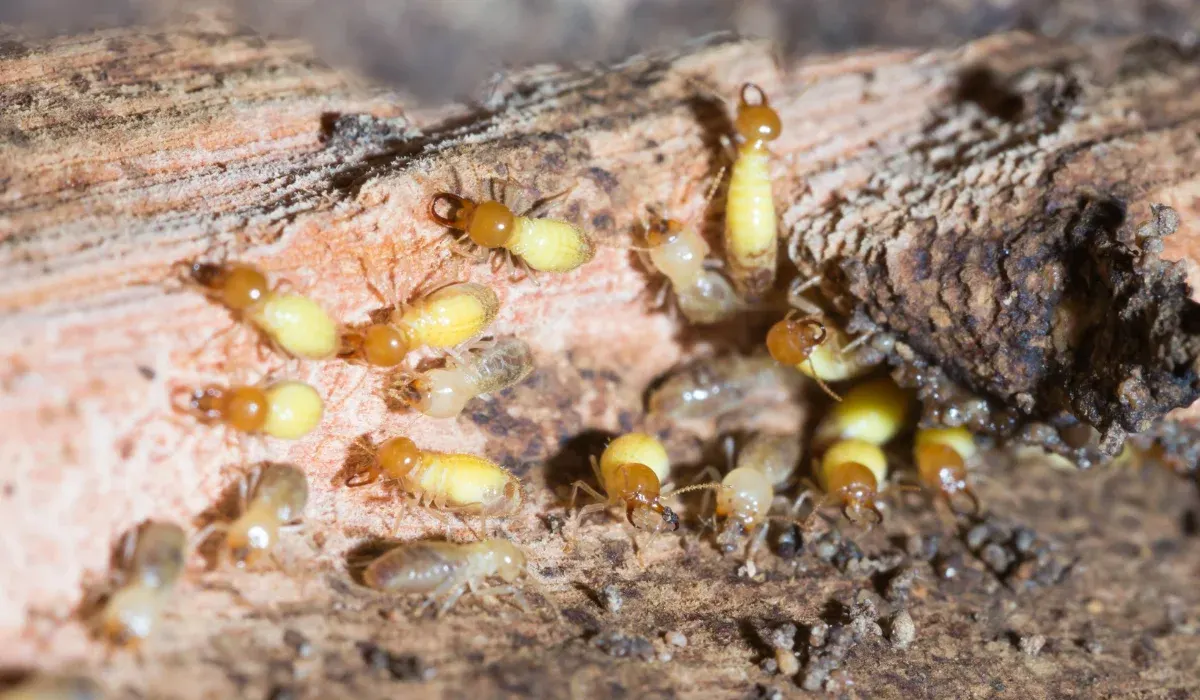
Termites also pick their spots. They follow certain odors in wood, and wood that fungi have started to rot is softer and easier to chew. Some fungi and bacteria even add nitrogen that termites can't get from wood alone. Inside a board, they usually eat the soft, pale spring growth first and leave the harder rings, which gives damaged wood its layered look.
What Termites Eat Inside a DFW Home
A house holds far more food than most people realize. The table below shows common materials in a DFW home, whether termites eat them and what that means.
| Material | Do termites eat it? | What it means for you |
|---|---|---|
| Framing lumber and sill plates | Yes | The wood closest to the slab is usually hit first |
| Baseboards, door frames and trim | Yes | Damage can hide under intact paint |
| Paper face of drywall | Yes, the paper but not the gypsum | Walls near plumbing and damp spots are most at risk |
| Cardboard boxes, books and papers | Yes | Boxes stored on a garage floor are an easy meal |
| Cotton and burlap | Yes | Stored fabric against a wall can feed workers that reach it |
| Plaster, soft metal, rubber and plastic | Chewed through, not eaten | Formosan termites tunnel through them looking for food and water |
| Concrete | No | They go around it through cracks, joints and gaps |
The slab protects nothing by itself. Subterranean termites build mud tubes up its edge or squeeze through cracks to reach the wood above.
What Termites Eat Outdoors
Outside, termites are recyclers. Dead trees, fallen branches and brush are their natural food, and colonies break that wood down into nutrients that enrich the soil. In nature, that makes them useful.
The trouble starts where yard wood meets the house. Fence posts, landscape timbers, stumps, firewood and old form boards near the foundation all feed a colony right next to your walls. Texas A&M's field guide even lists the stems of some garden plants, such as okra, as termite food.
Formosan termites push further. Texas A&M's Formosan termite page records them attacking more than 47 kinds of plants, including sweet gum, cedar, wax myrtle, Chinese elm and white oak. They eat both the soft spring wood and the harder summer wood, which helps explain why they cause damage faster than native termites.
Why Wet Wood Gets Eaten First
Moisture changes the menu. Wood softened by a leak or by rot is easier to chew, and the fungi growing in it make it more appealing. That's why termite damage so often turns up around a dripping pipe, a leaky window or a gutter that overflows onto the trim.
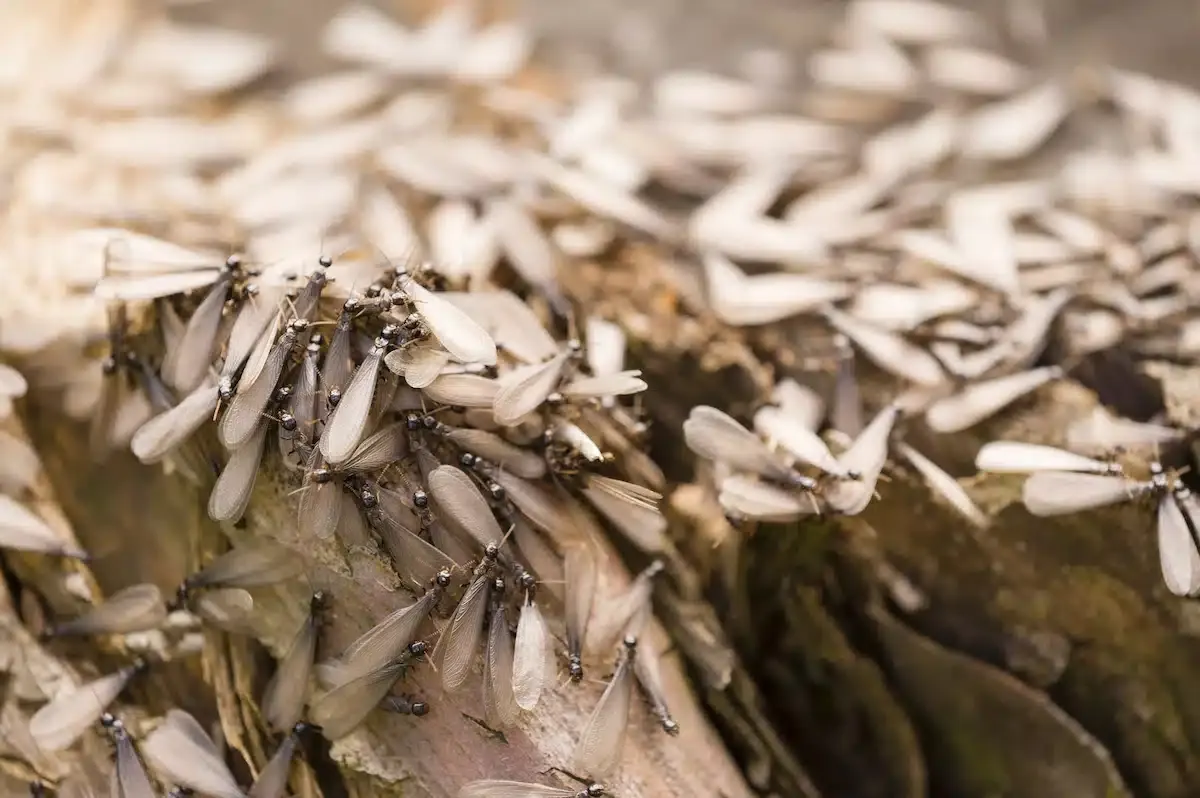
Subterranean termites still eat dry, sound wood, but wet wood draws them sooner. If you spot mud tubes or swarmers, a termite inspection checks the wood closest to moisture first, and Sentricon termite control treats the colony those workers feed. For a price, use the online quote or give us a call.
Termite Diet FAQ
Do termites eat anything other than wood?
Yes. They eat anything rich in cellulose, including paper, cardboard, cotton, burlap and some plant stems. In a home, that means stored boxes and books are at risk along with the framing.
Do termites eat plastic?
No, they can't digest it. Formosan termites do chew through plastic, rubber, plaster and thin soft metal while searching for food and water.
Are termites good for anything?
In the wild, yes. They break down dead wood and turn it into humus that enriches the soil. They only become a problem when the wood they find is part of your house.