How Big Can Rats Get? Sizes and the Biggest Rat
The Norway rat, DFW's biggest house rat, grows to about 16 to 18 inches including its tail. It weighs 7 to 18 ounces, so even a big one tops out around a pound. Roof rats run smaller, at 14 to 16 inches and 5 to 10 ounces. The world's biggest wild rats reach close to 3 feet.
On this page
How Big Do Rats Get in DFW?
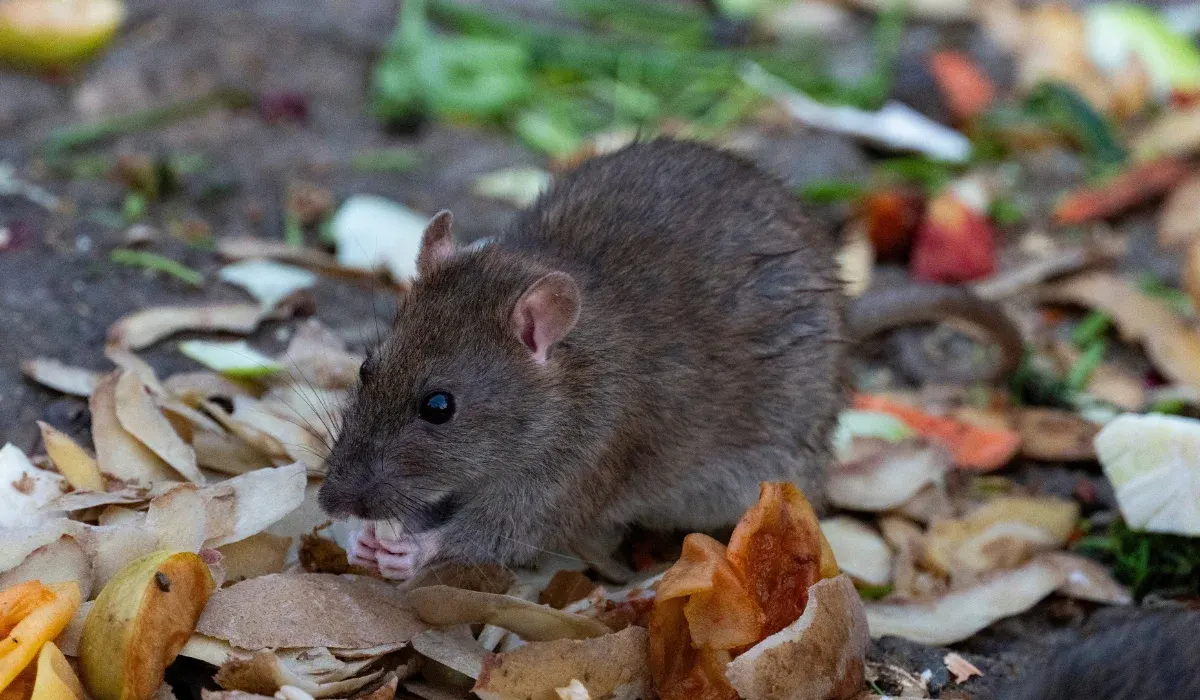
DFW homes deal with two rats, the Norway rat and the roof rat, and both came to North America from overseas. The Norway rat, also called the brown rat or sewer rat, is the larger and stockier of the two. The Mammals of Texas, the Texas Tech reference on the state's mammals, puts its average at about 17 inches from nose to tail tip. Its tail is shorter than its head and body.
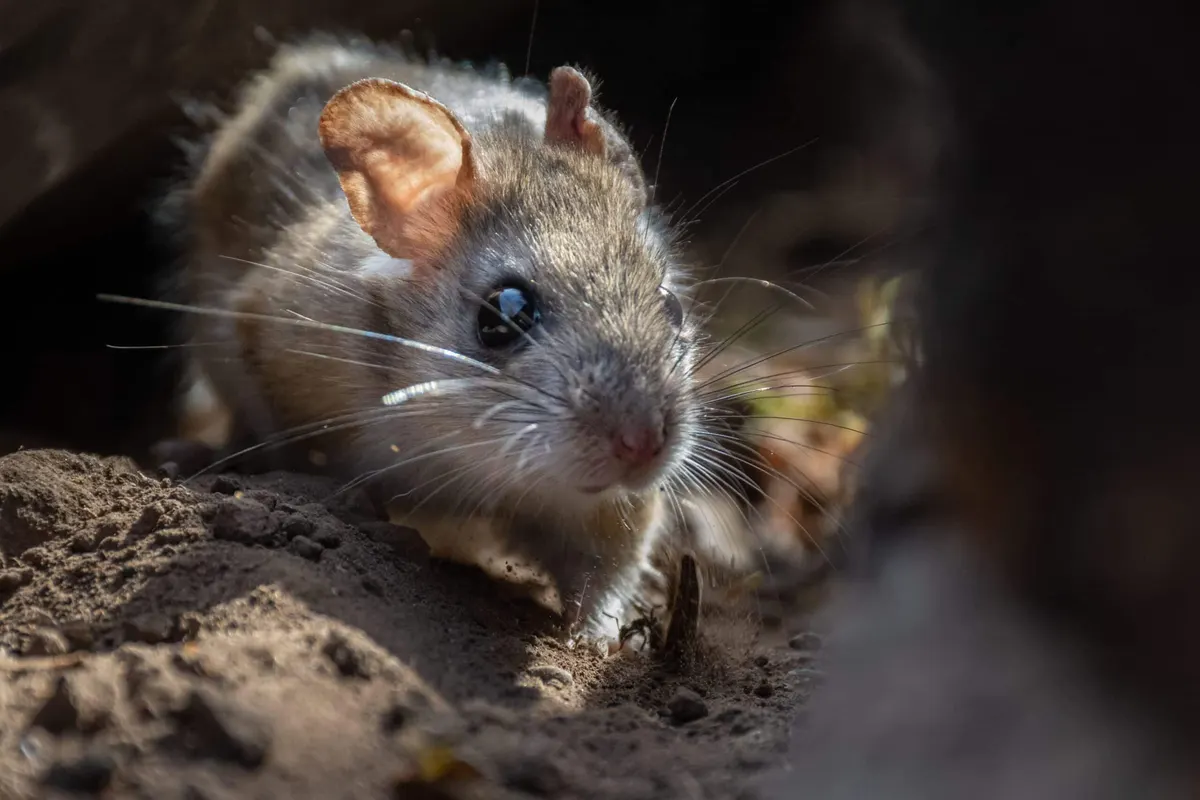
The roof rat, also called the black rat, is slimmer and lighter. The same reference puts its average at about 14.5 inches, with a tail longer than its head and body. Across most of Texas, roof rats are common, and towns have the most.
You can tell the two apart without a tape measure. UC IPM's guide to rats gives a simple test for a trapped rat. Pull the tail back over the body toward the head. A roof rat's tail reaches at least to its snout, while a Norway rat's tail reaches only to the middle of its skull. Roof rats also have a pointed muzzle and ears long enough to cover the eyes when folded, and Norway rats have a blunt muzzle and smaller ears.
Rat and Mouse Sizes Compared
House rats are much larger than house mice, and a full-grown Norway rat can outweigh a mouse more than 20 times over. The table below compares the rodents DFW homeowners are most likely to see in and around the house, from the smallest to the largest.
| Animal | Length with tail | Weight | Telltale feature |
|---|---|---|---|
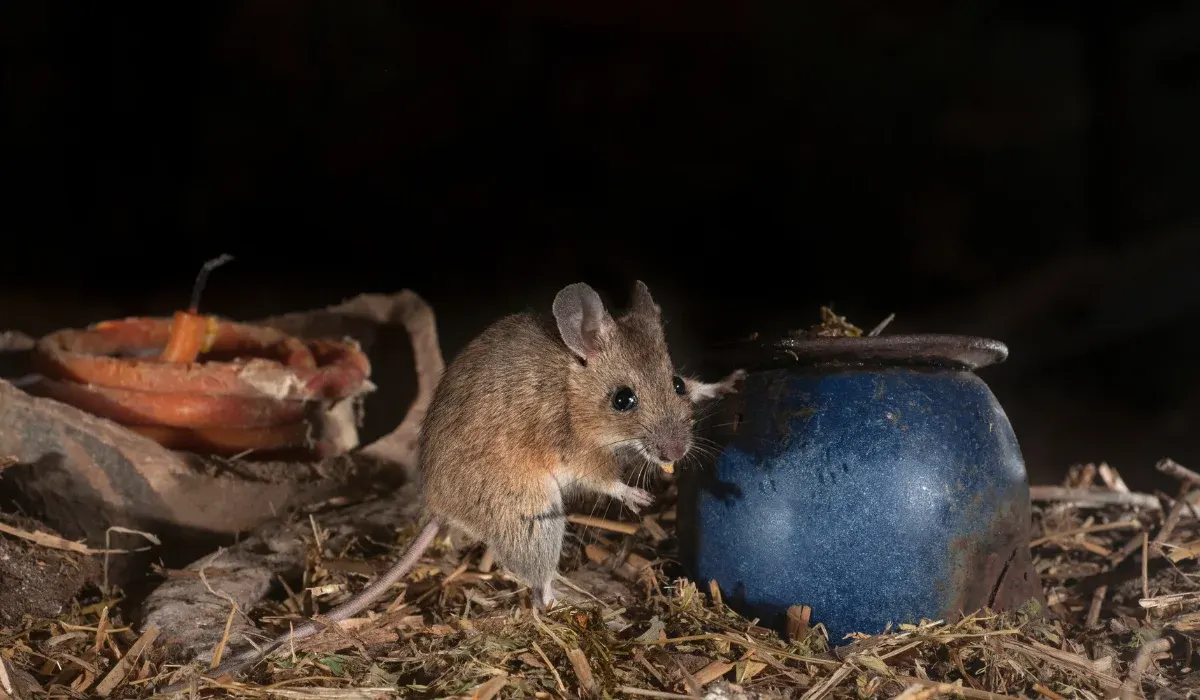
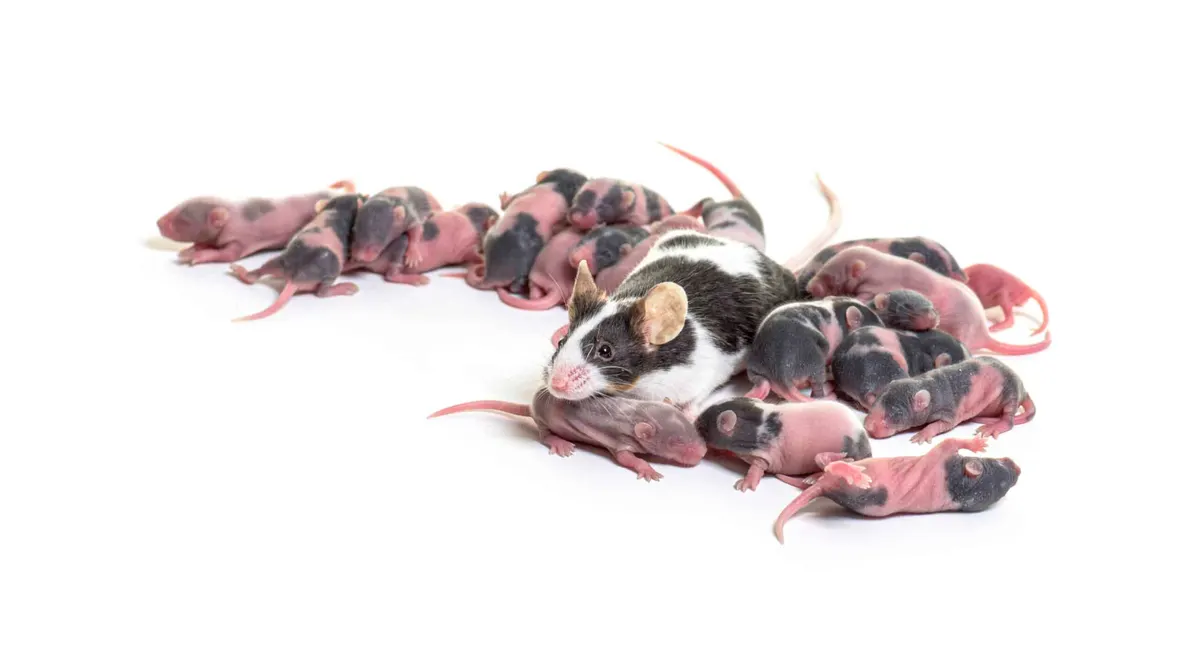
 House mouse House mouse |
5 to 7 inches | About 1/2 ounce | Large ears and small black eyes |
 Hispid cotton rat (field rat) Hispid cotton rat (field rat) |
About 10 1/2 inches | 3 to 5 ounces | Coarse, grizzled fur, lives in tall grass |
| Roof rat |
About 14 to 16 inches | 5 to 10 ounces | Tail longer than its body, pointed nose |
| Norway rat |
About 16 to 18 inches | 7 to 18 ounces | Tail shorter than its body, blunt nose |
| Nutria | About 31 to 35 inches | Normally 18 to 22 pounds | Webbed hind feet, orange front teeth |
| House mouse | 5 to 7 inches |
|---|---|
| Hispid cotton rat | about 10 1/2 inches |
| Roof rat | 14 to 16 inches |
| Norway rat | 16 to 18 inches |
| Nutria | 31 to 35 inches |
The hispid cotton rat is a native Texas rat of tall grass, old fields and road edges. Unlike the two house rats, it lives out in the grass, so a rat inside your house is almost always a roof rat or a Norway rat.
What Size Tells You About Your Attic
Size helps you sort out what you're hearing and seeing. A young rat can pass for a mouse. UC IPM notes that very young rats have large heads and feet for their bodies, while an adult mouse's head and feet look small. Mice slip through far smaller openings, down to about the width of a dime. If the animal in your pantry looks tiny and delicate, read our guide to keeping mice out of DFW homes.
Location narrows it down further. In DFW, a rat in the attic is almost always a roof rat. Roof rats climb trees, fences and utility lines and get in near the roofline, while the heavier Norway rats stay low in garages, crawl spaces and burrows along the foundation. Our page on how roof rats get into DFW attics shows the entry points for both.
Heavy thumps and an animal the size of a house cat point away from rats altogether. Squirrels, raccoons and opossums all move into DFW attics. Those are wildlife jobs, so call a wildlife specialist for them.
The Biggest Rat in the World
The biggest rats live far from Texas. The Gambian pouched rat of Africa measures about 25 to 36 inches including its tail and weighs 2 to 3 pounds. In Papua New Guinea, a film crew and scientists exploring the crater of Mount Bosavi found a giant woolly rat. It measured about 32 inches and weighed nearly 3 1/2 pounds, and expedition members compared it to a pet cat.
The largest rodent of all, the capybara of South America, isn't a rat. And claims of 4-foot sewer rats don't hold up. Even the biggest Norway rats stay in the range in the table above.
Big Rat Look-Alikes Around DFW
When someone in DFW reports a rat "as big as a cat," check the look-alikes before picturing a giant rat. Two local animals fit that description.
The nutria is a large South American rodent that now lives in aquatic habitats across the eastern two-thirds of Texas. The Mammals of Texas account of the nutria describes an animal nearly as large as a beaver. It has a long, rounded, scaly tail like a rat's, webbed hind feet and orange front teeth. Adults average 31 to 35 inches long. A huge "rat" swimming in a pond, creek or lake is most likely a nutria.
The opossum is the other one. It is about the size of a terrier, with a long, scaly tail, and it lives statewide, denning under buildings and even in attics. Opossums are marsupials, not rodents, but that tail fools a lot of people at night.
If the animal in your attic turns out to be a rat, the inspection inside your home is free, and the quote comes from what it finds.
Rat Size FAQ
How big can outdoor rats get?
Outdoor rats in DFW are the same two species that get into houses, and their food supply affects how big they grow. A well-fed Norway rat living near a creek, dumpster or chicken coop can reach the top of the range, about 18 ounces.
What are big rats called?
No special name exists. A big rat in or around a house is usually an adult Norway rat, also called a brown rat or sewer rat. The true giants, like the Gambian pouched rat, are separate species that live in Africa and New Guinea.
Are giant rats dangerous?
The giant species don't live in DFW. The rats that do live here matter because of disease and damage. UC IPM lists typhus, leptospirosis, foodborne illness and rat-bite fever among the diseases rats can spread, and their gnawing damages wiring and pipes. House rats almost never carry rabies.