How to Get Rid of Rats in Your Yard for Good
To get rid of rats in your yard, take away what keeps them there. Pick up fallen fruit, bird seed and pet food, close up the compost, fix dripping water, and clear woodpiles and dense ivy. Then set traps where you see burrows and runways. A yard with no food, water or cover can't hold rats for long.
On this page
Signs Rats Are Living in Your Yard
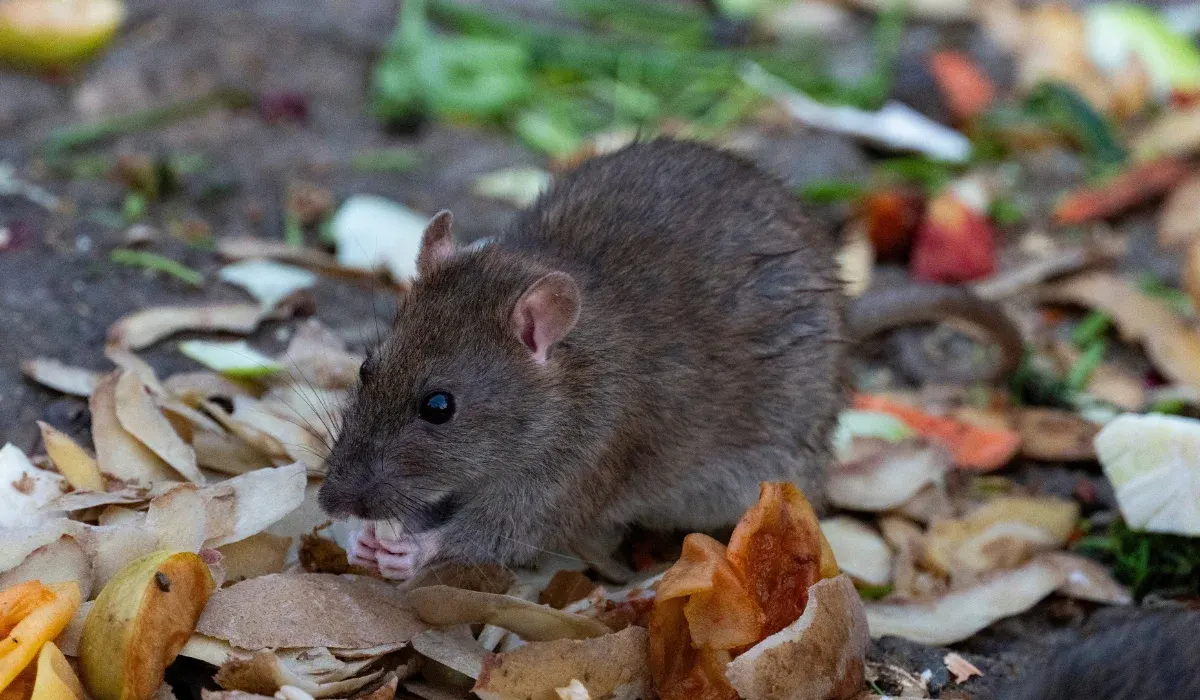
Rats leave clues outside before they get in. Norway rats dig burrows about 2 to 3 inches wide along foundations, under sheds and slabs, and beneath compost piles and trash cans. Active holes are clean of loose debris. Both rats also wear narrow runways through grass and low plants, because they travel the same routes every night.
Roof rats leave different clues. You may see them running along fence tops or utility lines around dusk. UC IPM's guide to rats notes that roof rats eat fruit while it is still on the tree, sometimes leaving hollowed-out rinds hanging. Also watch for droppings near pet dishes and digging under a shed or doghouse.
What Draws Rats to a Yard
Rats stay where food, water and cover sit close together. Missouri Extension notes that rats seldom travel farther than 300 feet from their burrows for food or water. The yard that feeds them is usually the one they live in, or the one next door. Texas A&M AgriLife lists bird and squirrel feeders, pet food bowls, abandoned vegetable gardens and poorly kept compost bins among the conditions that favor Norway rats. The table below shows the yard features that hold rats and what to do about each one.
| Yard feature | What it gives rats | What to do |
|---|---|---|
| Bird feeders | Spilled seed every day | Pause feeding during a rat problem, or switch to huskless seed |
| Fruit and nut trees | Food on the branch and the ground | Pick up fallen fruit and nuts often |
| Pet food and bowls | An easy nightly meal | Feed only what pets eat, bring bowls in, pick up pet waste |
| Compost | Food scraps and cover | Use a closed bin and keep meat, fish and eggs out |
| Woodpiles and lumber | Nest sites | Stack 18 inches off the ground, away from walls |
| Ivy and dense shrubs | Hidden runways and nests | Thin them, keep shrubs 2 feet from walls |
| Leaks and pet water | Daily water | Fix drips, empty bowls at night |
Water deserves extra attention in a DFW summer. Rats need about an ounce of water a day. In summer heat, the most reliable water around may be a dripping hose bib, a leaking sprinkler, an AC condensate line or a pet bowl left out overnight.
Clear the Cover Rats Nest In
Both rats favor dense vegetation close to the ground. UC IPM names climbing ivy, star jasmine and honeysuckle on fences and walls as plants that invite roof rats and recommends thinning or removing them. Keep at least 2 feet between shrubs and the house so rats can't travel unseen. The EPA also lists leaf piles and deep mulch as nesting sites to remove.
Stack firewood and lumber at least 18 inches off the ground and away from walls, and clear out junk piles and old tires. Roof rats return to the same nest sites, so a cleared spot has to stay cleared. Once a burrow sits empty, fill it in, as Texas A&M recommends for inactive burrows.
Why Yard Rats Keep Coming Back
A clean yard can still see rats, because rats ignore property lines. A rat's usual range covers an area about 100 to 150 feet across, so the rats in your yard may nest in the yard next door. The New York State Department of Health treats rats as a neighborhood problem and recommends that neighbors remove food and shelter at the same time.
Water routes matter too. Texas A&M AgriLife's rodent course notes that Norway rats commonly follow sewers, ditches and creeks when they spread to new areas. Wild populations live near woods and streams. In Fort Worth, that puts homes along the Trinity River and the creeks that feed it beside a natural travel route for rats. Fort Worth homeowners can check coverage for their neighborhood on the Fort Worth service area page.
Pets won't fix it. Missouri Extension notes that cats and dogs don't control rat populations in most cases, and rats often live under a doghouse and eat the dog's food.
Getting Rid of Rats in the Yard
Once the food and cover are gone, remove the rats still living there. Snap traps work best where you see activity, along runways, beside burrows and against walls and fences. UC IPM recommends covered boxes or stations wherever children, pets or birds could reach the traps, with traps about 10 to 20 feet apart. For roof rats, put some up on fences and branches. Rats avoid new objects, so leave the traps baited but unset for a few days first. UC IPM also advises against live-trapping and releasing rats.
Bait has a different job. Rat bait belongs outside, in tamper-resistant stations, as a maintenance tool that keeps the surrounding population down. It doesn't replace traps. Follow the label. Consumer bait stations carry labels for indoor use only, or for outdoor use within 50 feet of a building. UC IPM also advises against smoke and gas cartridges near homes, because burrows can run under the house.
If rats have already reached the attic or garage, yard work alone won't finish the job. We seal the house first, trap the rats sealed inside, then keep exterior bait stations maintained quarterly. You can read more about keeping rodents away from DFW homes. Fort Worth homeowners can start with a free inspection inside the house, and the quote for sealing and trapping follows from what it finds.
Rats in the Yard FAQ
What to do if you see a rat in your yard?
Note where and when you saw it, then look for burrows, runways and the food it came for. A rat on the fence at dusk usually lives close by, so start with the food and cover steps above and set traps where you see activity.
What time of year are rats worst?
In Texas, roof rats breed all year, with peaks in February and March and again in May and June, according to The Mammals of Texas. Rats also push into homes more often during the cooler months, so fall is a good time to clean up the yard.
How do you get rid of rats in your yard naturally?
Take away food, water and cover, then trap. Scents like peppermint fade quickly, and UC IPM reports that repellents give rats only brief pause at best.
Will rats in the yard get into the house?
Often, yes. UC IPM warns that once rats settle into a garden or landscaping, finding them indoors is only a matter of time, unless the house is truly rodent-proof.