Do Termites Make Noise?
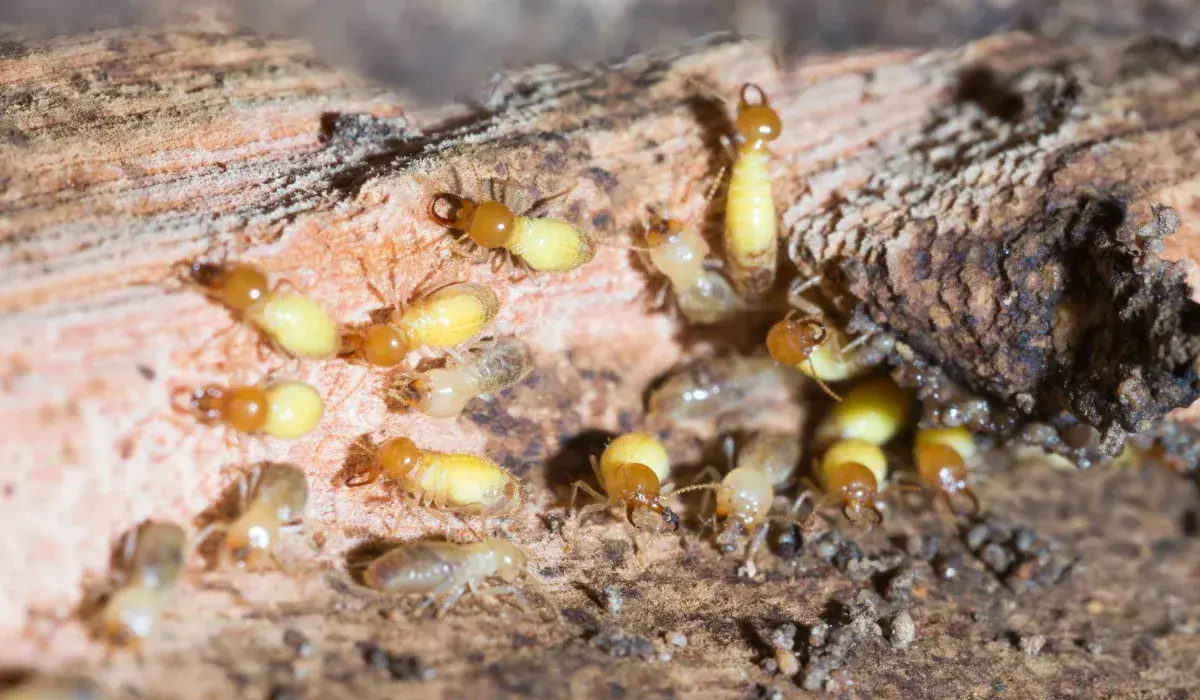
Termites do make noise, but it's very quiet. Soldier termites bang their heads against tunnel walls to warn the colony, and workers make faint clicks and rustles as they chew. You'd usually hear it only with an ear pressed to a wall in a silent room, so sound is a weak sign compared with mud tubes or swarmers.
On this page
Why Termites Make Noise
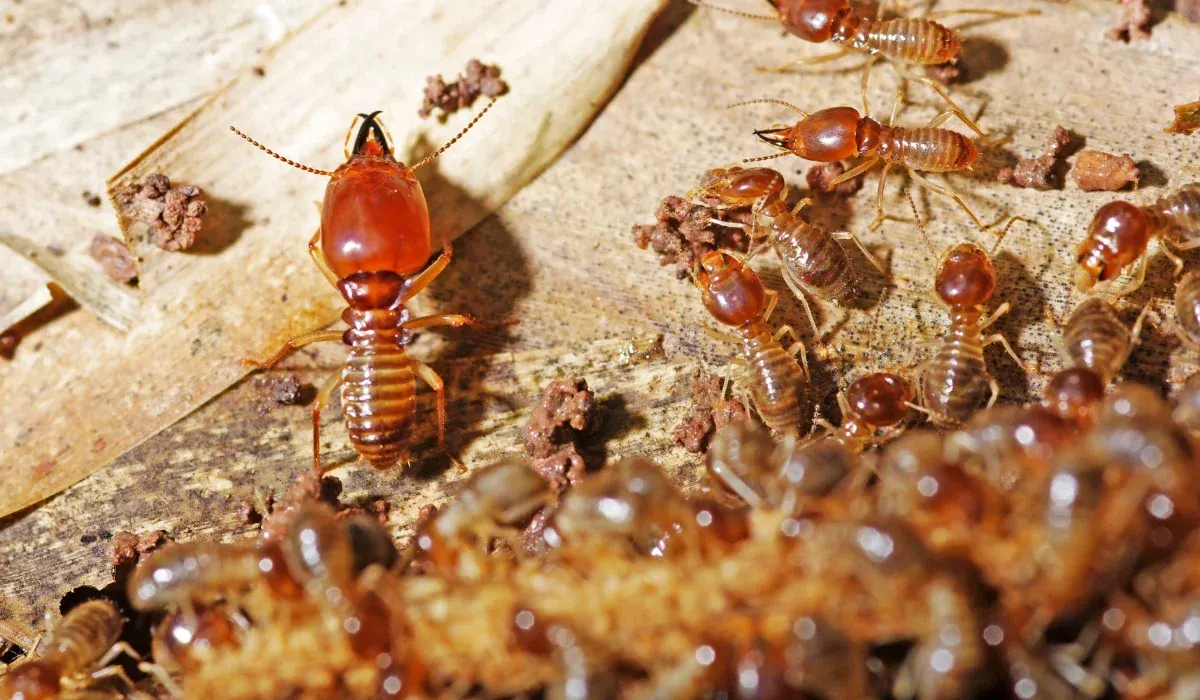
The noise is mostly a warning system. When something disturbs a colony, soldiers hit their heads against the wood or soil around them, over and over, and workers shake their bodies against the tunnel floor. Other termites feel those vibrations and react, with workers running away and soldiers heading toward the trouble.
Termites don't have ears. They sense vibrations through special organs in their legs, which is why the warning travels so well through wood. A 2023 study of 20 termite species found vibration-based alarm signals across the whole termite family. During those alarms, termites sometimes made sounds audible to the researchers.
The group that includes DFW's subterranean termites has some of the most complex alarm signals of all. One soldier banging its head tends to set off others, so a disturbance can ripple through a gallery in seconds.
What Termites Sound Like
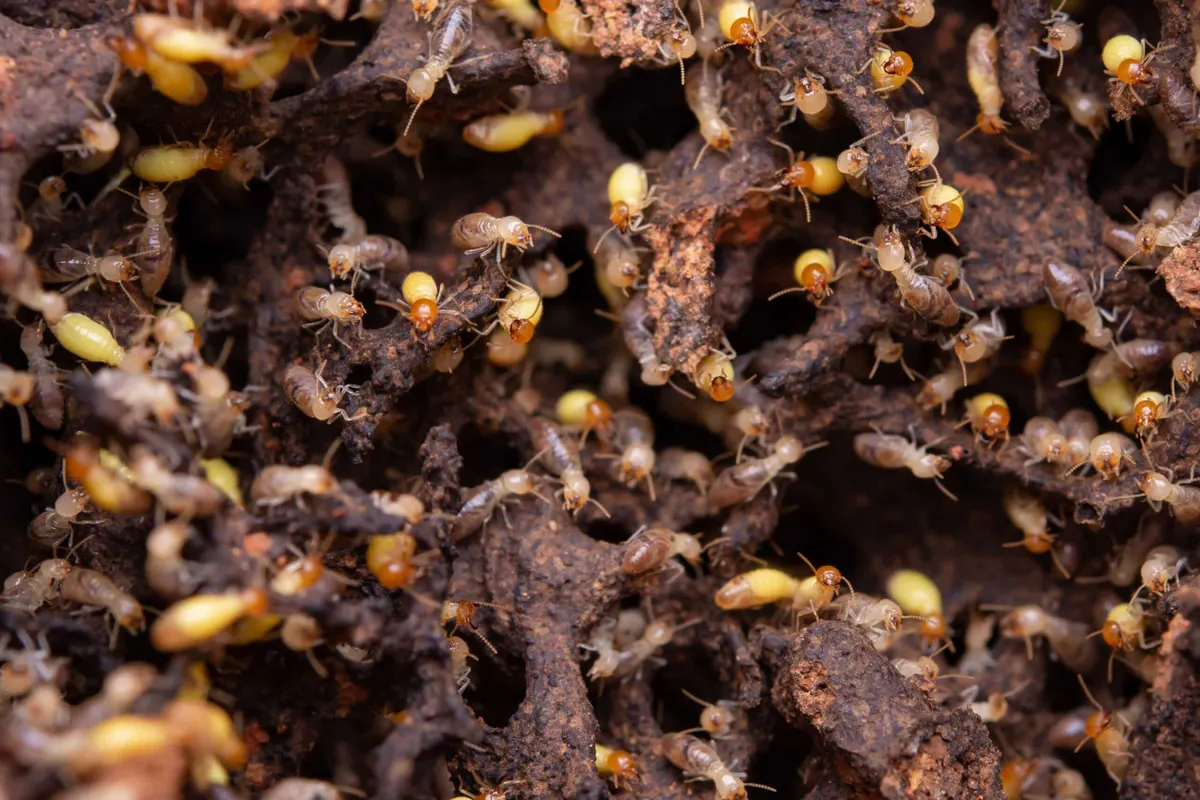
Up close, termite activity sounds like soft clicking, tapping or a dry rustle, a bit like paper crinkling. The clicks come in short bursts when something disturbs the colony. The chewing itself is even quieter, and most people never hear it at all.
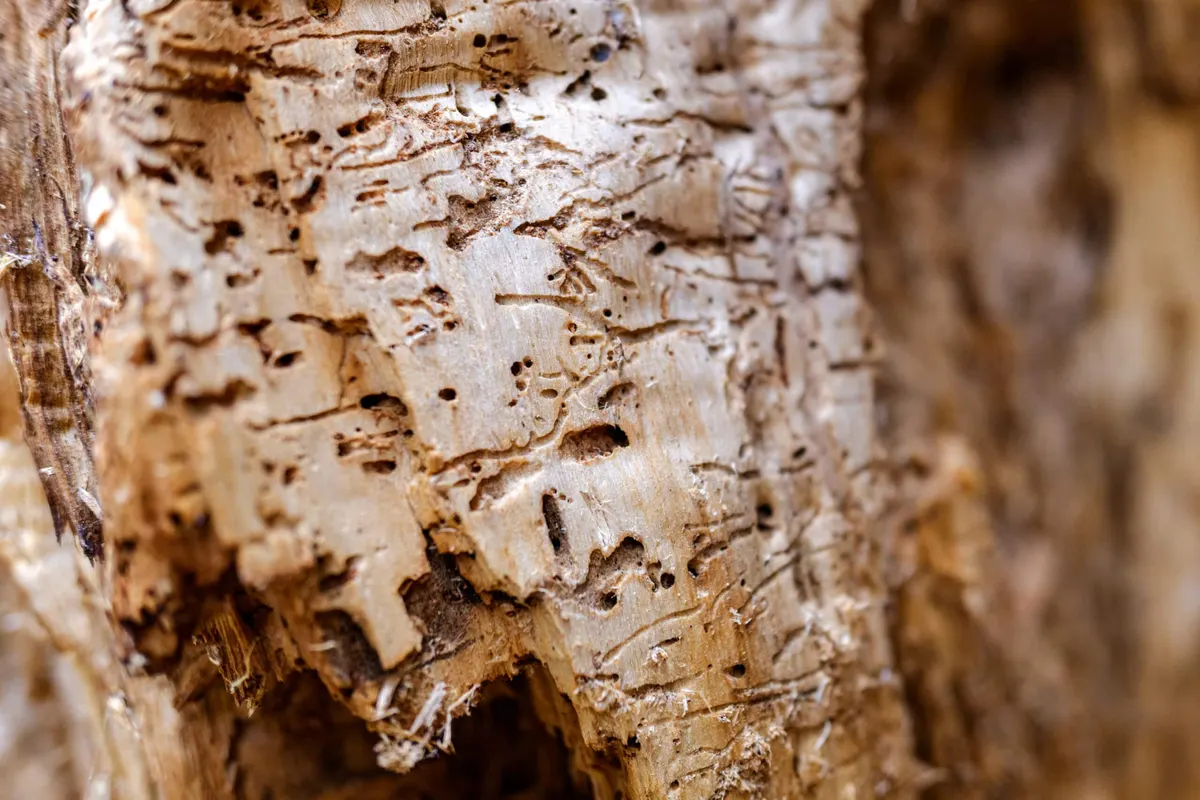
The sound you're more likely to notice comes from the wood, not the termites. Damaged wood sounds dull or hollow when you tap it with a screwdriver handle. Texas A&M AgriLife's termite guide describes that dull, thudding sound as a sign that termites may have hollowed out the wood.
Can You Hear Termites in the Walls?
Rarely. Subterranean termites, the only kind we deal with in DFW, live in the soil and work inside wall studs, baseboards and door frames. Drywall, insulation and paint muffle what little sound they make, so a heavy infestation can sit behind a wall without a sound you'd ever notice.
That's why inspectors don't rely on their ears. The Texas A&M guide notes that termite inspectors may use moisture meters, fiber optic scopes, acoustic detectors and other tools. Even with that equipment, the guide cautions that no tool finds every termite.
Sounds That Get Mistaken for Termites
Most noises in DFW walls come from something else. This table lists the common ones and how to check each.
| What you hear | More likely source | How to check |
|---|---|---|
| Scratching or scurrying at night | Mice or rats in the walls or attic | Look for droppings and gnaw marks in the attic and garage |
| Crunching or rustling near wood | Carpenter ants | Look for piles of fine wood shavings below a hole |
| Steady buzzing in a wall | A yellowjacket nest in the wall void | Watch outside for wasps using one hole |
| Chirping after dark | Crickets | Check the garage and laundry room |
| Popping or creaking at night | Wood and drywall shifting as the house cools | Notice whether it follows big temperature swings |
What to Check Instead of Listening
Your eyes find termites far more reliably than your ears. Check the slab edge for thin mud tubes, windowsills for loose wings after a spring swarm, and walls for paint that bubbles or drywall that sags. Tap baseboards and door frames near the floor for that dull, hollow sound.
If you find any of those, a professional termite inspection checks the slab edge, plumbing gaps and the wood closest to the soil. When termites are active, our termite treatment for DFW homes uses Sentricon bait stations, which workers carry back to feed the colony. Homes in and around Aubrey can book a termite inspection in Aubrey.
Termite Noise FAQ
Do termites make noise at night?
They make the same faint noise day and night, since they live in dark tunnels and don't keep a schedule. You just notice sounds more at night because the house is quiet.
Can you hear termites eating?
Almost never. Termite chewing is far too quiet to hear through a wall. The clicking people sometimes hear comes from soldiers sounding an alarm, not from feeding.
Will tapping the wall make termites louder?
It can. Tapping disturbs the colony and can set off a round of head-banging alarms. Still, a quiet wall doesn't mean the wood behind it is sound.
If you think you hear termites, a few visible signs will settle it. Book a quote through the website or by phone, and a technician will check for the signs that confirm it.