Types of Termites in Texas
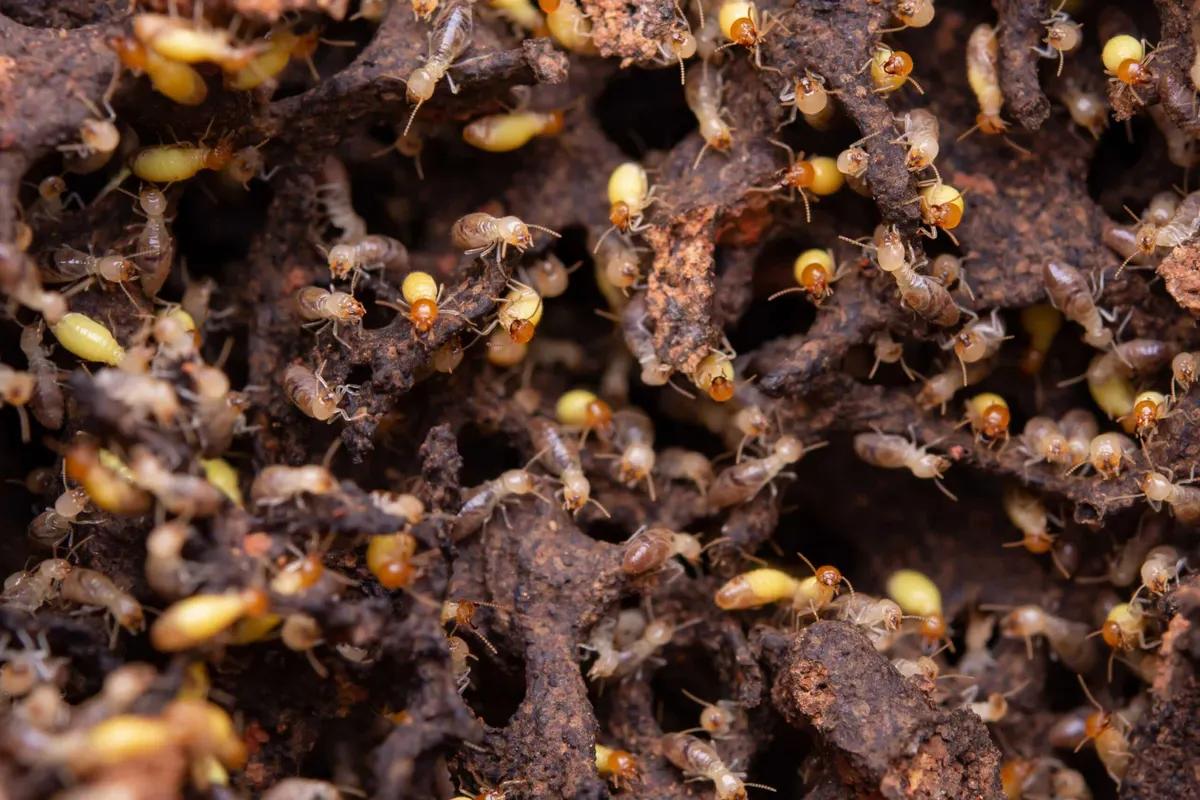
Most termites in Texas are native subterranean termites, a ground-nesting kind that reaches houses through mud tubes. Formosan subterranean termites are spreading inland from the Gulf Coast, and Texas A&M has recorded them in Dallas and Tarrant counties. Drywood termites live mainly along the coast and are rare in DFW.
On this page
Types of Termites in Texas at a Glance
Three termites matter to Texas homeowners. The table below shows where each one lives, whether it turns up in DFW, when it swarms and the clue that sets it apart.
| Termite | Where in Texas | Found in DFW? | Swarms | How to tell it apart |
|---|---|---|---|---|
| Native subterranean | Throughout the state | Yes, the most common | Spring, in daylight, often after rain | Mud tubes and mud in damaged wood, no pellets |
| Formosan subterranean | Mainly the upper Gulf Coast, with finds in 31 counties | Reported, but uncommon | Late May and June, at night, toward lights | Hairy wings, oval soldier heads, carton nests |
| Drywood | Coastal counties, spot finds north to Collin County | Rare | Late summer and fall, at dusk | Hard pellets piled below small holes in wood |
If you live in DFW and find termites, expect native subterranean termites. The other two matter because they need different handling, and because a few turn up where nobody expects them.
Native Subterranean Termites Across Texas
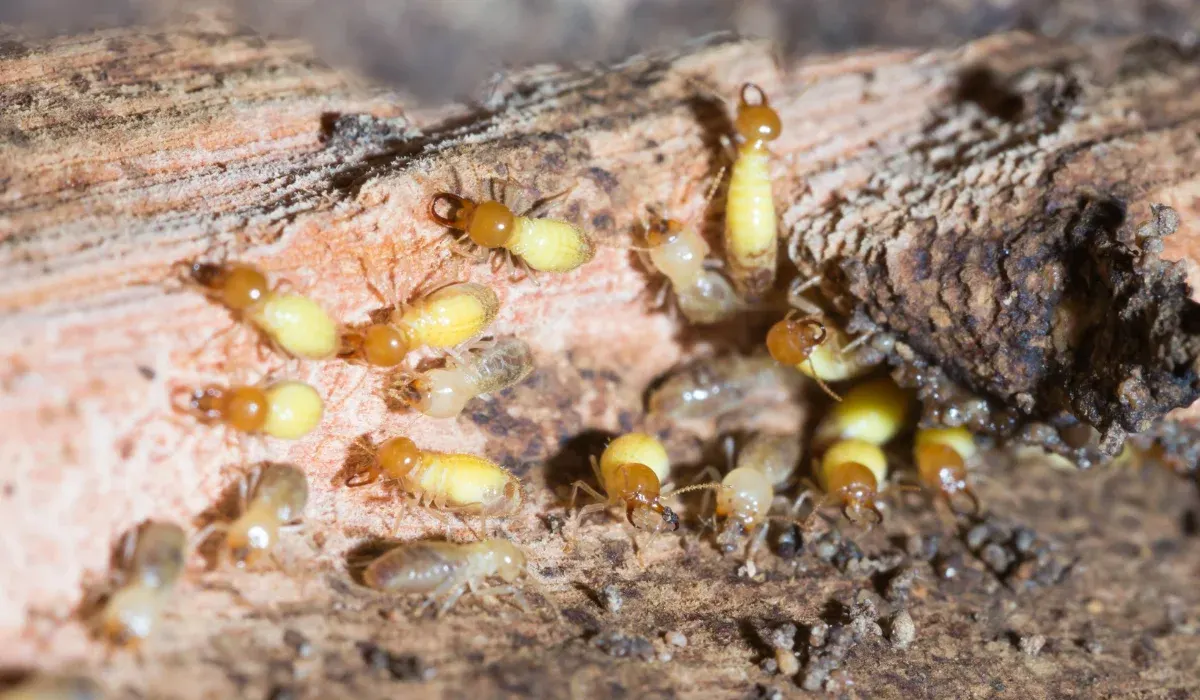
The eastern subterranean termite is the termite most Texans meet. Texas A&M names it as one of the two major termites in the state, along with the Formosan termite, and it lives throughout the state. Two close relatives share its range across East Texas. All three nest in the soil and come up to feed on wood.
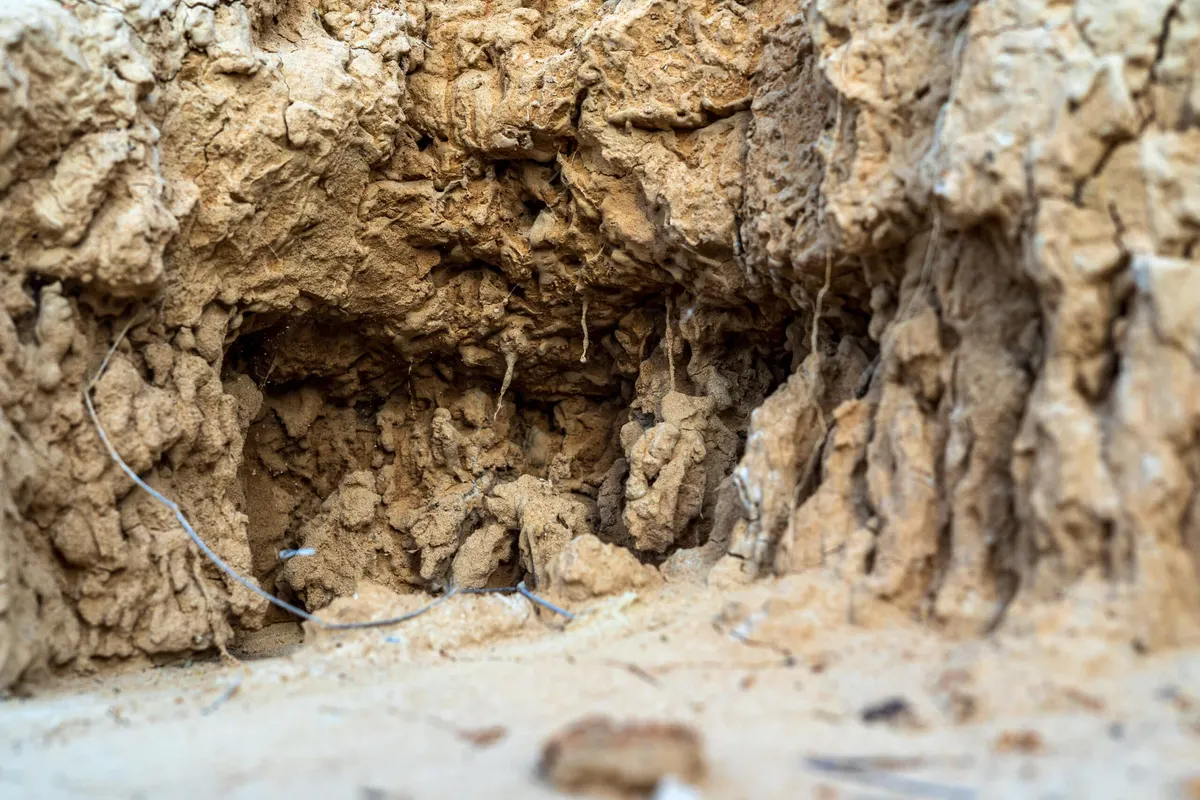
Texas A&M says a colony takes 3 to 5 years to reach full size, typically around a quarter million workers. One house can feed more than one neighboring colony at a time. The workers dry out quickly in open air, so they travel inside mud tubes and stay close to moist soil. That is why they show up at slab edges, leaky pipes and wet wood trim.
These are the termites in DFW homes. Their swarms fly in daylight in spring, usually after a rain, and they fill the wood they damage with mud, never pellets.
Formosan Termites Are Moving North
Formosan subterranean termites first turned up in Texas in 1956, at the Houston Ship Channel. Texas A&M's Formosan termite page now lists 31 Texas counties with finds, including Dallas, Tarrant, Collin, Denton, Rockwall and Johnson. Texas A&M still calls them unlikely outside the upper Gulf Coast, but it tells homeowners to watch for isolated cases anywhere in the state.
They are worth knowing because they work fast. A Formosan colony can top a million termites, and Texas A&M says they damage wood faster than native termites. They also build carton nests from chewed wood and soil inside wet walls, so part of the colony can live above the ground.
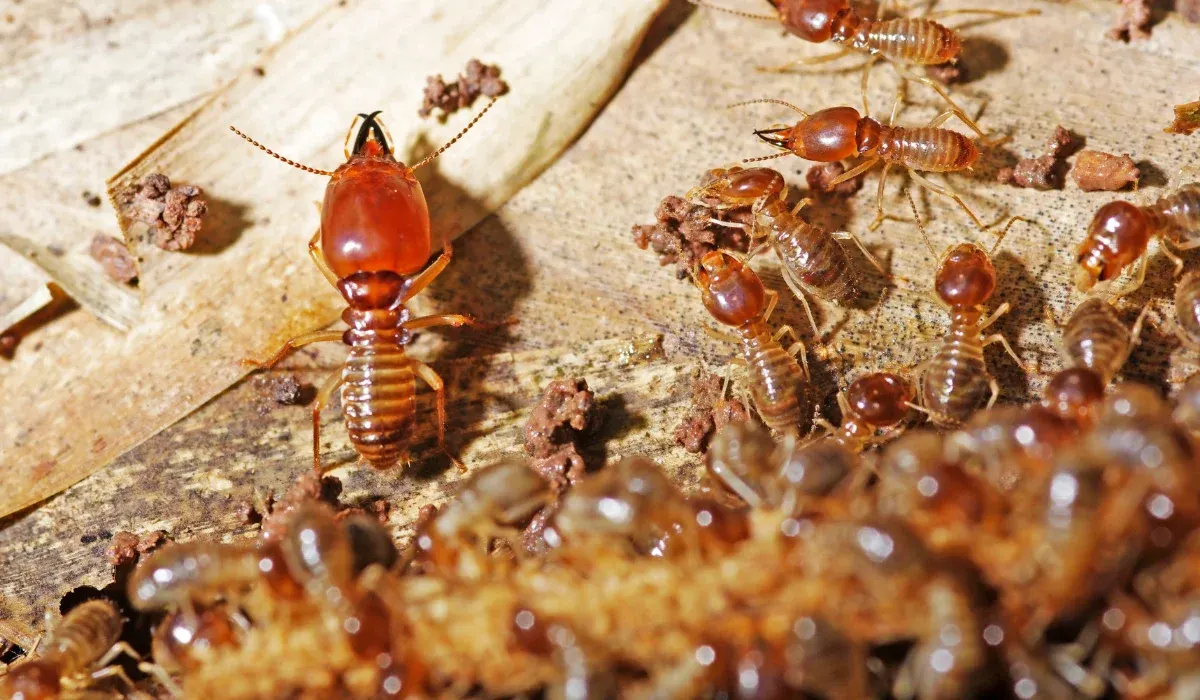
Swarmers and soldiers give them away. Formosan swarmers are yellowish brown and about half an inch long, with fine hairs on their wings. Their flights happen after dark in late May and early June, and they head for porch lights and lit windows. Their soldiers have oval heads, while native soldiers have longer, rectangular heads.
Drywood Termites Are Rare in DFW
Drywood termites live inside dry wood and never need soil. Texas A&M's field guide to Texas termites places them mainly in the coastal counties, with scattered infestations west to Uvalde and San Antonio and north to Collin County.
Their droppings are the clue. Drywood termites push hard, ridged pellets out of small holes, and the pellets pile up under the wood. They swarm at dusk in late summer and early fall. In DFW, the termites that damage homes are subterranean, so a pile of pellets calls for a closer look before anyone blames termites.
When Termites Swarm in Texas
Swarm season moves north with the warm weather, and the time of day differs by species, as the table above shows. Texas A&M says native swarms begin in South Texas in January and February, while the Panhandle sees none until April or May. DFW falls between the two, so most swarms here come in spring.
Where they land matters most. A swarm indoors points to a colony inside the walls or under the slab. A swarm in the yard points to a colony in the soil nearby, which may already reach your house or the one next door. If they're inside, bag a few for identification and book a termite inspection for your DFW home. You can also get a price online or by phone.
Termites in Texas FAQ
Is there a termite problem in Texas?
Yes. Texas A&M estimates that subterranean termites cause about $500 million in damage in Texas each year. It also gives an unprotected home about a 70 percent chance of some termite damage within 25 years.
Are there Formosan termites in Texas?
Yes. They first turned up near Houston in 1956, and they still live mainly around Houston, Galveston and Beaumont. Finds now reach 31 counties, from the Rio Grande Valley to DFW. Texas A&M notes that they can chew through thin soft metal, plaster and plastic while they search for food and moisture.
Are there black termites in Texas?
Yes, in a way. The kings and queens of native subterranean termites are dark brown to black, so the swarmers you see in spring look black. The workers that do the damage are pale. A dark winged insect at a window in spring is usually one of these swarmers or a flying ant.
How do you get rid of termites in Texas?
Treatment targets the soil where subterranean termites live, using either a liquid termiticide around the foundation or bait stations the colony feeds on. Texas A&M says the work takes specialized drills, injectors and pumps, and the Texas Department of Agriculture licenses the people who do it. Forterra handles it with Sentricon termite control, which works on the colony without drilling through the slab.