Termite Wings in the House
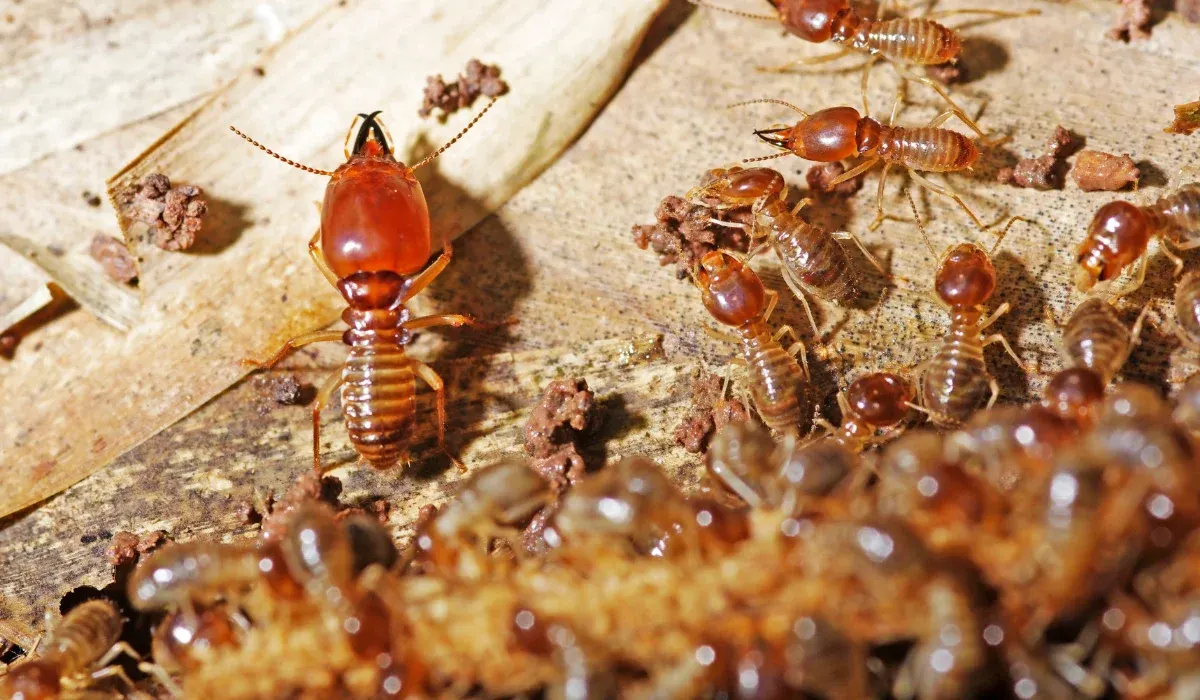
Termite wings in the house come from swarmers, winged termites that leave a mature colony to start new ones and snap off their wings soon after landing. A pile of matching, see-through wings on a windowsill or floor usually means a colony is feeding in or under the house. Save a few and get the house inspected.
On this page
Why Termites Drop Their Wings
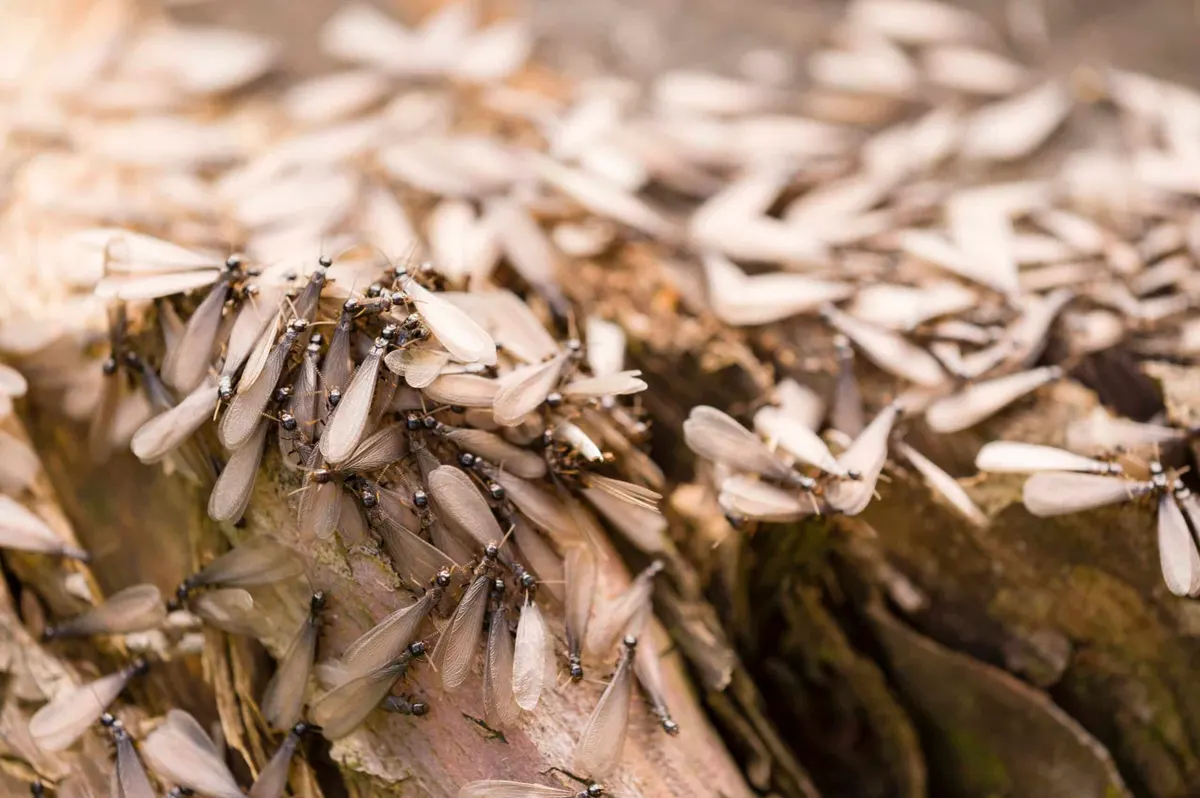
Termites use their wings for one short flight. Each wing has a weak line near its base, so it breaks off cleanly once the termite lands, leaving a tiny stub on the body. A swarmer that has lost its wings looks like a small, dark, straight-bodied insect crawling on the sill.
The flight is a mating trip. Swarmers pair up on the ground, drop their wings and look for moist soil near wood to dig a small chamber and start a colony. Kansas State University's insect lab notes that unless they land on moist soil, they die within a short time.
That's why swarmers inside a house rarely survive. They fly toward windows and lights, find no soil and soon dry out and die. Many die with their wings still on, which is why you can find whole termites and loose wings together.
How to Recognize Termite Wings
A termite's four wings all match in size and shape, so a pile of them looks uniform. Texas A&M's native subterranean termite page describes the wings as pale or smoky gray to brown, with distinct vein patterns. Up close, two darker veins run along the front edge, and the rest of the wing has a faint, netted texture.
DFW has two kinds of subterranean termites, and their wings differ. This table shows how to tell native swarmers from Formosan swarmers, which Texas A&M has found in Dallas, Tarrant, Collin, Denton and Rockwall counties.
| Feature | Native subterranean swarmer | Formosan swarmer |
|---|---|---|
| Wings | Pale to smoky gray-brown, with no hairs | Clear, with a dense coat of fine hairs |
| Body | Coal black to pale yellow-brown, about 1/4 to 3/8 inch | Yellowish brown, about 1/2 to 5/8 inch |
| Swarm time | Daytime in spring, often after rain | At night in late May and early June |
| Where wings collect | Windowsills, floors and bathtubs near the swarm | Under lights, on screens and around fixtures |
Pick what you see in each row.
If the wings are hairy and you found them under a light in early June, save them for an inspector. Texas A&M's Formosan termite page notes that this species has reached every major metro area in Texas.
What a Pile of Wings Tells You
The number and the spot matter. A few wings by an open door may have come from a swarm outside. Dozens of wings on a sill, in a bathtub or along a baseboard in a closed room usually mean the swarm came out inside the house.
Texas A&M says swarmers inside the house usually point to an active infestation in the structure. Indoor swarms often come up through cracks in the slab, gaps around plumbing or the bottom of a wall, then head for the nearest window.
Wings don't tell you when the swarm happened. They don't rot quickly, so wings in a window track, a light fixture or an old cobweb can sit there for months. Treat any find as worth checking, even if you never saw the swarm itself.
What to Do With Termite Wings
The wings themselves are harmless, but they're your best evidence. Before you clean up, keep a sample and note where you found it. These steps make an inspection faster.
- Photograph the wings where they lie, with a coin for scale.
- Press a strip of clear tape over a few wings and stick it to a white card.
- Note the room, the date and whether any whole termites were with them.
- Vacuum up the rest, along with any dead swarmers.
- Skip the bug spray, because it kills the swarmers and leaves the colony feeding.
A termite inspection for DFW homes checks the slab edge, plumbing gaps and wood near the soil to find where the colony is getting in. If termites are active, Sentricon termite treatment puts bait stations around the house that workers carry back to the colony. North of the metro, that plan is available through termite control in Aubrey.
Termite Wings FAQ
Do ants shed their wings too?
Yes. Winged ant queens drop their wings after mating, so loose wings alone can fool you. Ant wings come in two sizes, with the front pair larger, while all four termite wings match.
Will termite wings go away on their own?
The wings and the swarmers will, since indoor swarmers die quickly. The colony that sent them won't. Only an established colony produces swarmers, and it keeps sending out new ones each season until it's treated.
When do termites swarm in DFW?
Texas A&M says swarms happen most often between February and May across the state. In DFW, native termites usually swarm on warm spring days after rain, while Formosan termites swarm at night in late May and early June.
If you've found termite wings in the house, get a quote by phone or online, and we'll check where they came from.