American Cockroach or Palmetto Bug in Dallas
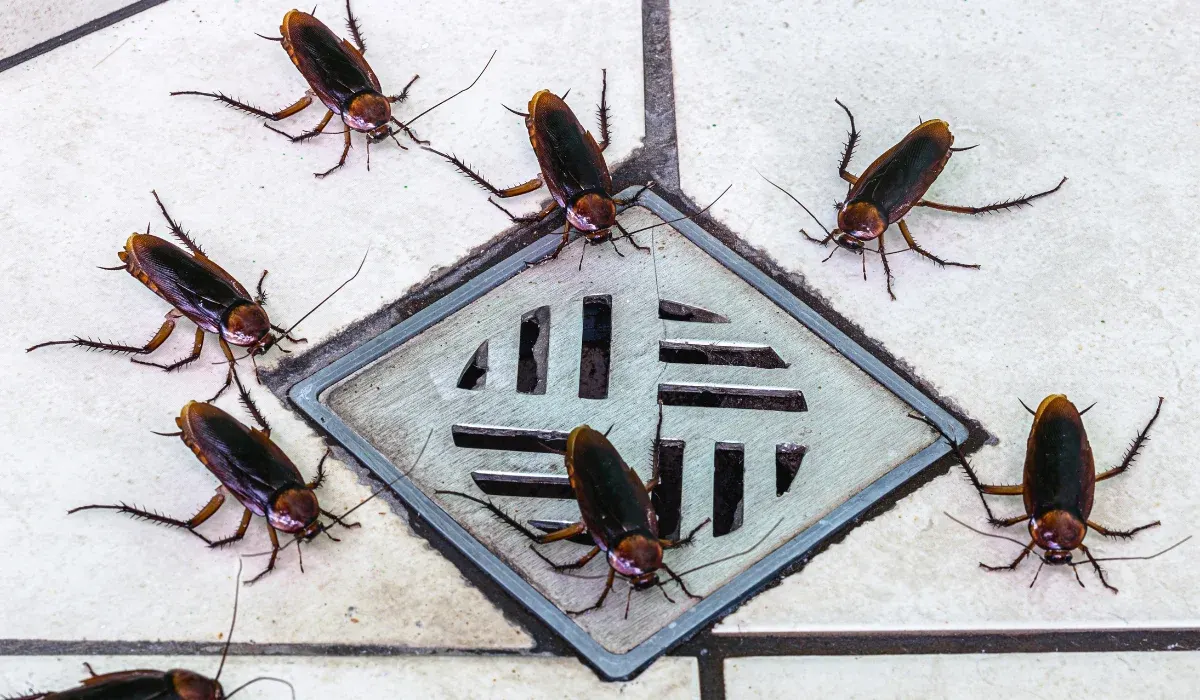
The American cockroach is the largest roach in Texas, a reddish-brown insect 1½ to 2 inches long with a pale yellow band behind its head. Texans also call it the palmetto bug or the waterbug. It lives mostly outdoors and in sewers, and Dallas heat, drought and heavy rain are what push it into homes.
On this page
How to Identify an American Cockroach
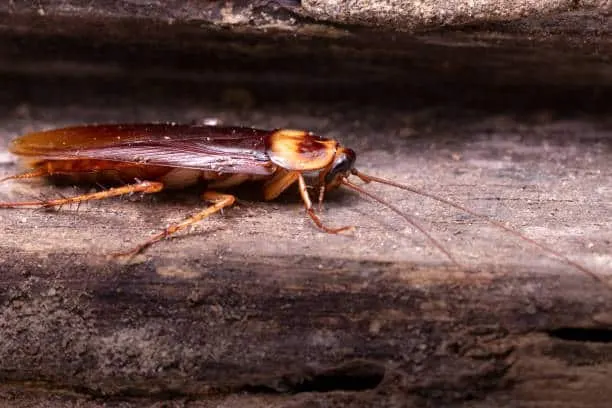
Size gives it away first. University of Florida entomologists measure adults at about 1⅜ to 2⅛ inches, far bigger than the ½-inch German cockroach in a kitchen cabinet. The body is reddish brown, and the shield behind the head carries a pale yellow or tan border.
Adults have full wings. A male's wings reach past the tip of his abdomen, while a female's do not. Texas A&M AgriLife notes that both sexes can fly, but the University of Florida rates them poor to average fliers, so they spend most of their time running.
Young American cockroaches have no wings. Texas A&M describes them as grayish brown at first, turning reddish brown after the first few molts. Growth is slow, averaging about 600 days from hatching to adulthood, and adults live another one to two years. A single female averages about 150 young in her lifetime.
Is a Palmetto Bug an American Cockroach?
Usually, yes. Palmetto bug is a nickname, not a species. Texas A&M AgriLife's cockroach guide lists palmetto bug and waterbug as common names for the American cockroach.
The name isn't exclusive, though. The University of Florida notes that people also call the smokybrown cockroach a palmetto bug. The two are easy to separate. The smokybrown is a bit smaller, about 1 to 1¼ inches, and dark mahogany to black all over, with no pale band behind the head.
How Dallas Weather Drives Them Indoors
American cockroaches like heat and moisture together. UC IPM notes that they prefer warm, humid places, usually above 82°F, and readily live outdoors when they find them. Dallas summers supply the heat. The National Weather Service office in Fort Worth puts DFW's average first 100-degree day on July 1 and the last on August 27, and 2011 brought 71 of them.
Moisture is the part that changes. The University of Florida's American cockroach profile explains that these roaches live outside but wander indoors for food and water or to escape extreme weather. It adds that infestations can follow heavy rain. They also move into homes from sewers through the plumbing. The table below shows how each kind of DFW weather changes where you see them.
| DFW weather | What American cockroaches do | Where you see them |
|---|---|---|
| Summer heat | Forage at night and rest near water by day | Garages, utility rooms, floor drains |
| Drought | Leave drying mulch and soil to look for water | Kitchens, bathrooms, laundry rooms |
| Heavy rain and storms | Move out of soaked ground and sewer lines | Floor drains, tubs, ground-floor rooms |
| Cold snaps | Look for warm shelter | Attics, garages, wall voids near plumbing |
In practice, you can see more of them indoors in both the driest and the wettest stretches of a DFW year. Killing the ones inside doesn't change the population outside, so the real work happens at the edge of the house.
Where American Cockroaches Live Around DFW
Sewers are the American cockroach's home base. Texas A&M lists it among the most common cockroaches in sewer systems, and University of Florida researchers note that a single sewer manhole can hold more than 5,000 of them. Storm drains and underground water meter boxes shelter them too.
Above ground, they live wherever it stays dark and damp. Look for them in mulch beds, leaf litter, woodpiles, hollow trees and compost piles, and now and then under roof shingles and in attics. Texas A&M also notes they are more common in commercial buildings, such as restaurants and grocery stores, than in homes.
They reach the inside of a house by a short list of routes. Texas A&M names floor drains, poorly sealed doors and roof soffits. The University of Florida adds trees and shrubs that touch the house or hang over the roof.
How to Keep American Cockroaches Outside
Because the population lives outside, prevention happens at the edge of the house. These steps come from Texas A&M AgriLife, the University of Florida and UC IPM.
- Run water into floor drains, tubs and sinks you rarely use, so the traps stay full and block the sewer line.
- Replace worn door sweeps and threshold seals, and make sure soffit vents have screens.
- Trim tree branches and shrubs back from the roof and walls.
- Keep mulch thin near the foundation, move woodpiles away from the house, and consider a 6- to 12-inch gravel strip along the walls.
- Fix leaking pipes, faucets and irrigation lines.
If they keep coming in anyway, cockroach control in Dallas focuses on the perimeter, the entry routes and the drain lines rather than the kitchen.
American Cockroach FAQ
Is one American cockroach a problem?
Not always. One adult near a door or drain at night is often a wanderer from outside. Several nights in a row, roaches in daylight, or small nymphs next to adults point to a population living close to the house.
What can be mistaken for an American cockroach?
One look-alike is the smokybrown cockroach, which is darker all over with no pale band. Oriental cockroaches are shiny black with short wings. Male Turkestan cockroaches, which Texas A&M says are spreading in Texas, mostly in the west, look similar but are smaller, with cream stripes along the wing edges.
Are American cockroaches dangerous?
They rarely bite, but they carry germs. Because they travel through sewers, UC IPM warns that they can spread the bacteria behind food poisoning, including Salmonella and Shigella. Their droppings and shed skins can also trigger allergies and asthma.
If big roaches keep showing up after storms or long dry spells, start outside the house. Our page on how Forterra handles outdoor roaches explains the perimeter approach, and a quote for your home is a minute away online.