
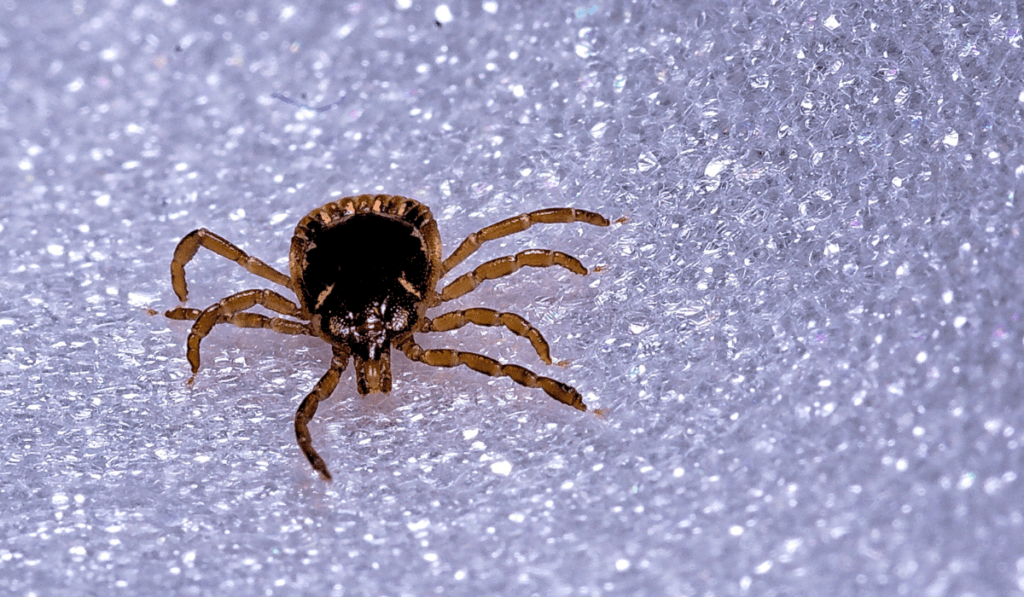
Spending time outside is part of daily life in North Texas. Kids play in the yard, pets roam the grass, and families spend evenings outdoors. Problems start when a small, hard-to-see pest comes back inside with you.
Many homeowners ask the same question after a bite or spotting something crawling on a pet’s ear. What do ticks look like?
Ticks are easy to miss, and people often mistake them for dirt or tiny spiders. They live close to the ground, hide in shaded areas, and wait for people or animals to walk past. Spotting ticks early lowers the risk of bites and helps protect your household from tickborne diseases.
This guide explains tick identification simply. It covers common Texas ticks, their life stages, how their bodies change while feeding, and why early identification matters. By the end, you will know what to look for and when to call a local professional for tick control in Texas.
This video walks you through common tick features and what to look for on pets and clothing. Even though it mentions mice as hosts, it explains how ticks move, attach, and spread across a property. This extra context can help homeowners feel more confident spotting ticks early.
When people ask what ticks look like, many are surprised to learn that ticks are not insects. They are arachnids related to spiders and mites. Adult ticks have eight legs, flat bodies, and visible mouthparts that attach to a host.
Most homeowners in Texas come across hard ticks. These ticks have a firm outer shell and a visible shield on their back called a scutum. Another group, soft ticks, has a leathery body and no hard shield. Soft ticks show up less often in yards but may appear in cabins, wildlife nesting areas, or buildings with rodents or birds.
Most adult ticks look dark brown or reddish-brown before feeding. After a tick feeds, its body swells and turns lighter in color. This change makes ticks easier to see, but it also means the tick stayed attached for some time.
Knowing these differences helps homeowners notice ticks sooner. If ticks appear more than once, we provide tick control for Dallas homes. Our trained technician can inspect your yard and reduce conditions that attract ticks.
Several tick species live throughout Dallas-Fort Worth neighborhoods, parks, and wooded areas. Each type has its own markings and habits.
Soft ticks behave differently from hard ticks and feed for shorter periods, often at night. Even though they are less common in yards, they still pose health risks in certain settings. If you are unsure which tick you found, we can help with identification.
Understanding the tick’s life cycle helps explain why ticks can be so hard to detect during early stages. Ticks go through four life stages: eggs, larvae, nymphs, and adult ticks. Each stage looks different, making tick identification challenging.
After eggs hatch, larvae appear with six legs. These larvae are tiny, often smaller than a grain of sand. After feeding on small animals, larvae molt into nymphs. Nymphs have eight legs and remain very small, which makes them hard to spot on the skin.
Nymphs grow into adults after another feeding. Adult ticks are easier to see and more likely to get noticed after a bite. Hard and soft ticks follow this life cycle, though soft ticks may live longer and feed more than once between stages. Breaking this cycle helps reduce future tick problems around homes.
Ticks do not jump or fly. They wait in places where people and animals pass by. Leaf piles, tall grass, shaded edges, and wooded areas serve as common hiding spots. Pets often pick up ticks when they brush against grass or shrubs.
Small animals, such as rodents, host young ticks, while large mammals like deer help spread adult ticks. Soft ticks often hide in animal nests or sheltered spaces instead of open lawns. Once a tick attaches, it may remain in place for hours or days, increasing the risk of disease transmission.
Clearing debris, mowing grass, and limiting wildlife access help lower tick activity. Our professional yard treatments focus on these problem areas and help create a barrier against ticks.
A tick bite is not always dangerous, but it can pose serious public health risks. Tick-borne diseases affect both people and pets. Some illnesses develop days or weeks after exposure, making early detection harder.
The Centers for Disease Control and Prevention (CDC) tracks Lyme disease, Rocky Mountain spotted fever, ehrlichiosis, tularemia, anaplasmosis, babesiosis, Heartland virus, and other tickborne illnesses. Hard ticks spread most human diseases, but soft ticks can also transmit certain pathogens under specific conditions.
Using DEET-based repellents, wearing protective clothing, and checking skin after outdoor activities help reduce the risk. If ticks are common around your home, we can help lower exposure and support safer outdoor spaces for your family using non-toxic pest control where possible.
If you find a tick attached to your skin, remove it right away. Use tweezers to grab the tick close to the skin and pull straight out with steady pressure. Do not twist or crush the tick, as this increases the chance of disease exposure.
Clean the bite area after removal and watch for symptoms. Save the tick if possible for identification. Seeing ticks more than once often points to a larger issue. We provide local solutions built for North Texas conditions and long-term prevention.
Knowing what ticks look like gives homeowners a strong start, but prevention goes beyond identification. Ticks follow clear patterns based on their life cycle, hosts, and surroundings.
By staying alert, maintaining your yard, and working with a professional, you can reduce the risk of tick bites. At Forterra Pest Control, we help homeowners across Dallas-Fort Worth reduce tick activity and protect outdoor spaces.
Seeing ticks more often is a clear sign to act now and keep your home safer year-round.
Ready to take the next step? Contact us today or request a free quote.
In Dallas-Fort Worth, the most common types of ticks include the American dog tick, lone star tick, and brown dog tick. These are hard ticks, typically found in yards, while soft ticks are more often associated with wildlife nesting areas.
Yes, tick bites can affect pets in North Texas. Dogs can develop illness from ticks like the brown dog tick or the lone star tick. Reducing yard exposure helps protect pets across the DFW area.
If you see ticks repeatedly in your yard or on pets in Dallas-Fort Worth, it is time to call a professional. Forterra Pest Control can inspect your property and help reduce tick activity before it becomes a larger issue.
