What Do Ants Eat?
Ants eat two kinds of food, sugar and protein. Workers fuel themselves on sweet liquids like flower nectar and honeydew, the sugary waste of aphids. The larvae and queen need protein from insects, seeds and meat scraps to grow and lay eggs. Inside a home, that means spilled sweets, grease, pet food and crumbs.
On this page
How Ants Eat Without Chewing
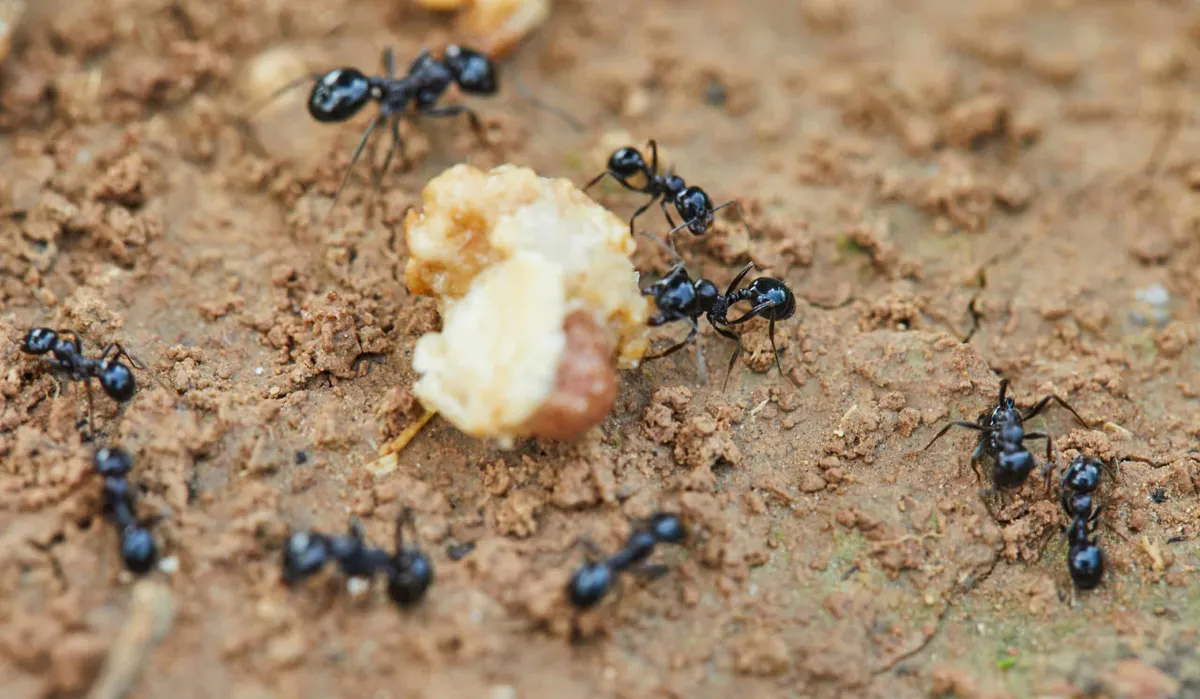
An ant carrying a crumb across the counter isn't eating it. Most adult ants can't swallow solid food, according to the Texas A&M AgriLife household ant guide. They drink liquids, and a small pouch behind the mouth strains out solid bits, which they later spit out as a pellet. Workers haul solid food home instead.
Back in the nest, the larvae do the heavy digesting. In some species, such as the pharaoh ant, workers set solid food on the larvae, which partly digest it and pass the liquid back for the rest of the colony. Adults then share food mouth to mouth, so a single trip to your kitchen can feed workers, brood and queens deep inside a wall.
That sharing matters for treatment. A bait the workers carry home reaches the whole colony, while a spray touches only the ants you can see.
Sugar for Workers, Protein for the Colony
The two halves of an ant diet do different jobs. Sugar is fuel, and foraging workers burn through it as they search for food all day. Protein builds bodies, so a colony raising lots of larvae and a laying queen hunts harder for insects, seeds and meat.
Honeydew may be the most important sweet in Texas. Fire ants guard aphids on plants and drink the sugary liquid they give off. A Texas A&M team measured how much that sugar matters. In seven weeks, lab colonies with honeydew-making aphids grew 20 percent larger than colonies with the same insect prey and no aphids. The Texas fire ant project's summary of the study calls that a dramatic boost. Researchers think that edge helped fire ants spread so fast across the South.
What Ants Eat Outside
Most of what ants eat outdoors you'll never notice. Fire ants are omnivores, but their main food is insects and other small invertebrates, including ticks, chiggers and caterpillars. They also take seeds, dead insects and honeydew from aphids and scale insects on shrubs and trees.
Some Texas ants specialize. Harvester ants collect seeds and store them in their nests, which is why their mounds sit in cleared, bare circles. Texas leafcutting ants, found mainly in central and east Texas, don't eat the leaves they cut. They chew them into a mulch that grows a fungus, and the fungus feeds the colony.
Around DFW homes, honeydew is the outdoor food that pulls ants closest. Aphids and scale insects on crape myrtles, roses and shrubs by the foundation keep a steady supply of sugar right beside the walls.
What Ants Eat in Your House
Each indoor ant has its own favorite foods, and knowing which one you have explains where it shows up. This table lists the house-invading ants in the Texas A&M guide and the foods each prefers indoors.
| Ant | Foods it prefers indoors | Where you'll see it |
|---|---|---|
 Pharaoh ant |
Grease, meats and sweets | Near warm, damp spots like dishwashers and bathrooms |
| Odorous house ant |
Sweets, meats and dairy | Kitchen counters, sinks and pet bowls |
| Red imported fire ant |
Meats, grease and sweets | Along baseboards from the yard, often after rain |
| Little black ant |
Grease, sweets, meats, fruits and vegetables | Kitchens, pantries and fruit bowls |
| Carpenter ant |
All foods, especially sweets | Kitchens at night, near damp wood |
| Crazy ant |
Sweets and meat | Trash cans, patios and kitchens |
A spotless kitchen doesn't always stop them. Pet food left out, a greasy stovetop, a recycling bin with soda cans or a damp sink cabinet can each keep a trail running.
How to Find Out What Your Ants Want
You can test your own ants in an afternoon. The Texas A&M guide suggests putting small amounts of sugar water, peanut butter, jelly and bacon grease in bottle caps or on foil squares near the trail. Watch which one draws a crowd, and note where the ants carry it.
The result tells you which bait will work. Some ants feed mostly on sugar, others prefer oils or proteins, and a bait only works if it holds the food your ants want. Fire ants feed on many kinds of food, from grease and meat to sugar.
Keep sprays away from the trail while you bait. A contact spray stops the workers before they reach the bait, so the bait never makes it back to the colony. Our ant treatment for DFW homes starts by naming the species, then treats the colony directly when a technician can reach it. Around our Southlake office, the same visit runs through ant control in Southlake.
Ant Diet FAQ
What do carpenter ants eat?
Carpenter ants eat insects, sweets and honeydew, not wood. They chew wood only to hollow out nest galleries and push the shavings out. If you're finding piles of those shavings indoors, carpenter ant control starts with locating that nest.
Do ants drink water?
Yes, and water draws them inside as reliably as food. Colonies may move indoors when the weather turns very hot and dry or very wet, and a dripping faucet or a damp cabinet gives them a reason to stay.
Do ants eat other ants?
Many do. Fire ants raid other colonies, and thief ants live inside the nests of bigger ants and steal their larvae for food. Ant brood is protein, and protein is what a colony needs most to grow.
If ants keep finding something to eat in your kitchen, get an online or phone quote, and we'll trace the trail back to the colony.