
Many Southlake homeowners recognize the sound of scratching in the walls, movement in the attic, or signs near food storage. The challenge is knowing whether rats or mice are causing the problem. These rodents may look similar, but their behavior and damage patterns differ.
Rodent problems are common across Texas, particularly in growing cities. Homeowners often need reliable pest control in Southlake, TX, as well as nearby areas such as Plano, McKinney, Dallas, and Fort Worth.
A rodent infestation grows quickly once rodents gain entry and access food sources. In some homes, they move through lower storage or utility areas before spreading upward.
This guide explains the key differences between rats and mice found in Southlake homes. You will learn how to tell them apart, why people confuse them, what health risks they pose, and how to keep your home rodent-free.
This video can help you see clear visual differences between these rodents. It shows size, body shape, movement, and common nesting behavior, which can be hard to judge during a quick sighting. Knowing how to tell the difference between rats and mice will help you determine which rodent control method you can use before they grow to a full rodent infestation.
In Southlake homes, rats and mice differ in size, behavior, and nesting habits. While both appear across North Texas, they move through homes differently and cause different types of damage.
Knowing which rodent you are dealing with guides the appropriate control approach and helps prevent recurring problems.
| Feature | Rats | Mice |
|---|---|---|
| Size | Large, heavy bodies | Small, lightweight |
| Common Species | Norway rats, roof rats | House mouse |
| Droppings | Large, capsule-shaped | Small, rice-sized |
| Behavior | Cautious, avoid new objects | Curious, explore quickly |
| Nesting Areas | Attics, crawl spaces, yards | Walls, cabinets, basements |
| Damage Risk | Structural damage, wiring | Food contamination |
| Entry Points | Rooflines, vents | Small cracks and gaps |
Knowing these differences improves treatment results. At Forterra Pest Control, we provide rodent control services for homes in Southlake, TX. Technicians identify the rodent first, then develop a plan tailored to the house.
Rats found in Southlake are most often Norway rats or roof rats. According to studies from Texas Tech University, roof rats are common over most of Texas, especially in towns. Norway rats are stocky with blunt noses, while roof rats are slimmer and strong climbers, often found near rooflines and attics.
Common signs include large droppings in garages or along walls, gnaw marks on wood or wiring, and loud nighttime noise from attics or crawl spaces. Rats often enter through roof gaps or damaged vents and can weaken wood over time.
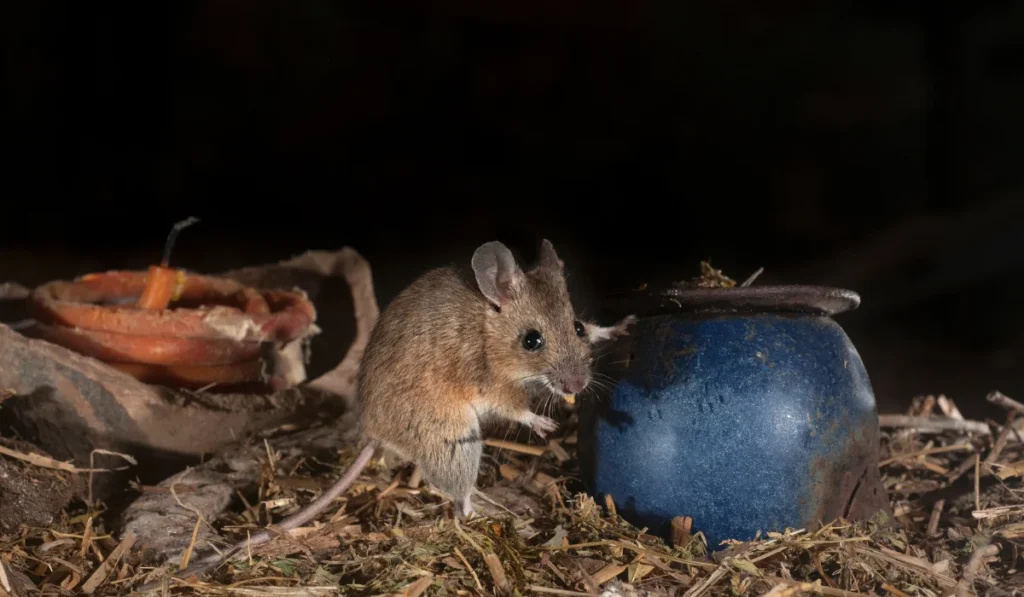
Mice are smaller and easier to miss. The University of California Agriculture and Natural Resources reports that the house mouse is light brown or gray with large ears and a thin tail. Mice can squeeze through very small openings.
Signs of mice include small droppings inside cabinets or drawers, shredded paper or fabric nests, and activity near pet food or pantry items. Once inside, mice rely on indoor food sources and spread quickly.
Knowing how to tell rats from mice helps guide effective rodent control. Forterra Pest Control helps Southlake homeowners identify the rodent and act before the problem grows.
People often confuse rats and mice because both hide in similar places and stay active at night. Growth and development around Southlake bring wildlife closer to homes, increasing overlap.
Both rodents use common entry points like gaps near garage doors, roofline openings, and utility lines. Seasonal changes also play a role. Cooler months across North Texas drive rodents indoors.
Both rats and mice pose health risks to Southlake homeowners, but the risks differ. Rats don’t carry rabies, but they cause more structural damage by chewing wiring and wood. Mice reproduce faster and contaminate food areas more quickly. Both can carry fleas and transmit disease through their droppings, like hantavirus.
Addressing either rodent early helps limit damage and reduce health concerns. At Forterra Pest Control, we help homeowners identify the rodent species and apply the appropriate control approach before the problem worsens.
Getting rid of rats and mice depends on the rodent involved. Both often need professional rodent control, but rats and mice use different entry points and nesting areas.
Effective rat control in Southlake focuses on exterior and structural areas:
Rats often cause structural damage, so missing these steps results in recurring issues. You can also use several common scents to deter rats from your Southlake, TX, home.
Mouse control targets interior spaces where mice feed and nest:
Mice spread quickly once inside.
For lasting results, we provide pest control and rodent control services built on thorough inspections, preventive measures, and follow-up to keep Southlake homes rodent-free.
Call a professional exterminator if rodent activity continues despite traps, you hear noises at night, or damage keeps returning. These signs often point to a larger infestation in attics, crawl spaces, garages, or storage areas.
At Forterra Pest Control, we address these issues through inspection, clear species identification, and targeted treatment plans. Homeowners across Southlake, Dallas, Fort Worth, Plano, and McKinney rely on our team for rodent control and exclusion services.
Understanding the difference between rats and mice helps prevent bigger problems. Size, behavior, and nesting habits guide the correct response.
With years of experience and a focus on eco-friendly solutions, our team at Forterra Pest Control delivers rodent control services built for long-term protection.
Contact us today to request your free pest control inspection.
Rats are larger and usually stay in attics, crawl spaces, or garages. Mice are small and often found in kitchens or pantries. Rats leave bigger droppings and louder nighttime noise, while mice leave smaller droppings and move quickly along walls.
Rats often cause more structural damage by chewing wiring and wood. Mice reproduce faster and contaminate food more quickly. Both pose health risks, so you should address either rodent problem early.
Yes. Mild winters keep rodents active longer. Cooler months drive rats and mice indoors in Southlake, resulting in increased activity in attics, walls, garages, and basements.
