Do Termites Bite? What Really Bit You in DFW
Termites almost never bite people. Only soldier termites have jaws built for fighting, and they use them on ants and other termites that break into the colony. A soldier may pinch if you pick it up, but termites don't sting and don't feed on blood. In DFW, chiggers, fire ants, mosquitoes and fleas bite people far more often.
On this page
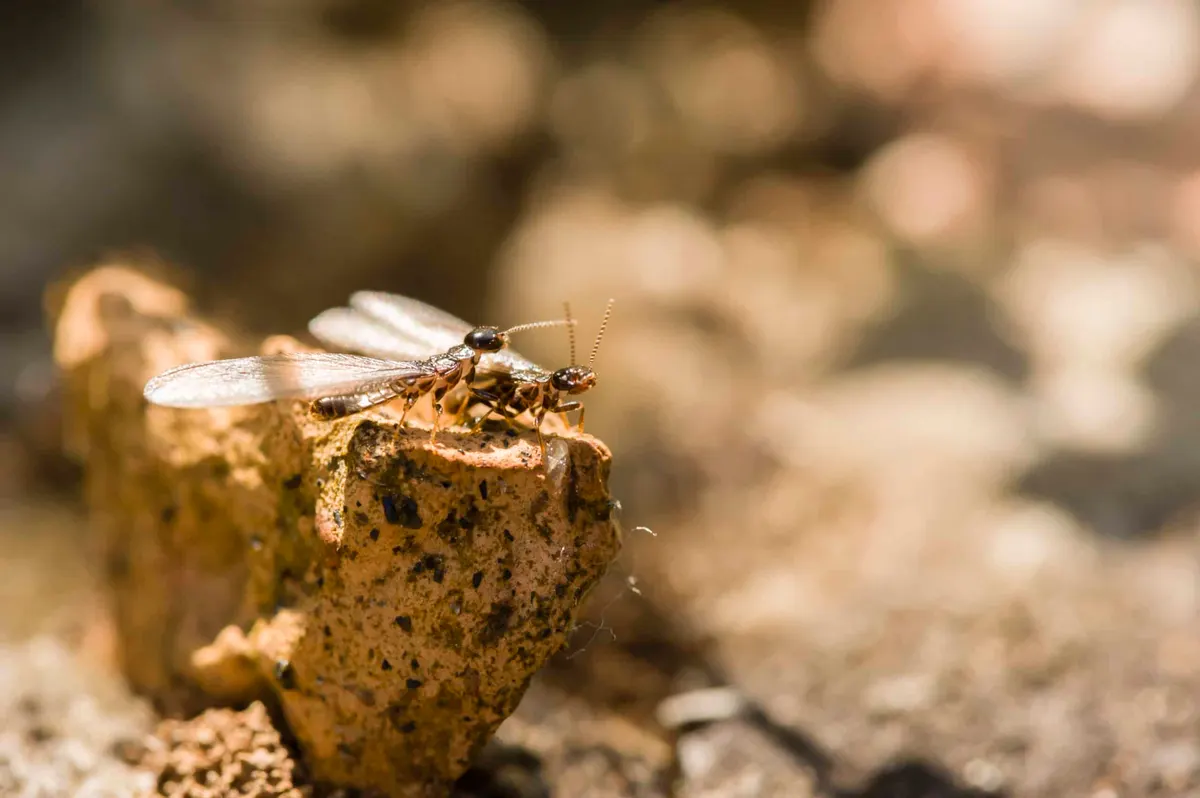
Can Termites Bite Humans?
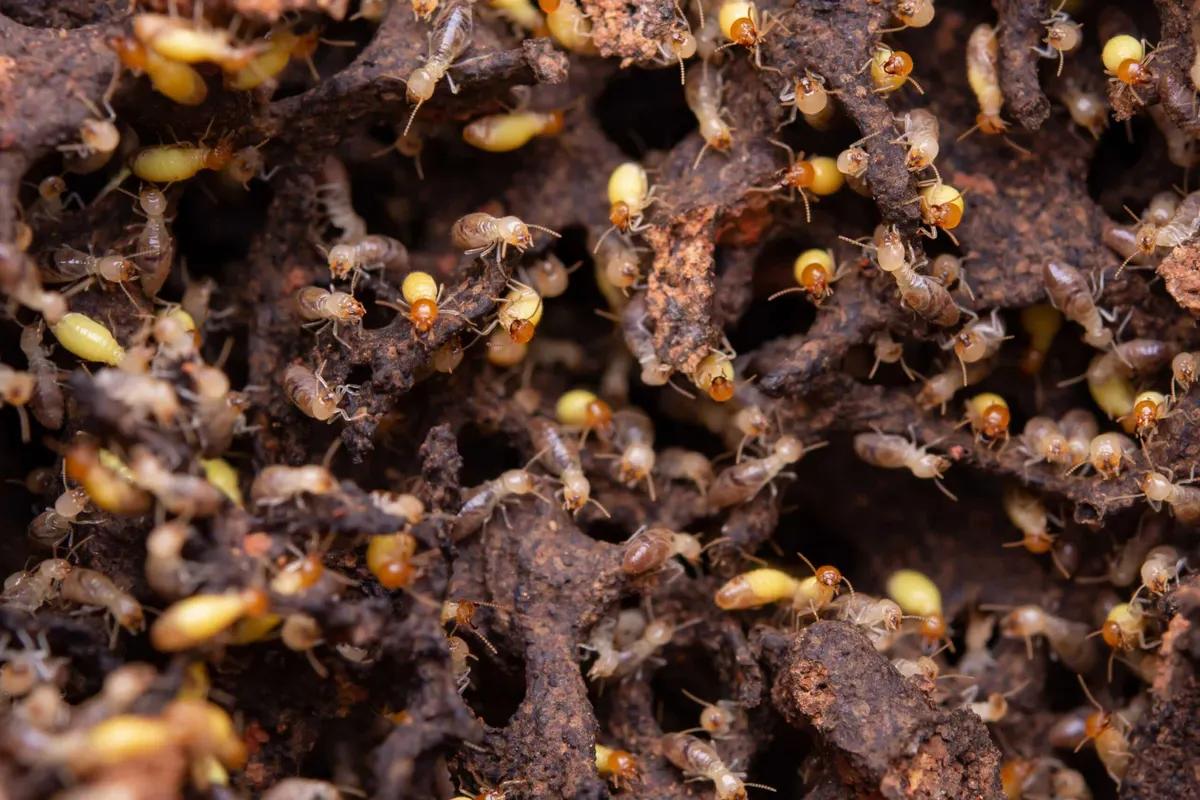
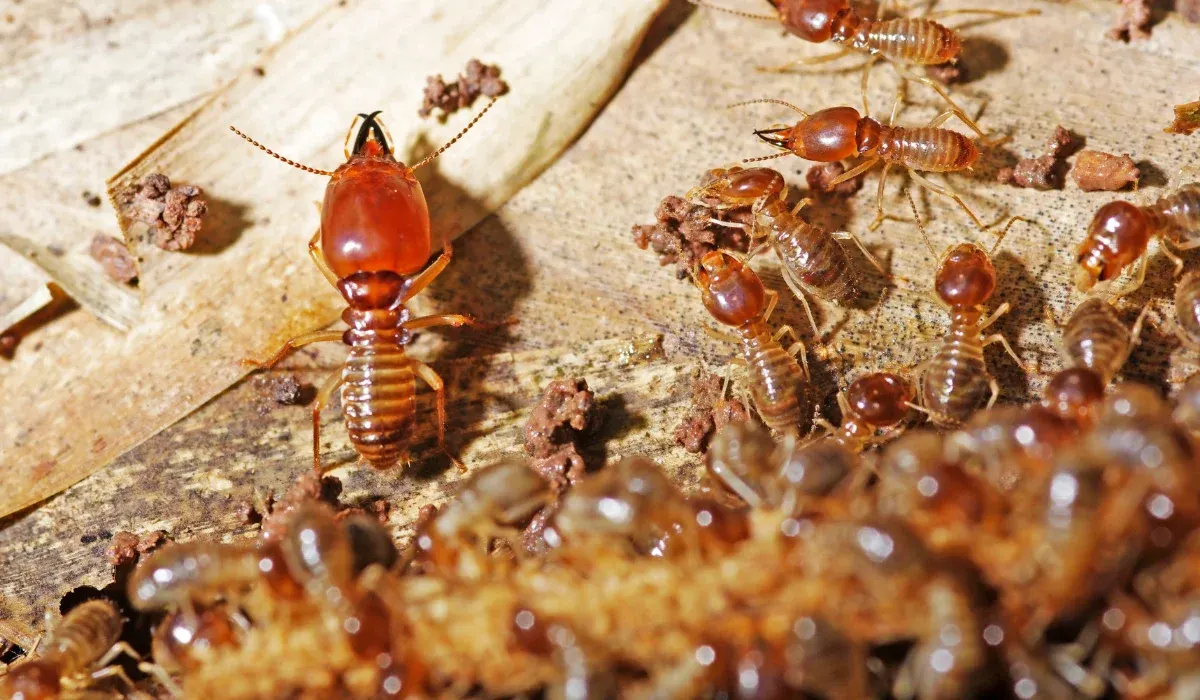
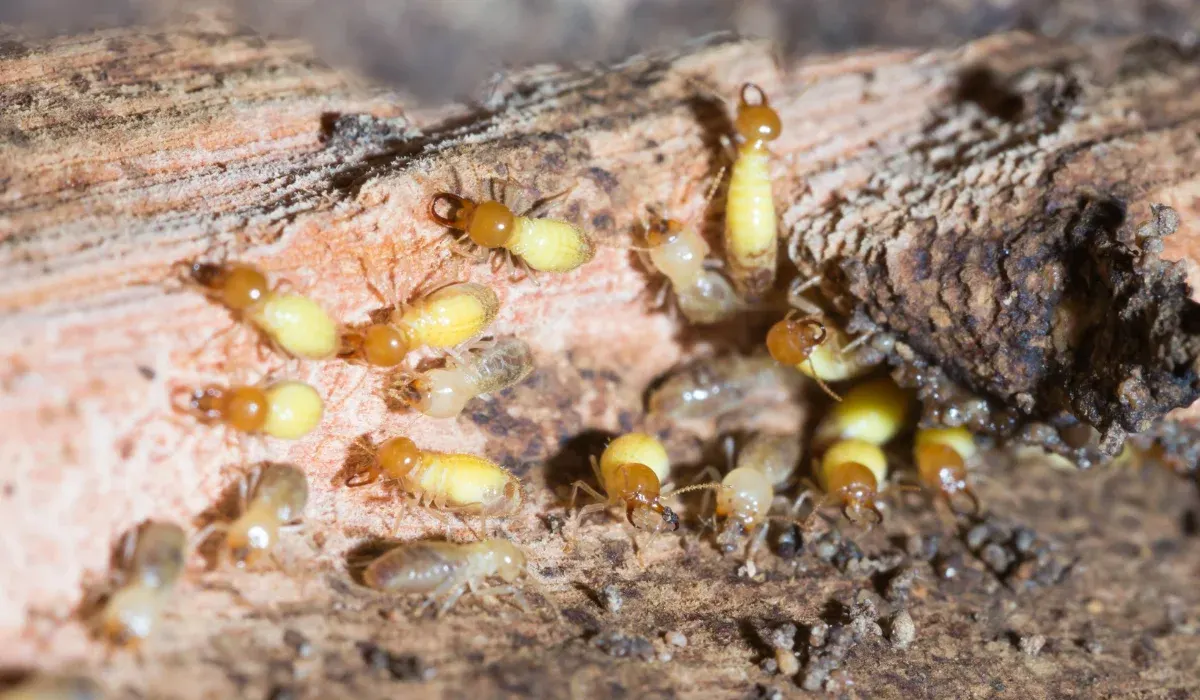
A termite colony has three main castes, and only one has jaws made for defense. Workers are soft, pale and blind, and they spend their lives chewing wood and building tunnels. Swarmers are the winged adults that fly out in spring to start new colonies. Soldiers have large brown heads with strong mandibles. Texas A&M says soldiers defend the colony mainly against ants and other termites. They make up only 1 to 5 percent of a colony, and they can't even feed themselves.
You would only meet a soldier by breaking into a mud tube or a piece of damaged wood. DFW termites live in the soil and travel inside mud tubes, so they don't wander across floors or beds the way biting insects do. If you handle a soldier, it may clamp onto your skin. It feels like a quick pinch and leaves a small red mark at most.
Termites also have no reason to bite you. They eat cellulose from wood and plants, not skin or blood.
What a Termite Bite Looks Like
A termite pinch looks like any minor insect bite. You may see a small red mark with a little swelling or itching, and it fades on its own within a few days. Wash the spot with soap and water, and watch it over the next few days for spreading redness, swelling or pain, which can mean infection.
You can't identify the insect from the mark alone, because many bites look alike. Where you were, when the itch started and the pattern of the bites tell you more. MedlinePlus's guide to insect bites and stings notes that bites from mosquitoes, fleas and mites tend to itch more than they hurt, while fire ant stings usually hurt. It also lists the signs that need emergency care, including trouble breathing, throat tightness and swelling of the face or mouth. Call 911 for any of those.
What Really Bit You in DFW
The table below compares a termite pinch with four DFW pests that bite or sting people far more often.
| Pest | Where you pick it up | What you see | Clue |
|---|---|---|---|
| Chiggers | Tall grass, brush, shady flower beds | Very itchy red bumps | Bites at sock lines and the waistband that itch hours later |
| Fire ants | Mounds in open lawn | Burning stings that become small blisters | Several stings in a cluster, often in a circle |
| Mosquitoes | Shady yards near standing water | Itchy raised bumps | Bites on skin left uncovered outdoors |
| Fleas | Pets, pet beds, shady spots where pets rest | Small red bumps, often in clusters | Bites on the legs and a pet that keeps scratching |
| Termite soldiers | A broken mud tube or damaged wood | A small red mark, if anything | Only after you handled termites |
Chiggers are easy to misjudge because the itch shows up late. Texas A&M AgriLife's guide to chiggers says itching starts 3 to 6 hours after the bite and peaks 24 to 48 hours later. Chiggers stay active from late spring to fall in most of Texas, and they don't burrow into skin or suck blood. If the bites keep coming from the same corner of the yard, chigger treatment for DFW yards covers the whole area where they live.
Fire ants are the other common culprit. In DFW, their mounds pop up in open lawn. A fire ant grips the skin with its jaws, stings, then pivots and stings again in a circle. Each sting turns into a small, firm blister within a day or two.
When Termites Are the Real Problem
Finding termites while you hunt for a biter is still worth acting on, because the real risk is damage to the house. DFW termites live in the soil and reach the house through pencil-wide mud tubes on the slab. In spring, usually from March to May, the colony sends out swarms of winged termites. Swarmers emerging indoors usually point to a colony already inside the structure.
Forterra's termite inspections are free, and an inspection shows whether the colony is active and how it gets in. If you need treatment, we use Sentricon bait stations for subterranean termites to take out the colony itself. Booking takes a minute online or one phone call, at any hour.
Termite Bite FAQ
Do drywood termites bite?
Drywood soldiers also have strong, toothed jaws, and they behave the same way. They stay sealed inside the wood they eat, so people almost never touch them. Drywood termites are rare in DFW and cluster along the Gulf Coast.
Do termites bite dogs?
Termites pose no real threat to dogs or cats, and Utah State University's extension service calls them harmless to pets. A soldier might pinch a dog that digs into a rotten stump. Fire ants are the bigger risk in a DFW yard, and Texas A&M notes that they sting animals where hair is thin, like the ears, muzzle and belly.
Do flying termites bite?
Practically never. Swarmers lack the oversized jaws of soldiers, and they spend their short flight looking for a mate, not food. Most that get indoors dry out and die soon after. A swarm inside the house is a sign of termites, not a health risk.
What is a termite's worst enemy?
Ants. Soldier termites spend their lives guarding the colony, and ants are the main invaders they fight. That job explains their big heads and strong jaws.