Flying Termites After Rain
Flying termites are swarmers, the winged kings and queens a mature colony sends out to start new colonies. They usually take off on a warm, calm day after rain, when damp soil gives new pairs a place to dig in. Outdoors, a swarm means a colony lives nearby. Indoors, termites are usually already in the house.
On this page
Why Flying Termites Show Up After Rain
A termite colony spends 3 to 5 years growing before it produces swarmers, and after that it sends them out about once a year. Heat, day length and moisture decide the day. Texas A&M's subterranean termite guide names all three as swarm triggers, and older, larger colonies release more swarmers.
Rain matters because of what happens after the flight. Swarmers are weak fliers that stay in the air only briefly. Each couple that pairs up sheds its wings and digs a small chamber in damp soil beside wood. About a week later, the new queen lays her first eggs. Wet ground after a DFW spring storm makes that digging possible, and calm, humid air keeps the swarmers from drying out on the way.
So in DFW, swarms tend to follow the first warm afternoon after a soaking spring rain. Colonies in the same area tend to swarm around the same time, which is why a whole street can see swarmers within a few days.
Flying Termites Inside vs Outside
Where you find swarmers tells you more than how many you see. A swarm indoors usually points to an active infestation in the structure. Swarmers outside show that termites live close by and may be feeding on buildings nearby. The table below matches common sightings with what they usually mean.
| Where you see them | What it usually means | What to do |
|---|---|---|
| Yard, fence line or woodpile | A colony lives in the soil nearby | Check the slab edge for mud tubes |
| Porch light, screen or outside window | Swarmers flew toward the light from close by | Note which side of the house they gathered on |
| Indoor windowsill or light fixture | Swarmers emerged inside and flew to the light | Treat it as a sign of termites in the structure |
| Bathroom floor, closet or garage slab | Swarmers came up through the slab at that spot | Mark the spot for the inspector before you clean up |
Wings left in spider webs, on sills or around lamps count the same as live swarmers. Swarmers drop their wings soon after they land, so a small pile of identical wings may be all that remains by evening.
How Swarmers Get Into DFW Slab Homes
Most DFW houses sit on a concrete slab, and subterranean termites reach the wood above it through small gaps in the concrete. When a colony under the house swarms, the winged termites use those same gaps to reach open air. A common weak spot is the bathroom, where plumbing rises through an opening in the slab called the bath trap. Expansion joints, cracks and the seam where the garage slab meets the house are the other usual exits.
Texas A&M's inspection checklist singles out bathroom plumbing, pipe entries and expansion joints on slab homes. DFW's clay soil shrinks in dry summers and swells after rain, and over the years that movement cracks slabs and opens new gaps. A house with no termites for decades can still develop an entry point.
Are Flying Termites Dangerous?
Flying termites can't hurt you. They don't bite or sting, and they don't chew wood. Most swarmers never survive the flight, and those that land indoors die soon after because they need moist soil. Kansas State University's insect diagnostic lab notes that swarmers trapped in a house won't manage to start a new colony there.
The real risk is the colony that sent them. Workers, the pale, wingless termites that stay underground, do all the wood damage, and a colony large enough to swarm has been feeding for years. Texas A&M notes that a swarm or a pile of wings is usually the first sign of that colony a homeowner notices.
What to Do After a Termite Swarm
Spraying swarmers wastes effort, since they die on their own soon after. What helps is a record of where they came from. These steps cover the first day after a swarm.
- Write down where the swarmers first appeared, such as a bathroom, a window or a crack in the garage slab.
- Drop a few into a small vial of rubbing alcohol, which keeps their wings intact for identification.
- Vacuum up the rest and empty the vacuum into an outdoor trash can.
- Look along the outside of the slab near that room for thin dirt tunnels climbing the foundation.
- Book a free termite inspection to find the colony and the gap it uses.
When the inspection finds activity, treatment usually means Sentricon bait stations around the house or a liquid soil treatment. With stations, the yearly technician visit decides whether bait goes in, and it only does when termites are feeding. Forterra backs the warranty itself.
Flying Termites or Flying Ants?
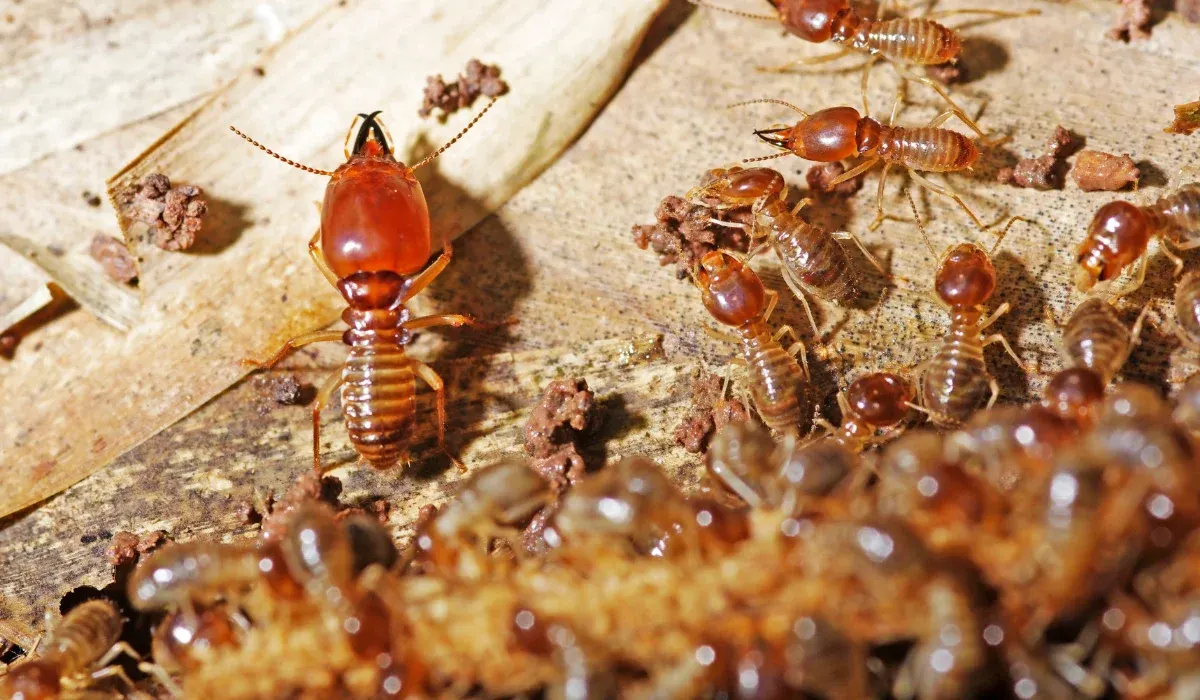
Flying ants swarm in spring too, so check the wings before you worry. A termite swarmer is about 3/8 inch long, with four wings of equal size that reach well past its body, up to twice its length. It also has a thick waist and straight antennae. A flying ant has a pinched waist, bent antennae and front wings larger than the back pair, and its wings are no longer than its body. Both shed their wings, so look at the waist if only wingless insects remain.
Flying Termites FAQ
Do flying termites mean I have termites?
They always mean termites live nearby. Swarmers outdoors come from a colony in the surrounding soil, which may already be feeding on a structure close by. Swarmers indoors usually mean that colony has reached your house.
How long does a termite swarm last?
The flight itself is short. A colony may release swarmers on several days in a row, with the biggest flight first, and then it won't swarm again until the next year.
Do flying termites eat wood?
No. Swarmers don't feed on wood at all, and the workers back in the colony cause the damage. Finding swarmers tells you those workers have been busy for years, so the inspection matters more than the insects on your windowsill.
Can drywood termites swarm in DFW?
Drywood termites are rare in DFW and most common along the Gulf Coast. Nearly every swarm in a DFW home comes from subterranean termites, which need soil to start a new colony.
If swarmers turned up inside, an inspection is the next step. You can see how Forterra handles termite control in DFW, or get a quote online in about a minute.